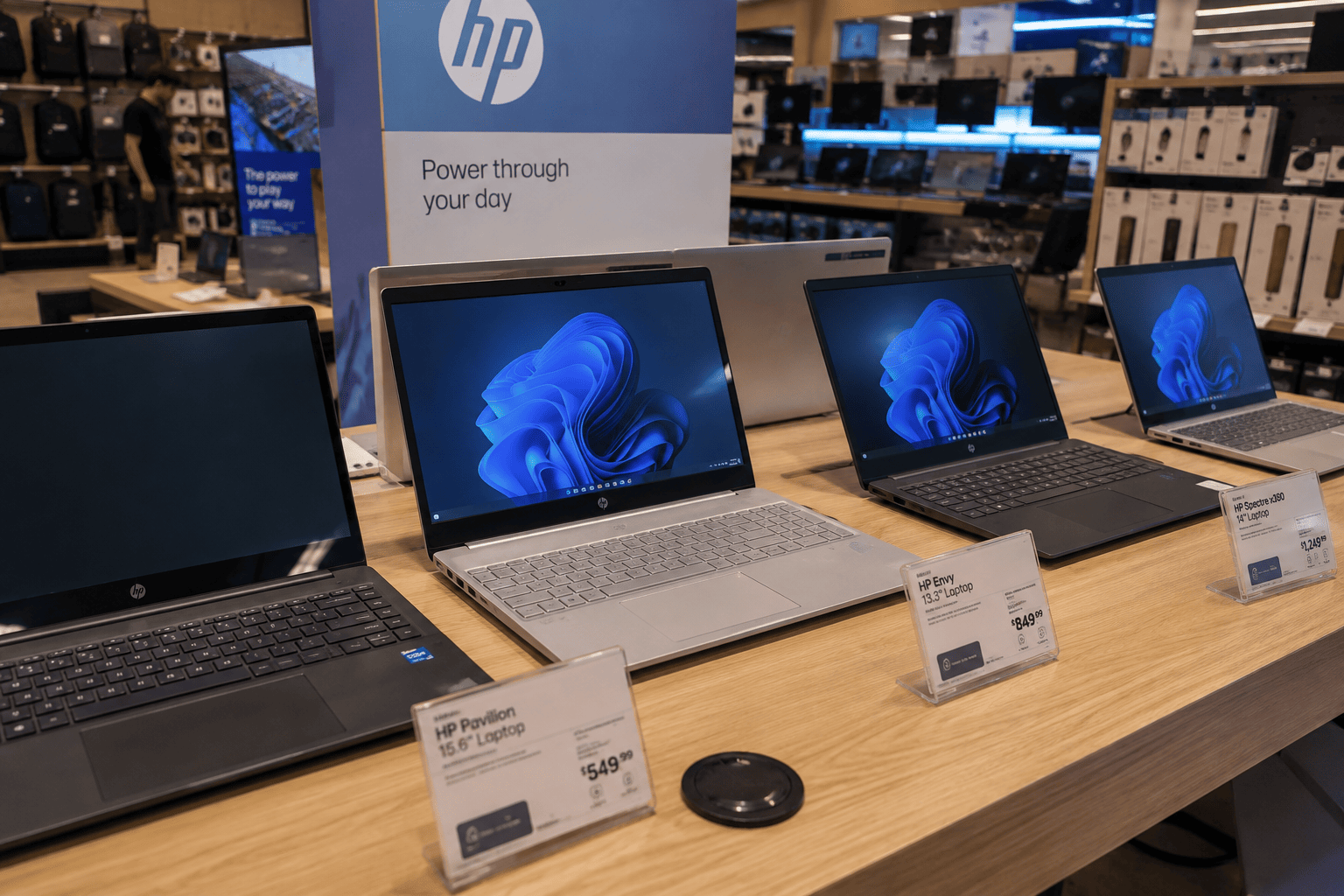
HP Inc. (NYSE: HPQ) saw its shares decline approximately 5% in trading after the company reported fiscal third-quarter results that topped analyst expectations but underscored mounting margin pressure from rising memory costs and a sharp drop in PC unit shipments.
For the quarter ended July 31, HP posted revenue of $15.7 billion, up 12.5% year over year and ahead of consensus estimates. Adjusted earnings per share came in at $0.83, also exceeding forecasts. However, both figures were boosted by tariff refunds, which masked underlying weakness in core operations.

Revenue growth driven by pricing, not volume
Personal Systems revenue rose 18% to $11.8 billion, supported by a 22% increase in commercial PC sales. Yet total PC unit shipments fell 16% year over year as the company raised prices and shifted its mix toward premium devices, including AI-enabled PCs. Higher average selling prices helped lift revenue despite softer demand.
Printing revenue slipped 2% to $3.9 billion, roughly in line with expectations. Adjusted EPS included an $0.11 per-share benefit from tariff refunds; analysts had anticipated $0.69 per share, according to LSEG data.
Memory costs weigh on margins
HP has been grappling with escalating memory chip costs as AI data center construction absorbs semiconductor capacity. The company responded by increasing PC prices and redesigning certain products, but these measures have not fully offset the cost pressure. Personal Systems operating margin contracted to 4.6% from 5.2% in the prior quarter, and management expects the headwind to persist into the fourth quarter, with a recovery not anticipated until fiscal 2027.
CFO Karen Parkhill noted that the company expects below-seasonal revenue performance in the fourth quarter due to commodity-driven price increases. Still, she projected year-over-year revenue growth, supported by pricing actions, gains in premium categories, higher-margin offerings, and increased adoption of AI PCs.
Guidance and outlook
For the fourth quarter, HP forecast adjusted EPS of $0.69 to $0.79, compared with the analyst consensus of $0.67. However, the guidance includes an estimated $0.08 per-share benefit from tariff refunds. Excluding that benefit, the midpoint would fall short of market expectations.
The company also raised its full-year adjusted EPS forecast to $3.19-$3.29 from $2.90-$3.10, but that range incorporates an estimated $0.19 per-share tariff refund benefit.
Analyst reaction
BofA Securities lifted its price target on HP to $21 from $18 while maintaining an Underperform rating. The brokerage acknowledged positive factors such as pricing execution, premium and AI PC adoption, market-share gains, and resilient printing profitability. However, it expects rising memory costs and higher PC prices to dampen demand elasticity, and it flagged continued pressure on core margins excluding tariff benefits, as well as uncertainty surrounding HP's leadership transition.
The results highlight the challenge HP faces in balancing cost increases with demand preservation. Investors are seeking greater clarity on the company's margin trajectory and its fiscal 2027 outlook, especially as memory costs remain elevated. The broader memory market has been a focal point, with recent reports of tightening NAND supply and volatility in memory chip stocks.
This article is for informational purposes only and does not constitute financial advice.

