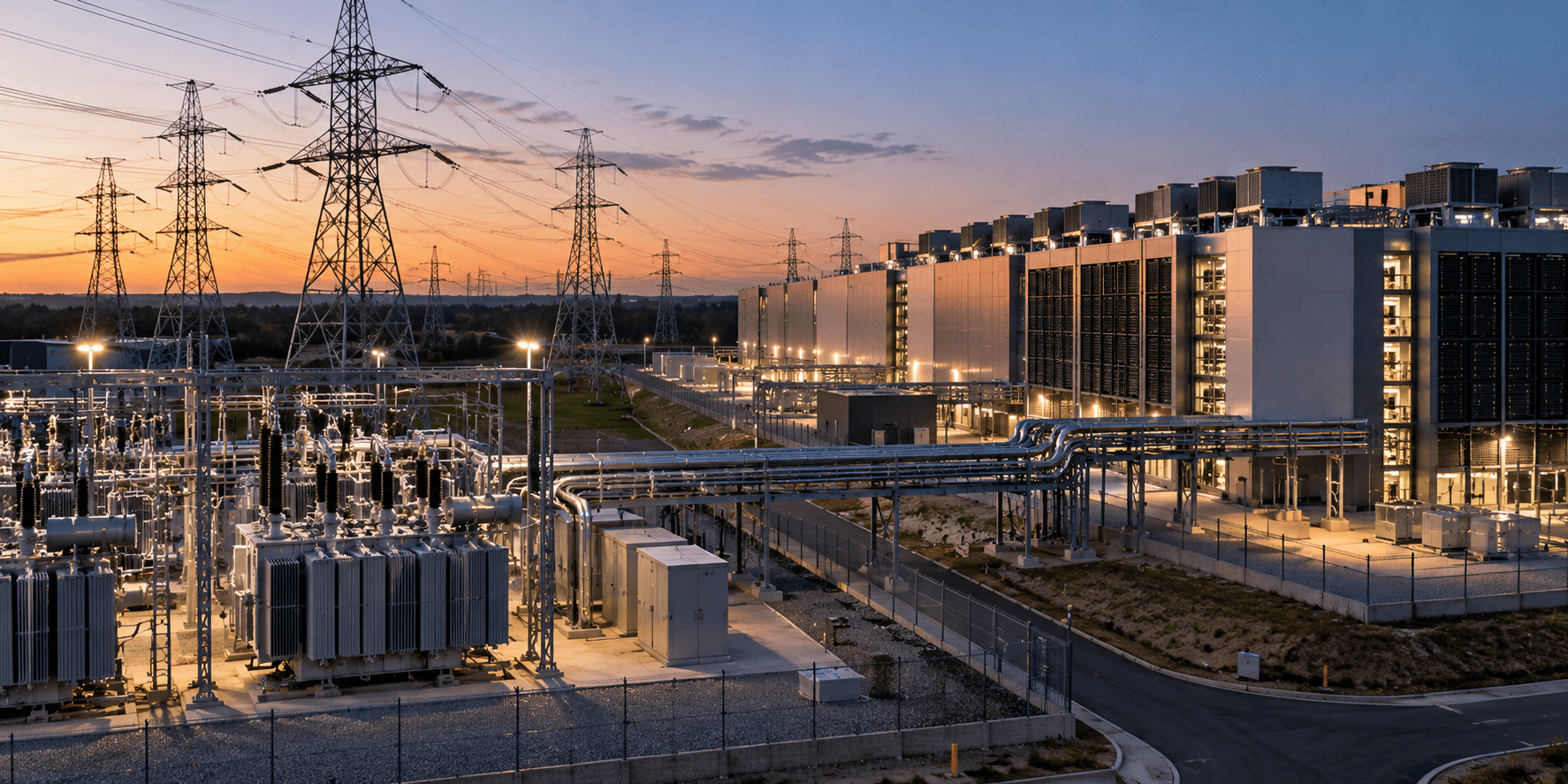
Google has unveiled a record €13 billion (approximately $15.1 billion) investment in Finland, marking its largest single commitment in Europe. The two-year plan, spanning 2027 and 2028, will fund the construction of three new data centers and the expansion of its existing facility in Hamina, while also channeling resources into clean energy and community initiatives.
The announcement underscores the intensifying race among tech giants to build out AI infrastructure. As demand for cloud computing and AI services like Google's Gemini surges, hyperscalers are pouring capital into data center capacity. Finland's cool climate and low-carbon energy grid make it an attractive location, and Google is not alone—Microsoft and ByteDance have also pursued projects there.

Job creation and economic impact
Google projects the construction phase will support more than 37,000 jobs across Finland, contributing an estimated €3.6 billion (around $4.1 billion) annually to the country's GDP. Of those, roughly 16,000 are construction roles, generating about €911 million (approximately $1 billion) in labor income per year. Once operational, the new sites are expected to sustain around 7,000 permanent positions, including engineers, technicians, and support staff, with average pay about 24% above Finland's national median wage.
The company is also allocating €31 million (around $35.5 million) to community programs in Hamina, Kajaani, Muhos, and Vaala over the next four years. This includes AI training for over 4,400 workers through partnerships with local colleges and new training slots for 100 Finnish students pursuing data center careers. A portion of the fund, €10 million (about $11.5 million), is earmarked for local research and innovation.
Energy deals underpin expansion
A significant part of the investment focuses on power supply. Google has signed a 22-year agreement with Finnish energy company Fortum to support the life extension of the Loviisa nuclear plant, which currently provides about 10% of Finland's electricity. Additionally, Google is adding onshore wind capacity and has contracted for a 94-megawatt battery system near its Kajaani site, expected to be operational in late 2027, to stabilize the grid during peak demand periods.
Google is also collaborating with Finnish grid operator Fingrid and the agency Business Finland to plan future data center sites around grid capacity, positioning this approach as a model for responsible AI infrastructure development across Europe. This strategic alignment with energy availability is crucial as AI workloads become increasingly power-hungry.
Why Finland, why now
Finland's cold climate reduces cooling costs, and its largely renewable energy mix aligns with corporate sustainability goals. The country's grid reliability and supportive government policies further enhance its appeal. For Google, the timing coincides with a broader industry push to expand compute capacity, as seen in Nvidia's recent AI infrastructure moves and Dell's record AI growth.
Ruth Porat, Google's chief investment officer, expressed pride in deepening the company's roots in Finland with this landmark investment. The move is expected to bolster Google's European cloud network and support its AI ambitions, while also contributing to Finland's economy and energy transition.
As the AI infrastructure race intensifies, investments like this are likely to shape the competitive landscape. For investors, monitoring such capital expenditures can provide insights into the growth trajectories of major tech firms and the broader AI ecosystem.
This article is for informational purposes only and does not constitute financial advice.