Intel's Rally Extends as AI Infrastructure Demand Offsets PC Weakness
Shares of Intel Corporation have maintained a significant upward trajectory, climbing approximately 4.5% in a recent session to approach levels not seen in decades. This movement extends a multi-week rally that has delivered the company's strongest monthly performance since the late 1980s. The surge is primarily attributed to shifting investor sentiment regarding the chipmaker's role in the expanding artificial intelligence infrastructure landscape.
Server CPU Business Drives Optimistic Revisions
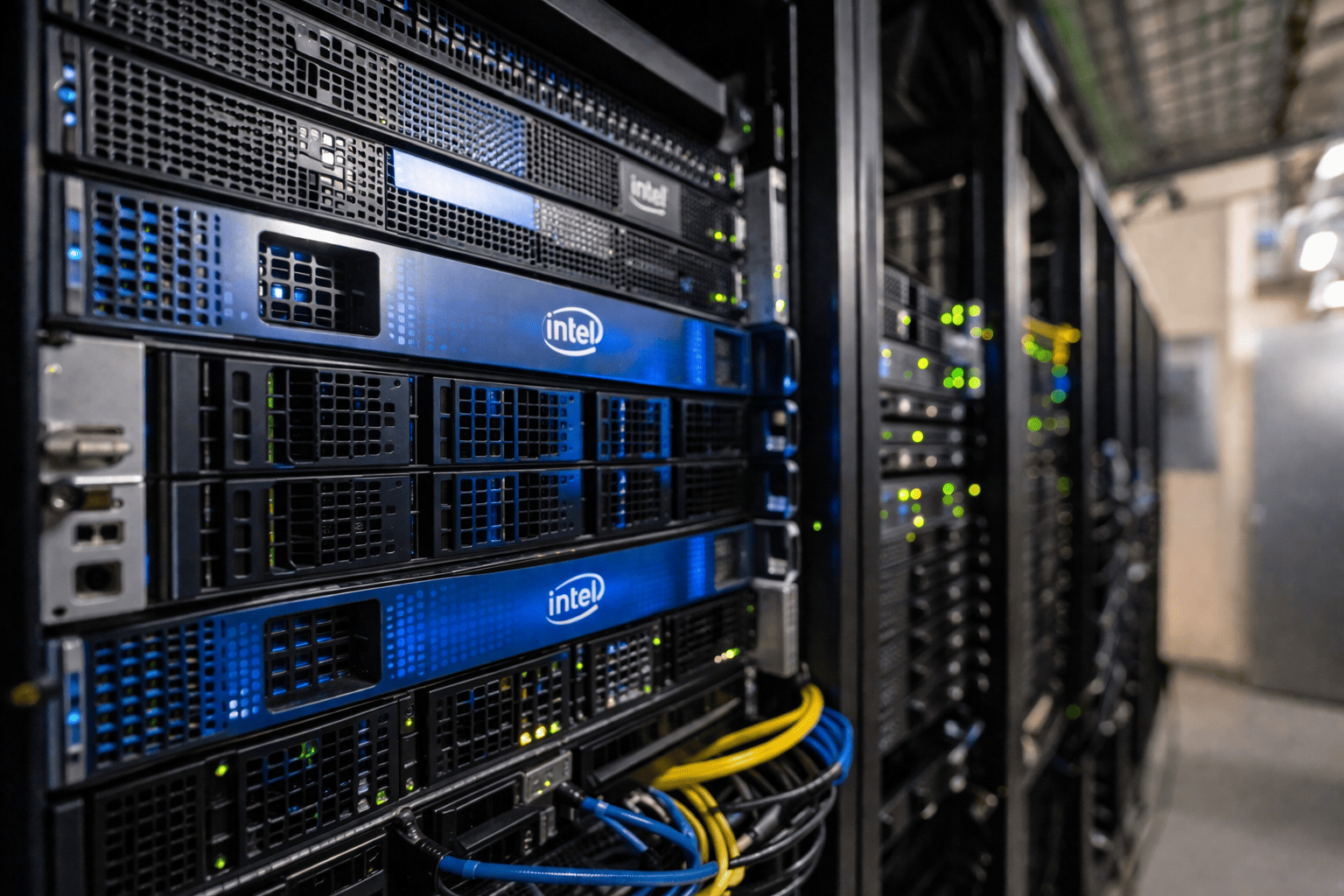
The core driver behind the revised outlook is robust demand for Intel's server central processing units (CPUs), which are increasingly required for AI computational workloads. Analysts identify the emergence of 'agentic AI' applications as a key trend, supporting both higher shipment volumes and improved pricing within the data center segment. One firm projects server CPU average selling prices could increase between 10% and 15% this year, with the tailwind potentially lasting through the decade.

This strength in servers provides a crucial counterbalance to ongoing softness in the personal computer market. The demand imbalance may offer Intel operational benefits, allowing it to shift manufacturing capacity from lower-margin PC chips toward more profitable server products. Consequently, financial analysts have upgraded their forecasts, with one now anticipating year-over-year revenue growth of 36% for Intel's Xeon server business by 2026, accompanied by improved gross margins.
Analysts Raise Targets but Maintain Cautious Stance
Despite the improved financial projections, analyst ratings largely reflect a neutral to cautious perspective. Multiple firms have increased their price targets—with one raising its target to $59 from $48 and another lifting its target to $60 from $36—while reiterating Neutral or Market Perform ratings. These adjustments are based on heightened earnings expectations rather than a fundamental change in conviction about the company's competitive position.
The revised models now forecast 2026 revenue near $53.3 billion with earnings per share of $0.82, and 2027 revenue approaching $57.5 billion with EPS of $1.33. While these profit estimates exceed consensus due to anticipated margin expansion, the revenue forecasts remain tempered by the weaker PC market outlook.
Valuation and Execution Risks Under Scrutiny
A primary concern emerging from the stock's rapid ascent is valuation. Intel shares are currently trading at approximately 95 times forward earnings, a multiple that many market observers consider elevated given the company's ongoing challenges. Less than a quarter of covering analysts rate the stock as a Buy, underscoring widespread caution despite the recent price momentum.
The long-term thesis for Intel remains heavily dependent on successful execution. The company must navigate a competitive landscape where rivals like Advanced Micro Devices and Nvidia have established strong leads in key segments, including dedicated AI accelerators. Additionally, Intel's ambitious foundry expansion strategy carries significant operational and capital expenditure risks that must be managed.
Market participants will seek clarity on these execution points when the company reports its quarterly results. As one analyst noted, while the server CPU surge appears increasingly substantiated, struggles with both the fundamental outlook and the stock's valuation persist following the sharp rally. The broader market context also remains in focus, as seen in movements like the Nikkei 225 reaching historic peaks amid shifting global dynamics.
In summary, Intel's stock performance reflects a market betting on a cyclical recovery and strategic positioning in AI servers. However, the disconnect between raised price targets and maintained neutral ratings highlights a consensus view that the current valuation may already incorporate much of the near-term optimism, leaving limited margin for error in the company's execution.
This article is for informational purposes only and does not constitute financial advice.