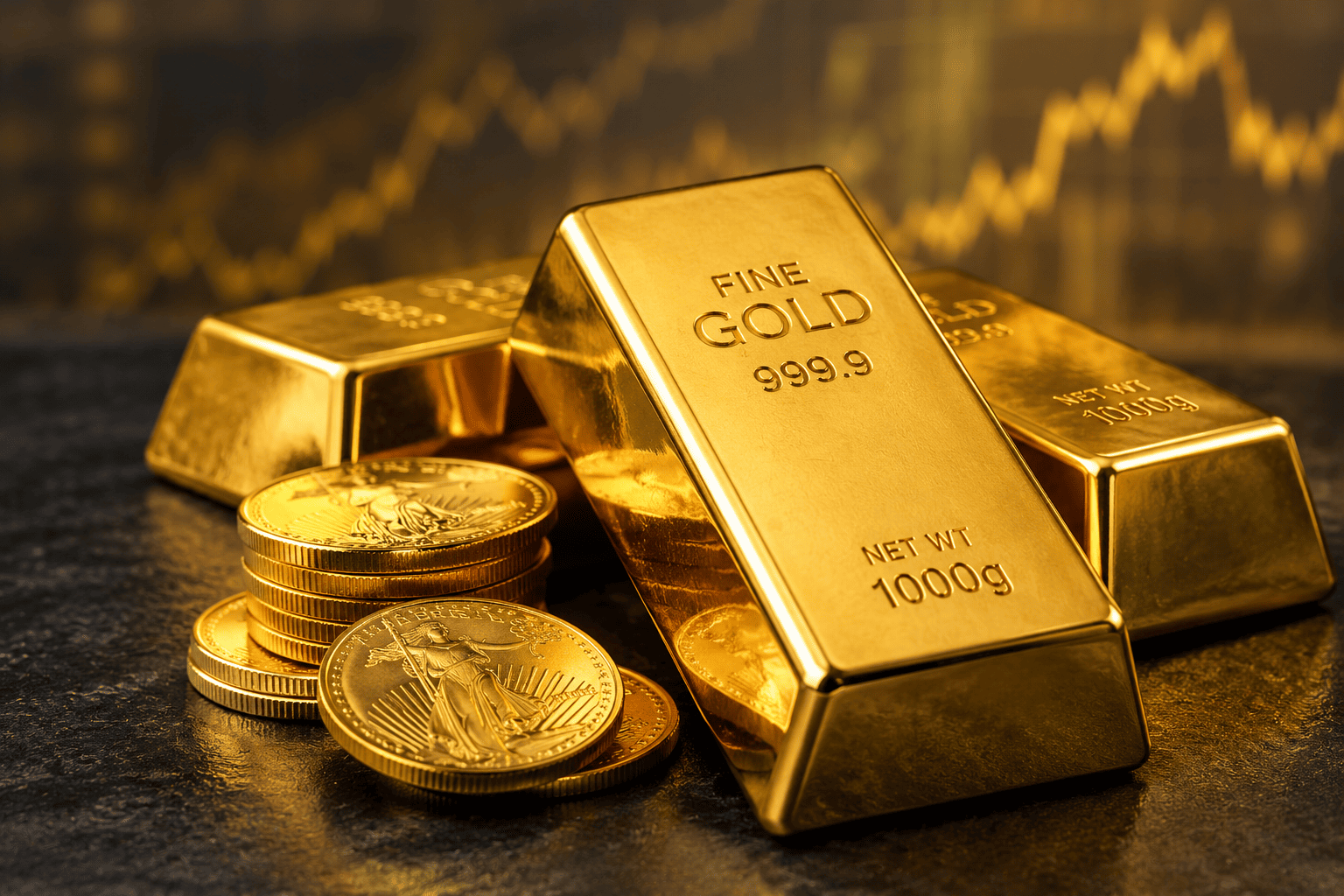
Gold traded near $3,995 an ounce in early Asian hours on Monday, hovering just below the $4,000 mark after suffering its steepest weekly decline since June. The metal dropped more than 4% last week, briefly touching $3,975.23 on Friday, as investors weighed the prospect of another US interest-rate increase against escalating Middle East tensions.
The Iran conflict has paradoxically weighed on gold, despite its traditional safe-haven appeal. Rather than driving sustained buying, the geopolitical turmoil has pushed energy costs higher, reviving inflation concerns and reinforcing expectations that the Federal Reserve may keep monetary policy tight.

Oil's Role in Gold's Slide
Oil prices are central to the paradox. Brent crude settled at $116.72 on Friday after attacks on Saudi energy infrastructure raised supply disruption fears. It eased to about $114.88 on Monday amid reports of fresh mediation efforts, but remained substantially higher following a 6.2% weekly advance.
The more expensive fuel becomes, the greater the threat that price pressures linger across the US economy. That, in turn, gives the Fed less freedom to loosen policy and increases the prospect of further tightening. Konstantinos Chrysikos of Kudo argued that the risk of damage to Middle Eastern energy infrastructure was reinforcing expectations of higher interest rates.
Rising yields make income-paying assets more competitive against gold, which offers no coupon or dividend.
Stock Market Selloff Adds Pressure
Monetary policy was not the only source of pressure. Last week's sharp declines in AI-linked shares also appeared to force some investors to sell gold to cover losses elsewhere.
That distinction matters. Selling bullion to meet margin calls is different from abandoning it because of a weaker long-term investment case. But forced disposals can accelerate a decline when prices are already testing important levels. Rich Checkan, president of Asset Strategies International, told Kitco News on Friday that falling equities had triggered liquidity demands, prompting investors to raise cash by selling gold. He nevertheless expects bargain hunters to return if Wednesday's Fed announcement delivers no unpleasant surprise.
Can $3,900 Be Avoided as the Fed Meets?
Friday's $3,975 low is now the first level to watch. A sustained move below it would strengthen the case for further selling, while a recovery through $4,000 would suggest that the initial breakdown has failed.
Praveen Singh, head of commodities at Mirae Asset Sharekhan, wrote in Business Standard on Friday that a decisive loss of $4,000 could bring $3,930 into focus. His warning puts the round-number $3,900 region on traders' radar, although it is not a firm price target.
The Fed is widely expected to leave rates unchanged on 28 October. What matters more is its assessment of the oil shock and the prospects for a December hike, for which markets were pricing an approximately 75% probability on Monday. September's US Personal Consumption Expenditures inflation data, due on Thursday, will then test whether price pressures are easing.
A hawkish Fed or hotter inflation could deepen losses; softer guidance and renewed buying might instead lift gold back towards $4,065–$4,075, where another test awaits.
This article is for informational purposes only and does not constitute financial advice.