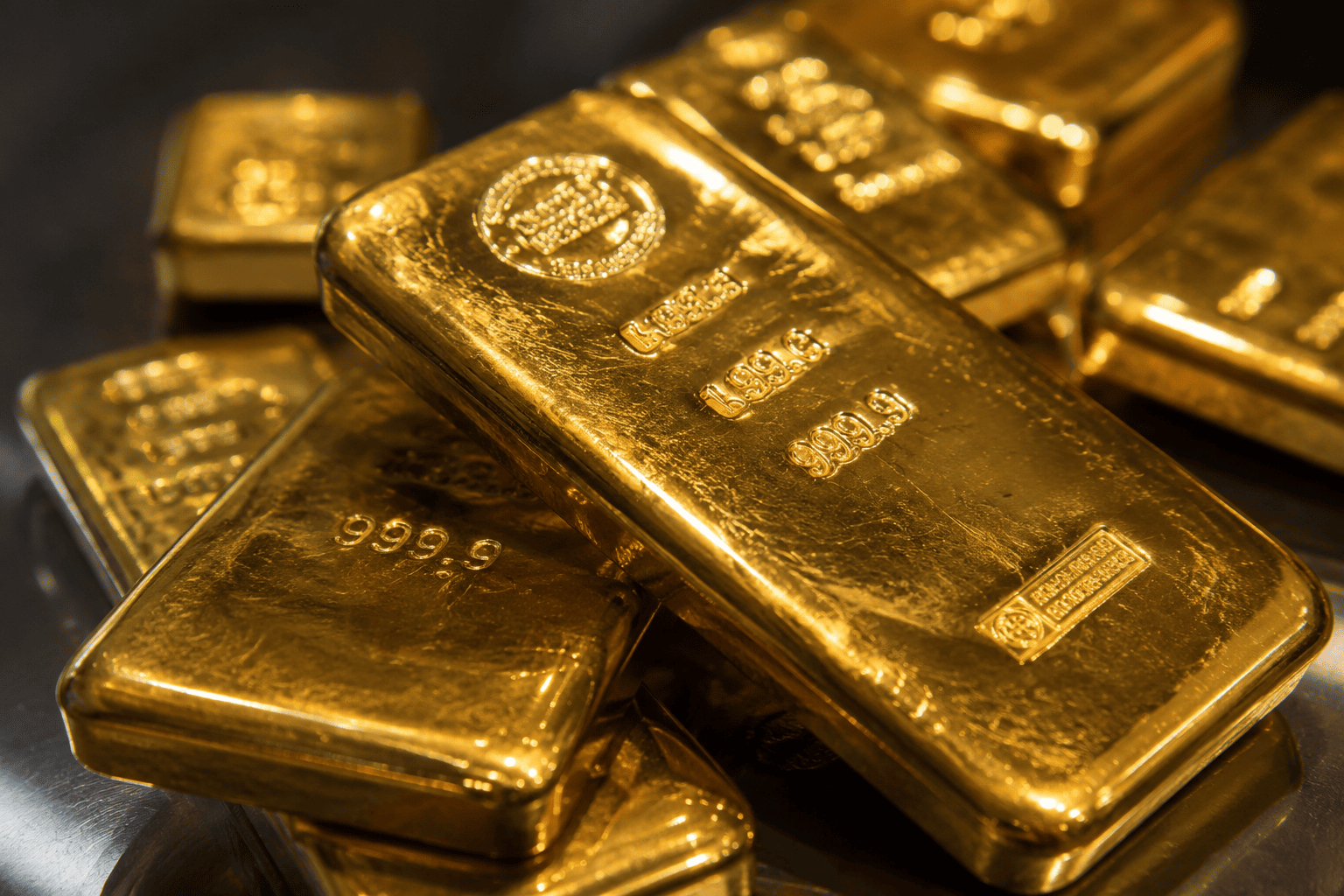
Gold prices stabilized in early US trading on Friday, hovering near levels reached after Thursday's sharp decline. Spot gold was trading around $4,020 per ounce, down 0.1% on the day, while silver fell more than 1% to $54 per ounce.
The precious metals complex remains under pressure as renewed Middle East tensions push crude oil higher, stoking inflation concerns and reinforcing expectations that the Federal Reserve will maintain a restrictive monetary policy stance. Brent crude briefly touched $115 a barrel, its highest in about five months, while West Texas Intermediate climbed above $100.

Despite heightened geopolitical risk and weakness in global equities, gold has struggled to attract sustained safe-haven buying. The conflict has created competing forces: while military escalation and potential energy supply disruptions can support defensive demand, higher oil prices also threaten to keep inflation elevated, potentially giving the Fed reason to keep rates higher for longer.
That dynamic has muted gold's traditional safe-haven response. Some investors have instead directed defensive flows toward US government bonds, while rising yields have added to the pressure on non-yielding bullion. Silver has faced heavier selling as investors weigh the impact of expensive energy and restrictive monetary policy on industrial activity.
Market sentiment remains shaped by persistent inflation risks and expectations for further tightening. Interest rate futures indicate the Fed is widely expected to leave rates unchanged at its October 27-28 meeting, while traders price in about a 78% probability of at least one additional rate increase by December.
UBS sees key support at $4,000
Despite the pressure from higher yields, UBS strategist Giovanni Staunovo said gold has shown resilience. "Still, we think gold has proved notably resilient to the sharp rise in yields," Staunovo wrote.
UBS expects the metal could retest the $4,000-an-ounce level in the near term, with longer-term buyers potentially stepping in if prices retreat further. "In the near term, gold may retest support around USD 4,000/oz, where we expect structural dip buyers to establish a floor," the strategist said.
"Overall, we believe the long-term investment case for gold remains positive," Staunovo added. "In our view, price pullbacks toward USD 4,000/oz offer opportunities to add exposure."
UBS's longer-term outlook is supported by several structural factors, including central banks diversifying their reserves, concerns about rising public debt and debt-servicing costs, expectations for a weaker US dollar over time, and continued strong buying from China. The bank continues to expect annual central bank gold purchases of between 750 and 1,000 metric tons, a source of underlying demand that could help cushion the market during periods of short-term volatility.
This article is for informational purposes only and does not constitute financial advice.