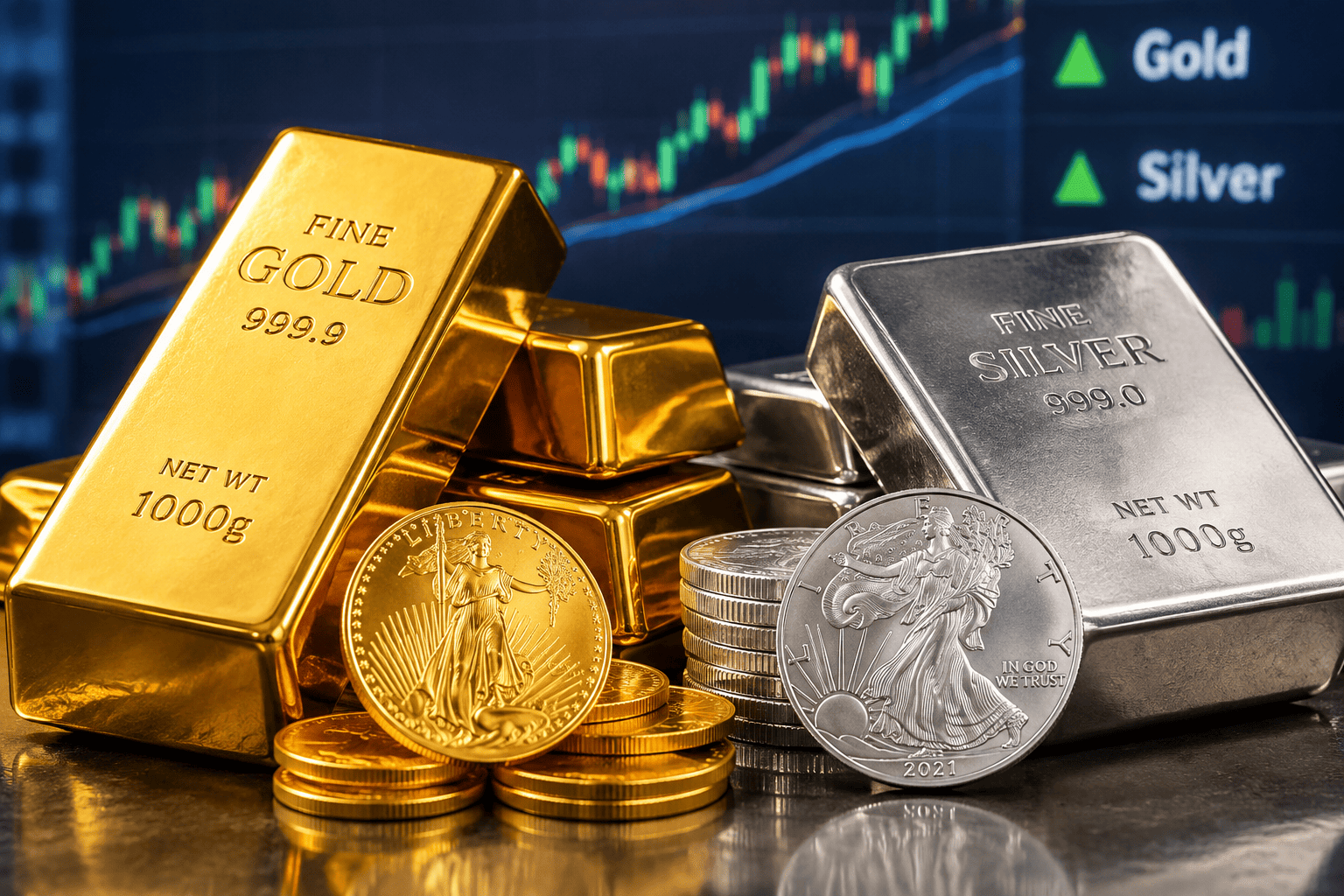
Gold prices extended their decline on Wednesday, slipping to a two-week low as a resurgent dollar and renewed expectations of Federal Reserve rate hikes outweighed lingering geopolitical uncertainty surrounding US-Iran peace talks. Spot gold dropped 1% to $4,067.51 an ounce in early Asian trade, while August futures fell 1.6% to $4,083.90. The broader precious metals complex also weakened, with silver, platinum, and palladium all moving lower.
Dollar Strength Pressures Bullion
The dollar climbed to a more than one-year high as traders increased bets that the Federal Reserve may need to raise interest rates again this year. This shift in monetary policy expectations has been the dominant driver behind gold's recent retreat. Since gold pays no income, higher yields and a stronger dollar raise the opportunity cost of holding the metal, making it less attractive to investors. The dollar's rally also makes gold more expensive for buyers using other currencies, potentially cooling physical and investment demand.

According to a macro analyst cited in the original report, the latest pressure reflects a market that has moved from war-driven inflation fears to a rates-driven narrative. Bonds weakened, yields moved higher, the dollar advanced, and gold lost ground as a result.
Iran Uncertainty Provides a Floor
Geopolitical risks have not disappeared entirely. President Donald Trump stated that Iran had accepted open-ended nuclear inspections, but Tehran denied making such a concession. The two sides also appeared to differ over access to frozen overseas funds, leaving the peace deal looking fragile. However, markets have started to remove some of the war premium that had supported bullion earlier this year. Gold is down about 23% since the US-Israel conflict with Iran began in late February, suggesting that investors are now more concerned about sticky inflation and policy tightening than immediate safe-haven demand.
PCE Data as the Next Catalyst
The next major test for gold comes with Thursday's release of the US personal consumption expenditures (PCE) report, the Fed's preferred inflation gauge. A stronger-than-expected reading would reinforce expectations of higher rates and could push gold toward the psychologically important $4,000 level. Analysts view this area as a key technical support; if it breaks, attention may shift toward $3,800, with a deeper correction possible if the dollar rally extends.
The dollar's strength has been a persistent headwind for commodities, and gold is no exception. For now, bullion remains caught between two forces: geopolitical unease that limits downside, and a hawkish Fed repricing that keeps rallies under pressure.
This article is for informational purposes only and does not constitute financial advice.