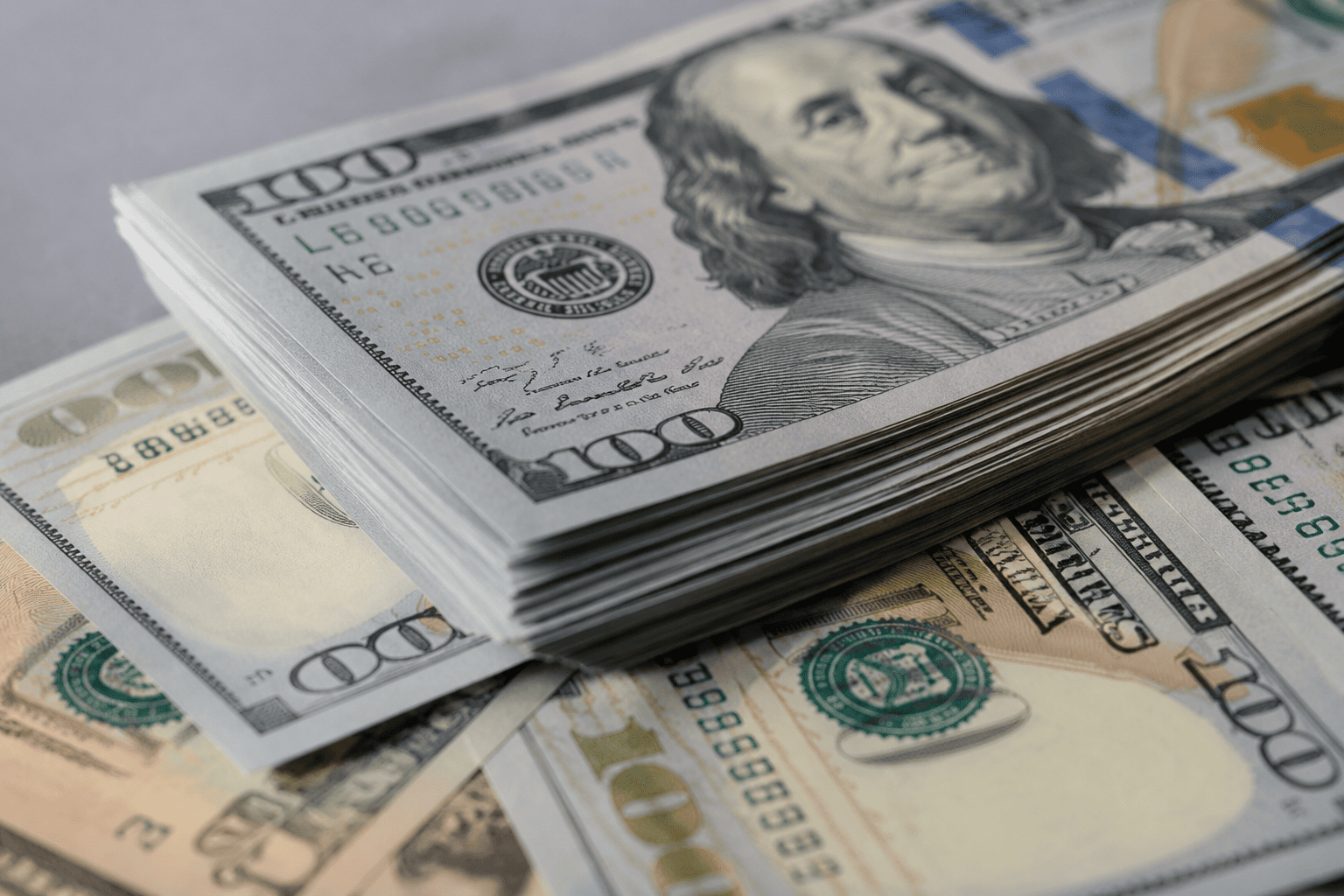
The US dollar held firm on Tuesday, trading near a one-year high as market participants increasingly priced in the likelihood of Federal Reserve rate hikes later this year. The dollar index hovered around 101.06, close to last week's peak of 101.12, as rising US Treasury yields and hawkish Fed expectations continued to support the greenback.
Two-year Treasury yields remained elevated near a 16-month high, reflecting growing conviction among traders that the Fed may tighten policy. Fed funds futures now imply a 75% probability of a rate increase by September, a shift that has been reinforced by recent economic data showing continued resilience. Major financial institutions, including BofA Global Research and Deutsche Bank, have revised their earlier forecasts and now anticipate a rate hike within the year.

The Japanese yen remained under significant pressure, trading near 161.62 per dollar after briefly weakening to 161.93 on Monday. A move above 161.96 would push the currency to its weakest level since 1986, keeping intervention fears alive. Japanese Finance Minister Satsuki Katayama held an online meeting with US Treasury Secretary Scott Bessent, with discussions reportedly focusing on policy responses to the yen's historic weakness. However, Japanese authorities have not yet provided clear signals on potential market intervention, leaving traders on alert.
Oil prices extended their decline as progress in US-Iran peace talks eased concerns about supply disruptions in the Gulf region. Investors are also awaiting clearer signs of a resumption in crude flows through the Strait of Hormuz. Lower oil prices provided some relief for the Indian rupee, which opened flat against the dollar. The USD/INR pair held near 94.70, with a firm dollar capping upside while softer crude prices limited downside pressure.
The euro remained near a three-month low at $1.1422, after European Central Bank President Christine Lagarde downplayed concerns about second-round inflation effects. Sterling traded at $1.3234, broadly steady following the resignation of British Prime Minister Keir Starmer, which paved the way for an orderly transfer of power. For more on the UK political landscape, see our coverage of UK Leadership Shift: Burnham's Fiscal Plans and Chancellor Pick in Focus as Starmer Steps Down.
Among risk-sensitive currencies, the Australian dollar fell 0.5% to $0.6966, its weakest level since early April, while the New Zealand dollar also weakened to around $0.5693. The broad strength of the dollar, driven by hawkish Fed bets, continued to weigh on major currencies and emerging market assets alike.
The dollar's resilience has also impacted commodity markets beyond oil. For instance, Platinum Faces Sixth Weekly Loss as Hawkish Fed, Strong Dollar Offset Supply Tightness, highlighting the broader trend of dollar strength capping gains in raw materials. Similarly, Cocoa Prices Retreat from 5-Week High as Dollar Strength Caps Gains; Key Support at $3,937.
Looking ahead, market attention remains fixed on the Fed's policy trajectory and any further signals from central bank officials. The combination of a firm dollar, elevated Treasury yields, and geopolitical developments in the Middle East will likely continue to drive currency and commodity markets in the near term.
This article is for informational purposes only and does not constitute financial advice.