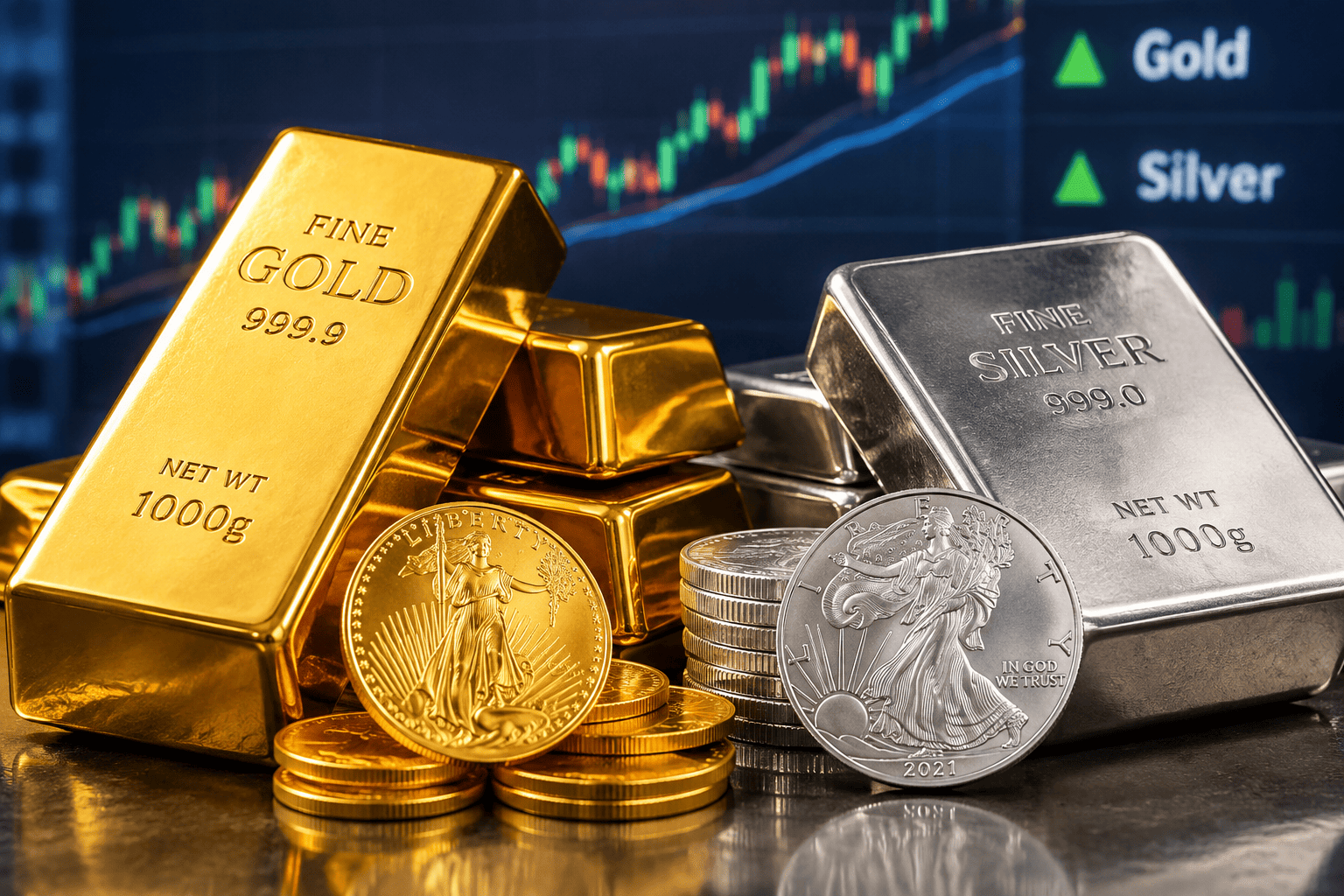
Precious metals faced heavy selling pressure during Asian trading on Wednesday, with silver leading the decline to a fresh multi-month low as a strengthening US dollar and shifting Federal Reserve rate expectations weighed on non-yielding assets.
Silver dropped to an intraday low of $60.74, its weakest level in over six months, before recovering slightly to trade near $61.00. Gold also extended its recent losses, with spot gold falling 1% to $4,067.51 an ounce after touching its lowest point since June 11. August gold futures declined 1.6% to $4,083.90. Platinum and palladium moved lower as well, indicating broad-based weakness across the metals complex rather than pressure isolated to a single commodity.

Fed Rate Expectations Shift Sharply
The selloff in precious metals coincided with a significant reassessment of US monetary policy. According to the CME FedWatch tool, the probability of the Federal Reserve raising interest rates this year has climbed to nearly 86%. This marks a sharp reversal from earlier expectations that had priced in two rate cuts before the onset of the Middle East conflict, which contributed to stronger inflationary pressures.
Higher interest rates typically reduce the appeal of precious metals, which do not offer yield. Rising borrowing costs and firmer Treasury yield expectations make yield-bearing assets more attractive, prompting investors to rotate out of gold and silver. The latest move suggests the market's focus has shifted from geopolitical uncertainty alone to the implications of a more hawkish Fed path. While gold continues to find some support from uncertainty surrounding the US-Iran peace process, that support has proven insufficient to offset the impact of a stronger dollar and the repricing of policy risk.
Dollar Strength Adds Pressure
The US dollar's rally added another layer of pressure. The US Dollar Index, which measures the greenback against six major currencies, rose 0.1% to near 101.50, its highest level in more than a year. A stronger dollar makes precious metals more expensive for holders of other currencies, reducing demand and weakening prices. For silver, the combination of hawkish Fed expectations and dollar strength created a particularly challenging environment, with the metal continuing to slide as investors reassessed the near-term risk-reward balance.
For further context on the dollar's strength, see our analysis: Dollar Holds Firm Near 101 as Hawkish Fed Bets Rise; Yen Tests 162, Oil Eases.
PCE Inflation Data in Focus
Investors are now looking ahead to the release of the US Personal Consumption Expenditure Price Index data for May, due on Thursday. The core PCE reading, the Fed's preferred inflation gauge, is expected to rise to 3.4% year-on-year from 3.3% in April. A stronger-than-expected reading could reinforce expectations that the central bank will keep policy tighter for longer, potentially maintaining pressure on precious metals.
Silver Remains Technically Weak
Silver's technical picture points to continued near-term weakness. XAG/USD remains well below its 20-day Exponential Moving Average of $68.09, underscoring the prevailing bearish bias. Momentum indicators also show persistent downside pressure. On the upside, the 20-day EMA at $68.09 remains the first major resistance level. For more on silver's technical setup, see: Silver Price Nears Death Cross as US Inflation Data Looms.
The broader precious metals selloff also reflects a rotation out of non-yielding assets as the dollar strengthens and rate expectations rise. Platinum, which has faced its own headwinds, is also under pressure. For more on platinum's recent performance, see: Platinum Faces Sixth Weekly Loss as Hawkish Fed, Strong Dollar Offset Supply Tightness.
This article is for informational purposes only and does not constitute financial advice.