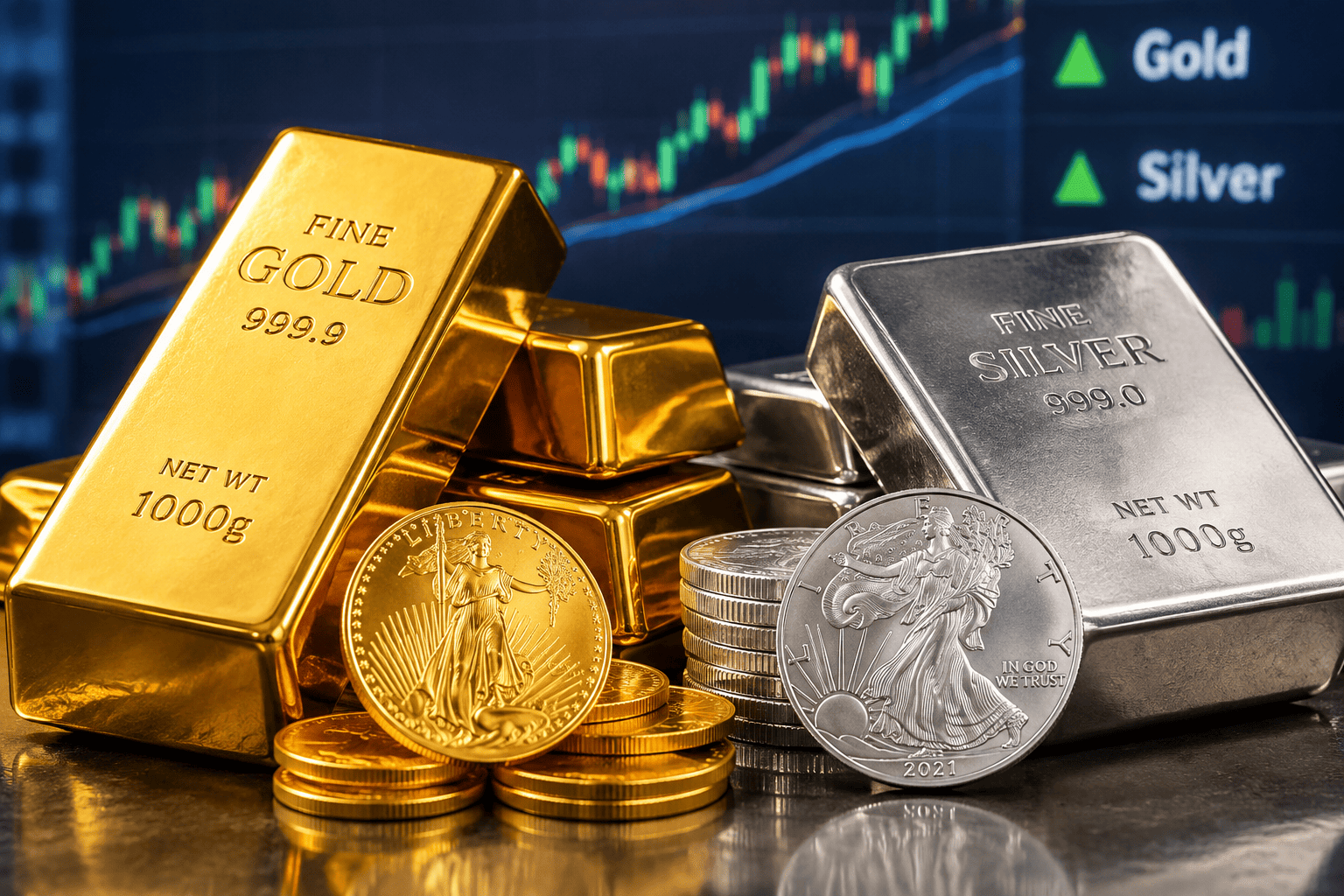
Gold prices climbed on Wednesday, approaching the $4,400 mark, as renewed geopolitical tensions revived safe-haven demand. Investors now await the release of US inflation data that could determine whether the metal's August rebound has further momentum.
Spot gold gained 0.5% to around $4,387 an ounce during Asian trading, holding near the two-month high reached a day earlier. The most-active US futures contract settled Tuesday at $4,383, marking a third consecutive session of gains. So far in August, gold has advanced more than 8%, rebounding sharply from the $4,000 area as softer labor data reduced expectations for an immediate Federal Reserve rate hike.

Geopolitical risks add support
The latest move comes as geopolitical risks broaden beyond the US-Iran negotiations that have dominated markets for months. A deadly Houthi attack on an Egyptian-owned vessel in the Red Sea and separate US military action against a ship heading toward Iran raised concerns about a wider escalation around major Middle Eastern shipping routes. North Korea also launched a ballistic missile on Wednesday, adding another flashpoint for markets.
Unlike oil, where these developments primarily raise questions about supply losses, gold is reacting through investor demand for defensive assets. That bid is reinforced by investment flows. Global physically backed gold exchange-traded funds attracted about $3 billion in July, according to the World Gold Council, reversing some of the weakness seen earlier this year. ETF holdings increased by 23 tonnes to 4,068 tonnes, while assets under management reached roughly $530 billion.
The World Gold Council expects investment to remain the main driver of gold-demand growth through the rest of 2026, with Asian and over-the-counter buying becoming increasingly important. Central banks are also expected to remain significant purchasers.
CPI as a pivotal catalyst
The more immediate catalyst arrives at 8:30 a.m. ET on Wednesday, when the Bureau of Labor Statistics releases July consumer prices. Economists expect headline CPI to rise 0.1% from June, with annual inflation slowing to about 3.4% from 3.5%. The report follows last week's unexpectedly weak employment figures, which reduced confidence that the Fed needs to tighten again in September.
That creates a relatively straightforward test for bullion. Softer inflation would strengthen the case for keeping rates unchanged, potentially pulling Treasury yields and the dollar lower. Both outcomes generally improve the relative appeal of gold because the metal pays no interest. A hotter report would present the opposite problem. The recent rebound in energy costs will not be fully captured in July CPI, but persistent oil strength could lift future inflation expectations and make policymakers more cautious. For context, oil-driven inflation fears have already been a market theme.
Technical resistance near $4,435
The rally has also brought gold into an important resistance area. Forex.com analyst Fawad Razaqzada sees roughly $4,365 to $4,425 as a key zone that bulls need to overcome to confirm that the recovery is developing into something more durable. Gold briefly reached about $4,435 on Tuesday before giving back part of the advance.
A sustained move through $4,425-$4,435 would put the psychologically important $4,500 level back into focus. Analysts see scope for gold to challenge $4,500 if the current combination of lower real-rate expectations, central-bank demand, and geopolitical uncertainty persists. Failure to clear that zone would leave the rally vulnerable to consolidation, with $4,300 emerging as a more important downside reference after gold's rapid August advance.
Investors are also watching broader market dynamics. For instance, long-duration Treasury ETFs have been under pressure as US debt levels climb, which could influence gold's relative appeal. Meanwhile, bitcoin's struggle at resistance highlights the mixed sentiment across asset classes.
This article is for informational purposes only and does not constitute financial advice.