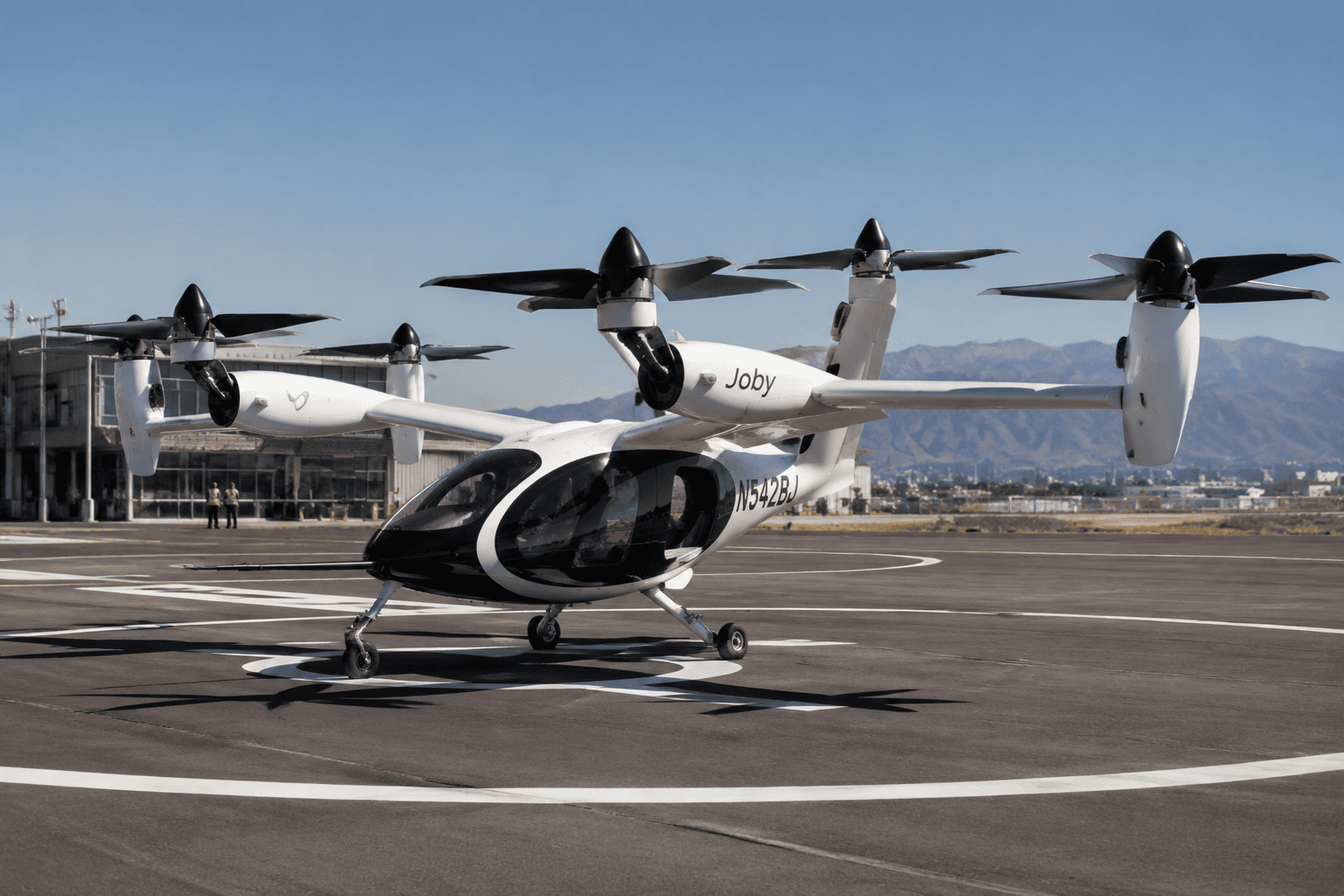
Shares of electric vertical takeoff and landing (eVTOL) pioneers Joby Aviation and Archer Aviation have suffered steep declines in 2025, erasing billions in market value even as both companies near the start of commercial operations. Joby Aviation has dropped 48% year to date and 60% over the past 12 months, while Archer Aviation has fallen 37% and 57%, respectively, according to TradingView data.
The sell-off reflects growing investor skepticism about the path to profitability, persistent share dilution, and the high cash burn rates typical of pre-revenue startups. Despite significant progress in aircraft development, regulatory approvals, and commercial partnerships, the market is pricing in a longer and more uncertain road to sustainable earnings.
Commercialization on the Horizon
Both companies are targeting the launch of commercial eVTOL services later this year or early 2026. Archer's Midnight aircraft is designed to carry four passengers up to 160 kilometers at speeds between 241 and 322 km/h, while Joby's S4 offers a 241-kilometer range. The industry is projected to grow at a compound annual rate of 12.3% through 2035, reaching a $5 billion market size, per Markets and Markets.
Joby recently finalized an electric air taxi agreement with Virgin Atlantic and has similar partnerships with Delta Air Lines, Uber, and authorities in Saudi Arabia and Dubai. Archer has secured deals with United Airlines for up to 200 aircraft, Ethiopian Airlines, and Southwest. Toyota is Joby's largest shareholder with 128 million shares, while Stellantis is a major backer of Archer.
Why Shares Are Falling
Despite these milestones, investor concerns center on three key issues: dilution, profitability timelines, and balance sheet sustainability. Archer's outstanding shares have ballooned from 110 million in 2021 to over 623 million today, while Joby's have risen from 300 million to more than 560 million. This dilution has weighed heavily on share prices.
Short interest has climbed as a result. Joby currently has a short interest of 10%, and Archer's stands at 14.28%, indicating that many traders expect further declines. Even with Joby holding $2.4 billion in cash and Archer $1.8 billion, analysts warn that both companies will likely need to raise additional capital through equity or debt before achieving profitability.
For context on how capital-intensive emerging technology sectors can be, see our coverage of Nvidia-backed neocloud stocks tumbling on rising costs.
Analyst Targets vs. Market Reality
Wall Street remains broadly optimistic. Cannacord Genuity has a $11.50 target on Joby, Morgan Stanley sees it rising to $13, and Needham and Oppenheimer both target $18. For Archer, the consensus target is $11.80, with Canaccord, Needham, and Goldman Sachs setting targets of $12, $9, and $11, respectively. Those targets imply significant upside from current levels, but the market has so far ignored these bullish calls.
The next major catalyst will be the companies' quarterly earnings reports in early August. Joby is scheduled to report on August 5, followed by Archer on August 7. Investors will be watching for updates on cash burn, commercialization timelines, and any new partnership announcements.
For a broader view of how high-growth stocks are faring amid shifting market dynamics, see our analysis of chip stocks rallying ahead of big tech earnings.
While the eVTOL sector holds transformative potential, the current sell-off underscores the gap between long-term vision and near-term financial realities. Until these companies demonstrate a clear path to revenue and profitability, volatility is likely to persist.
This article is for informational purposes only and does not constitute financial advice.