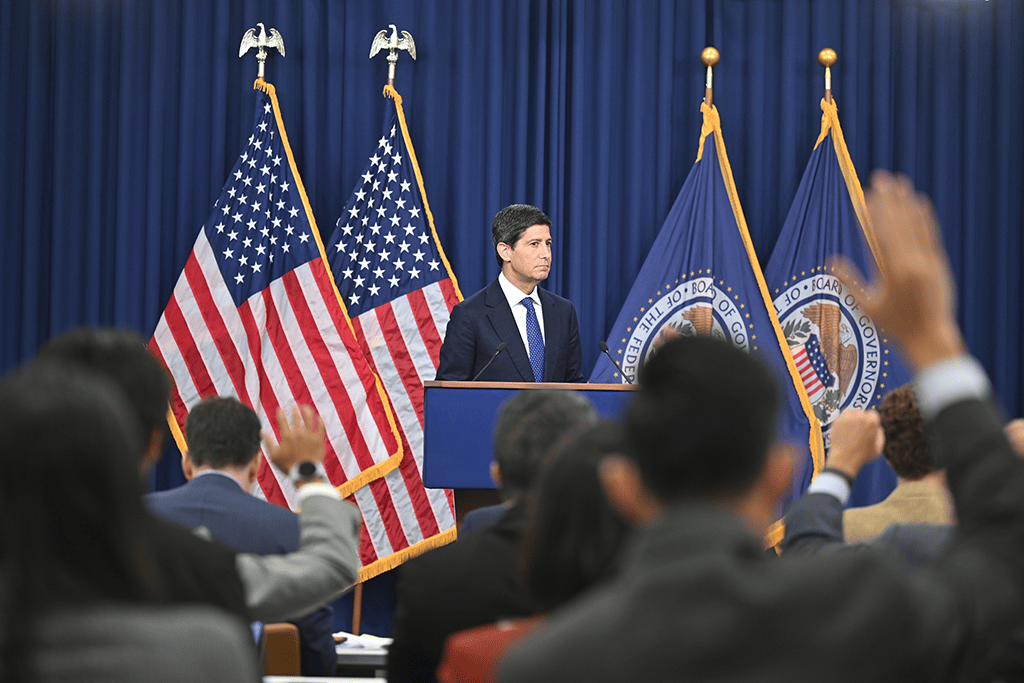
The Federal Reserve's decision on Wednesday to raise its benchmark interest rate by 25 basis points to a target range of 3.75%-4% marks its first increase since July 2023. The move was widely anticipated, but the central question now is whether this is the beginning of a new tightening cycle or a one-off adjustment.
The Fed's latest projections suggest more hikes are likely, with 16 of 18 officials indicating at least one additional increase this year. However, market reactions have been mixed, with stocks initially falling before rebounding the next day. The Dow dropped 1.21% on Wednesday, while the S&P 500 lost 0.45%, but by Thursday the Dow had gained 0.62%, the S&P 500 rose 1.14%, and the Nasdaq jumped 1.69%.

Inflation remains the focus
Fed Chair Warsh emphasized that inflation remains elevated and that the rate hike supports a timelier return to the 2% target. The statement noted solid economic expansion, resilient domestic spending, strong productivity, and robust capital investment. This combination suggests the Fed is prioritizing inflation control over growth concerns.
Robert R. Johnson, a finance professor at Creighton University, believes this is unlikely to be a one-and-done move. He points to futures markets pricing a 55% probability of another hike after the October meeting. "To paraphrase James Carville, 'it's inflation, stupid!'" Johnson said. "The economy has been very resilient, and employment is much less of an issue than inflation."
Eugenia Mykuliak, founder of B2PRIME Group, agrees, stating that the Fed chair was clear that inflation is too high for too long, making another hike likely.
Supply-side constraints
However, some analysts argue that the Fed's tools may be limited. J.D. Pisula, CEO of Accolade Advisory, notes that supply shocks, such as those from geopolitical conflicts, cannot be addressed by monetary policy alone. "There is some risk that the Fed might negatively impact aggregate demand when the real issue is the supply shock," he said.
Energy prices remain a key uncertainty. A persistent oil shock could keep inflation elevated even as tighter policy slows interest-sensitive sectors. Morgan Stanley's chief US economist, Michael Gapen, suggests that a single 25-basis-point hike would not fundamentally alter the outlook, but if inflation moderates, the Fed might find that another hike is no longer justified, making September an "ex-post one and done."
The case for a pause
ING is making the case for a one-off hike, pointing to weaker labor market trends, 3% wage growth, moderating shelter inflation, and tariff-related pressures being absorbed. They expect energy prices to decline later in the year, which could help inflation move lower. If that happens alongside continued labor market softness, the case for another hike weakens.
ING draws parallels to the late 1990s, when the Fed delivered a single "risk management" hike in 1997 before a prolonged pause. The bond market, however, remains cautious, with the 10-year Treasury yield reaching 5% before falling back to 4.939%.
As investors weigh these signals, the debate over whether the Fed's hike is one-and-done or the start of a cycle continues. The upcoming jobs data and inflation reports will be crucial in determining the next move. For more on market reactions, see our coverage on Asian markets' response and bitcoin's price action.
This article is for informational purposes only and does not constitute financial advice.

