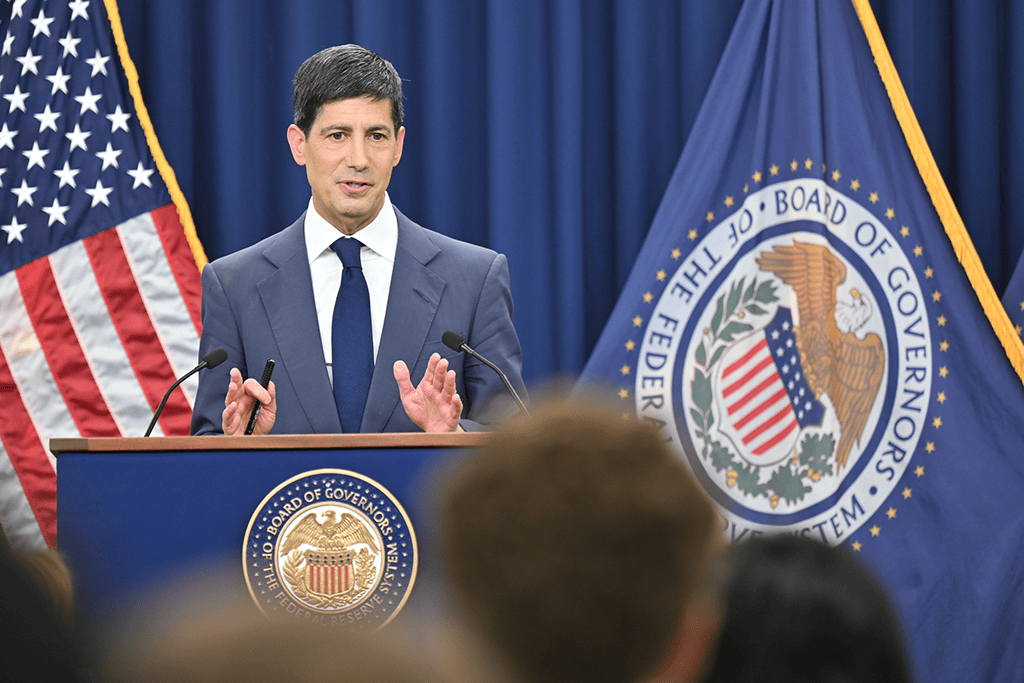
The Federal Reserve is widely expected to raise its benchmark interest rate by 25 basis points on Wednesday, following hotter-than-expected inflation and rising energy prices. According to CME FedWatch, there is about a 90% probability of a quarter-point hike at the September 15-16 FOMC meeting. Major banks including Goldman Sachs, J.P. Morgan, HSBC, and Deutsche Bank are all forecasting such a move.
Given the near-certainty of the hike, the market's attention is shifting to what comes after. The key question is whether the Fed's guidance and updated economic projections will signal further tightening, or if the move is a one-off adjustment. A hawkish tone could push Treasury yields and the dollar higher, pressuring rate-sensitive stocks. Conversely, a well-communicated hike might reduce uncertainty, stabilize bonds, and allow equities to focus on strong corporate earnings.

Inflation and oil are driving the Fed debate
The recent shift toward tighter policy follows stronger U.S. consumer and producer inflation readings for August, alongside a renewed increase in oil prices amid Middle East tensions. HSBC economist Ryan Wang noted that "lack of inflation progress has tipped the balance," backing a September hike. J.P. Morgan economists led by Michael Feroli also turned more hawkish, saying rising bond yields, higher energy prices, and firm inflation made a September hike "more likely than not."
David Russell, Global Head of Market Strategy at TradeStation Group, highlighted that energy and tariff-related price pressures are increasingly important. "Higher diesel means higher prices for many goods and services," he said. "Last week's PPI report already showed inflation spreading from fuel, and that is likely to spread as businesses raise prices to cover costs. An inflationary cycle is taking hold. Bigger forces are leading, and the Fed is following."
Investors will be looking for evidence that officials believe inflation is moving back toward the 2% target quickly enough. Russell expects Fed Chair Kevin Warsh to reinforce the hawkish message. "Kevin Warsh has laid the groundwork for a rate hike with hawkish rhetoric, and investors expect him to deliver," Russell told Invezz. "The market will anticipate more stern messaging and higher inflation estimates in the SEP. The dot plot might be less important given fast-moving events in the Middle East and Warsh's own skepticism toward forward guidance."
Treasury market may matter more than the hike
The bond market could provide a crucial signal of how investors interpret the decision. The 10-year Treasury yield briefly moved above 5% on Tuesday, reaching 5.041%, its highest level since 2007. J.P. Morgan argues that the rise in long-term yields is no longer simply a Federal Reserve story. Since the July FOMC meeting, the biggest contributor to higher Treasury yields has been a rise in the term premium, followed by robust economic activity, while more hawkish monetary policy has not been a meaningful driver.
Energy prices are adding to that pressure. J.P. Morgan noted that Brent crude has risen about 13% since the July meeting, while diesel and jet fuel have risen 50% and 60%, respectively. This makes the reaction at the long end of the Treasury curve especially important. In a September 11 Goldman Sachs discussion, Jonathan Shugar, head of cross-asset sales, described the back end of the rate curve as one of the largest market risks, citing global fiscal deficits and heavy AI investment. Goldman analysts estimate hyperscaler capital expenditure at about $800 billion this year and $1.2 trillion next year.
Shugar added that equities can tolerate higher rates, but "it's really just the pace of change that has the biggest impact." A modest increase in short-term rates that is already priced in may have limited impact on stocks, but a fresh jump in long-term yields could put more pressure on valuations. Recent market moves reflect this sensitivity: stocks fell sharply as the 10-year yield topped 5%, and long-duration ETFs have dropped to multi-month lows.
Equities face competing signals from rates and growth
The expected equity reaction is far from unanimous. Brian Allen, Chief Investment Officer at C.S. McKee, said the market impact of a rate hike would depend on the Fed maintaining a hawkish tone and showing broader committee support for higher rates. "A rate hike this year is necessary, but its credibility and impact depend on the Fed Chair maintaining a hawkish tone and the revised Summary of Economic Projections (SEP) showing broader committee support for higher rates," Allen told Invezz.
Allen expects that combination to stabilize and flatten the yield curve, modestly lower longer-maturity bond yields and mortgage rates, support the U.S. dollar, and slow Treasury sales by foreign investors and central banks. He also expects U.S. equities to rally on the news, with small-cap and large-growth stocks performing particularly well. That view aligns with the argument that markets can absorb higher policy rates if economic growth and corporate investment remain resilient.
UBS echoed that sentiment, saying the market reaction to a Fed hike would depend heavily on the economic backdrop. In a September 14 note, UBS said Fed hikes alone do not necessarily derail equity markets if growth holds up. However, the combination of higher long-term yields and rising energy costs could create headwinds, as seen in recent sessions where oil topped $102 and yields neared 5%.
Ultimately, the Fed's decision is likely to be a sideshow compared to the bond market's reaction. Investors should watch the 10-year yield and the term premium for clues about the sustainability of the current equity valuations. As some strategists warn, a continued rise in long-term yields could pose a significant risk to stocks, especially those with high valuations.
This article is for informational purposes only and does not constitute financial advice.

