The Federal Reserve delivered a widely expected 25-basis-point rate hike on Wednesday, lifting its benchmark rate to a target range of 3.75% to 4%, and signaled that further tightening could be on the horizon as inflation forecasts were revised upward. The unanimous 12-0 decision by the Federal Open Market Committee (FOMC) came alongside updated projections showing that most officials expect at least one more increase.
In its statement, the FOMC noted that economic activity is expanding at a solid pace, supported by resilient consumer spending, strong productivity gains, and robust capital investment. However, inflation remains elevated, and the central bank reiterated its commitment to returning inflation to its 2% objective. The latest projections show 16 of 18 participants anticipate at least one additional rate hike, with four seeing the possibility of two more moves.

Fed Chair Kevin Warsh, who has not submitted an individual dot since taking office, emphasized that monetary policy cannot directly influence oil prices or address supply disruptions. "We can't affect any individual price, whether it be oil prices, whether it be foodstuffs at the grocery store," Warsh said during his press conference. He added that the Fed would aim to prevent changes in relative prices from spilling into broader inflation.
The updated projections also raised near-term inflation expectations, with headline PCE inflation now seen at 3.7% for 2026 and core PCE at 3.4%, both 0.1 percentage point higher than the June forecasts. The Fed expects inflation to return to its 2% target by 2029, with headline PCE projected at 2.3% and core PCE at 2.5% in 2027.
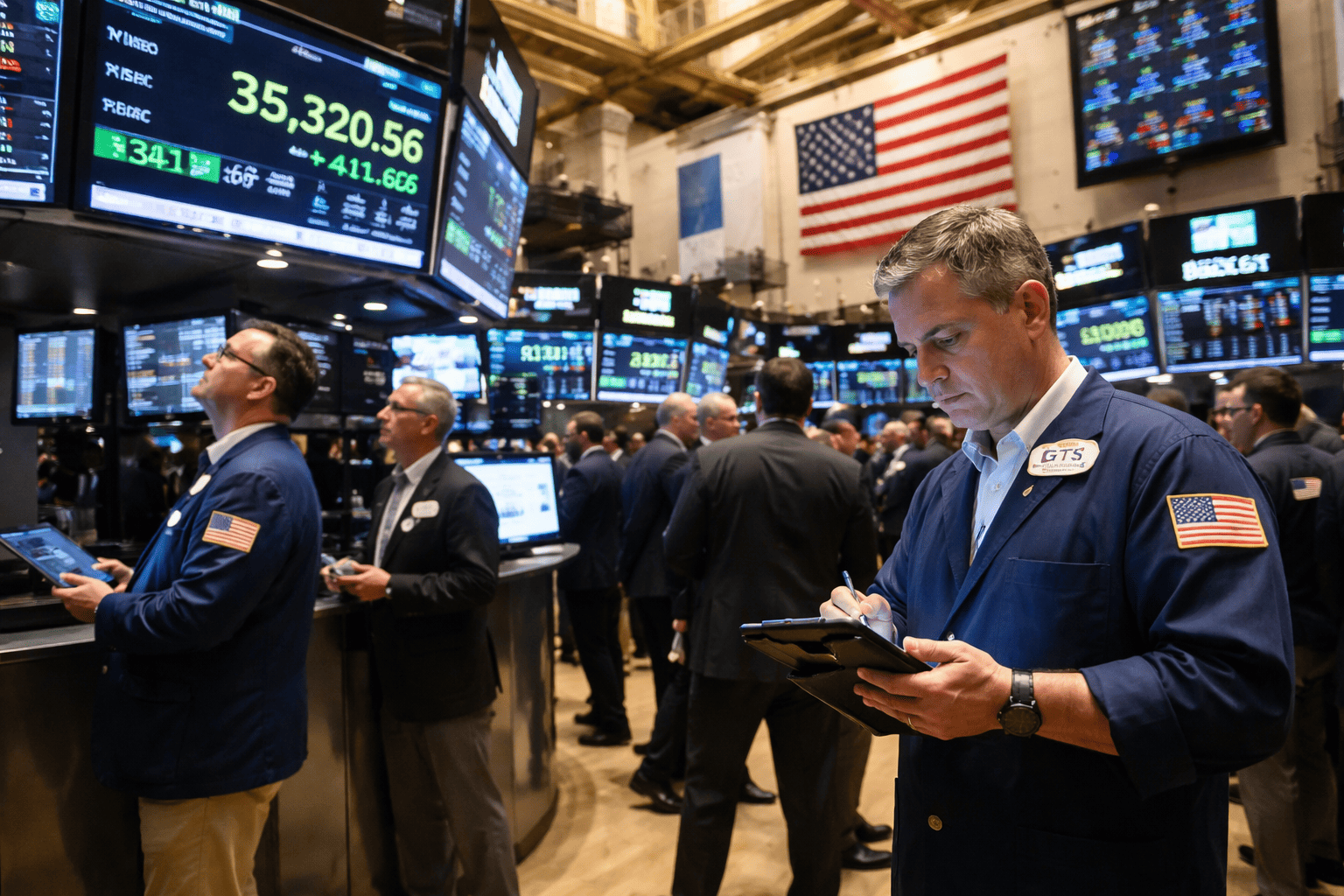
US stocks ended lower following the decision and Warsh's remarks. The Dow Jones Industrial Average dropped 630 points, or 1.2%, while the S&P 500 fell 0.5%. The Nasdaq Composite finished near flat after all three major indexes had traded higher earlier in the day. Financial stocks were among the biggest decliners, with Bank of America and Wells Fargo each falling 3%, while American Express and Goldman Sachs also declined. The 10-year Treasury yield moved back above 5% during Warsh's comments, reflecting investor focus on persistent inflation.
In corporate news, Intel shares gained after a report that the company was in talks with South Korean memory chipmaker SK Hynix to build semiconductors in the US. This development comes amid ongoing chip stock volatility and broader questions about AI demand.
Oil prices retreated as concerns over Middle East supply disruptions eased. Reports indicated that Saudi Arabia is offering additional crude cargoes to Asian refiners through ship-to-ship transfers off Oman's Sohar port, according to Reuters. Brent crude fell 3% to $105.45 a barrel, while West Texas Intermediate declined 3.62% to $102. UBS analyst Giovanni Staunovo noted that the reports of Saudi exports through the Gulf suggested worries about the scale of the disruption were diminishing. Oil also faced pressure from US inventory data, which showed a smaller-than-expected draw of about 640,000 barrels last week.
Gold reversed earlier gains after the Fed's decision, as the dollar strengthened and higher interest rates reduced the appeal of non-yielding bullion. Spot gold fell 0.69% to $4,263.22 an ounce after reaching a session high of $4,365.57. US gold futures for December delivery settled 0.65% lower at $4,304.50. Silver dropped 1.7% to $62.57 an ounce, platinum declined 2.3% to $1,735.33, and palladium fell 1.5% to $1,269.95.
Market participants now look ahead to the Fed's next moves, with the signals of more tightening likely to keep volatility elevated across asset classes. The high yield environment continues to pose challenges for equities, particularly those with stretched valuations.
This article is for informational purposes only and does not constitute financial advice.

