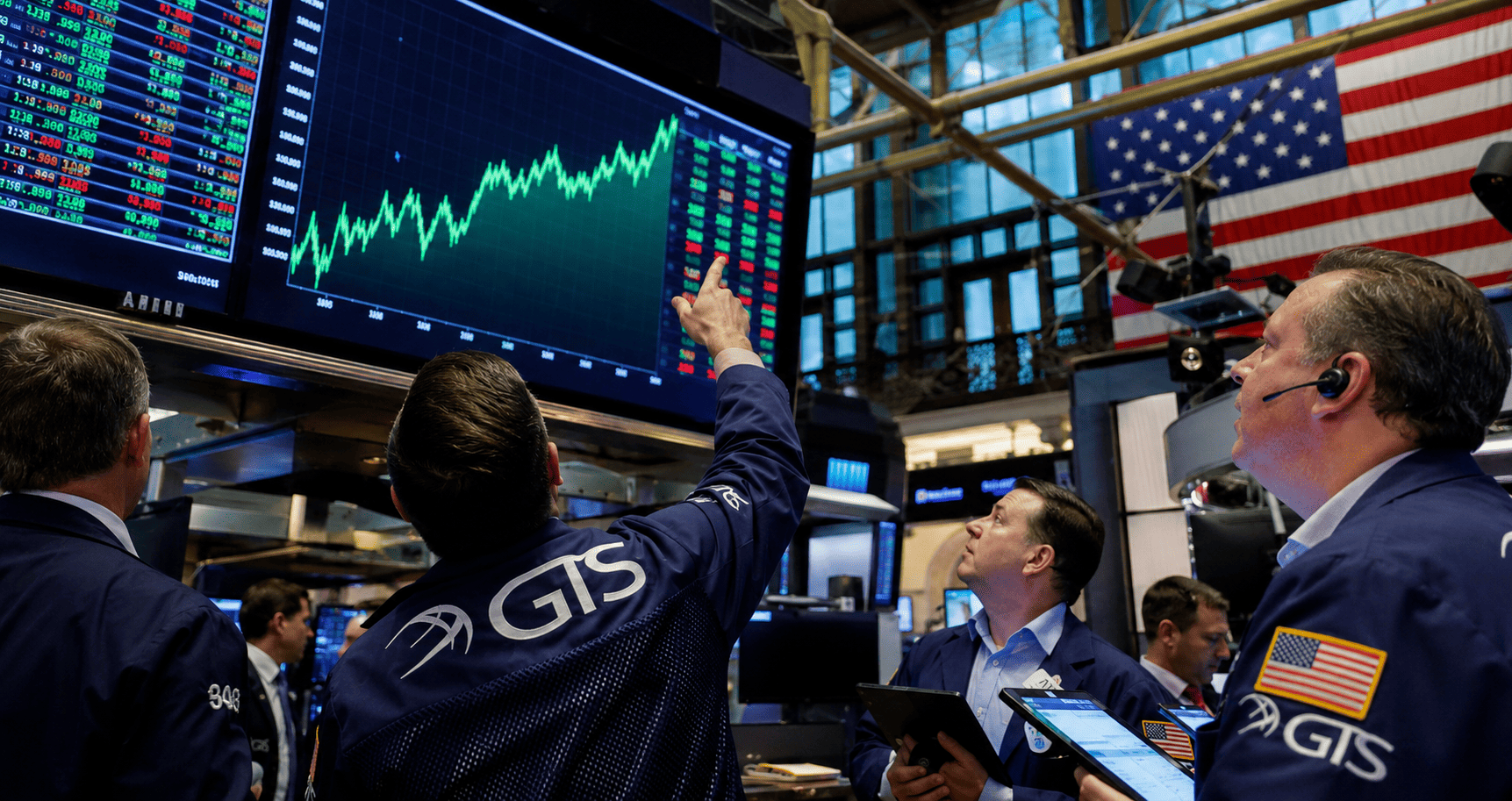
Evercore ISI has raised its year-end target for the S&P 500 to 9,000, a level that would represent a roughly 15% gain from current prices. In a research note released Monday, strategist Julian Emanuel argued that the current bull market still has “ample” room to run, despite the index already climbing more than 20% from its 2026 low.
Emanuel’s optimism is rooted in the absence of the classic late-cycle warning signs that typically end structural bull markets. He pointed to the lack of an imminent recession, no abrupt spike in long-term bond yields, and no evidence of unhinged speculative mania across capital markets. Instead, moderate interest rate expectations and robust corporate earnings—especially in technology and semiconductor supply chains—continue to underpin valuations.

The strategist also highlighted a “self-reinforcing upward loop” driven by heightened call option activity. As investors buy upside call contracts, market makers are forced to purchase underlying equities to maintain delta-neutral hedges, which accelerates momentum and pushes index levels beyond what traditional fundamental models would suggest. This dynamic, he argues, is typical of a FOMO-driven overshoot rather than a sign of exhaustion.
Emanuel drew parallels to historical innovation booms, noting that the current AI-driven surge has not yet reached the duration or valuation peaks seen in the 1920s electrification movement or the 1990s internet expansion. With corporate balance sheets showing disciplined leverage, he believes the financial system remains well-equipped to absorb further expansion.
A second pillar of Evercore’s bullish case is the sophisticated posture of modern market participants. Unlike the late-1990s dot-com bubble, where capital indiscriminately chased a narrow basket of unproven internet stocks, institutional portfolios in 2026 are demonstrating remarkable structural diversification. Emanuel noted that a record 121 stocks have migrated to Evercore’s “Negative Beta” tracking list—names that exhibit an inverse statistical correlation to the S&P 500 over a trailing six-month window. Prominent names on this list include defensive heavyweights like PepsiCo, McDonald’s, Kinder Morgan, CoStar, and Gartner.
The record expansion of this group suggests asset managers are actively running a barbell strategy: holding high-growth generative AI leaders on one side while maintaining robust allocation to low-correlation, steady-cash-flow stocks on the other. Having digested the historical lessons of previous market crashes, institutional desks are managing risk dynamically at record index highs rather than engaging in concentrated, unhedged speculation.
Evercore’s updated outlook comes as the broader market continues to defy gravity, with the S&P 500 pushing into record territory. The firm’s previous target had been set at 7,800, and the new 9,000 figure represents a significant upward revision. The call aligns with a broader trend of rising year-end targets on Wall Street, though 9,000 remains one of the most aggressive forecasts.
Investors have also been watching the rise of prediction markets as a new way to gauge sentiment on everything from S&P 500 binary options to record activity on platforms like Robinhood. These markets, which allow traders to bet on the likelihood of specific outcomes, have gained traction as a complement to traditional derivatives.
Evercore’s bullish stance is also supported by the firm’s recent upgrades in the tech sector, including a higher price target on Credo Technology and a lifted target on Microsoft, reflecting confidence in AI-related capital expenditure. While the 9,000 target is ambitious, Emanuel’s reasoning underscores a belief that the current rally is built on solid fundamentals and a resilient market structure.
This article is for informational purposes only and does not constitute financial advice.