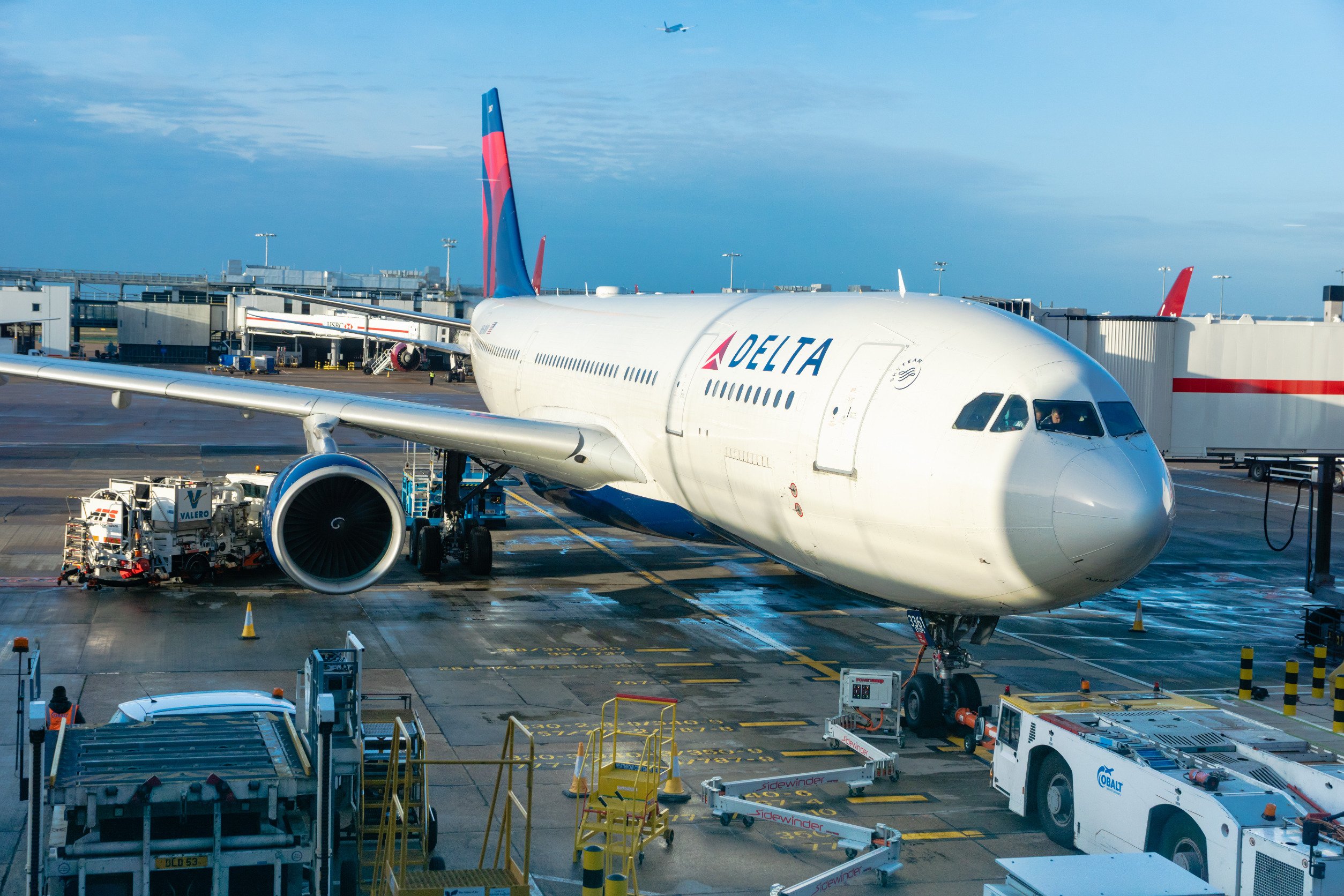
Delta Air Lines enters Monday with two distinct challenges: a weekend flight diversion that has captured public attention and a rise in oil prices that could weigh on earnings. The diversion of flight DL251 from Barcelona to Boston, which landed in Porto after smoke was reported in the cabin, is an operational and reputational issue, but its financial impact is not yet clear. The more significant concern for investors is the price of Brent crude, which climbed above $106 a barrel on Monday, following Delta's 2.63% gain on Friday to close at $84.94.
Fuel Costs: The Real Threat to Earnings
Fuel expenses have a direct and immediate effect on an airline's income statement, unlike a single operational incident. Delta's September-quarter guidance assumes an all-in fuel price of approximately $3.15 per gallon, including a refinery benefit, alongside an operating margin of 11% to 13% and earnings per share of $2.00 to $2.50. With Brent returning above $106, sustained crude strength could quickly raise the cost base underlying these forecasts, reversing some of the relief seen last week.

The distinction between the two shocks is crucial. While the flight diversion may dominate headlines and social media, the oil price movement can prompt analysts to revise earnings models across multiple quarters. Wall Street has already begun adjusting estimates.
Wall Street Cuts Estimates
UBS analysts Atul Maheswari and Thomas Wadewitz warned last week that higher fuel prices were already forcing changes to airline forecasts, despite resilient travel demand. They noted, "We see meaningful downside to the implied fourth-quarter earnings per share outlooks and 2027 estimates given the forward curve for fuel currently." Despite this, UBS maintains Delta as its top airline pick heading into earnings, highlighting the contradiction shaping the stock.
Pricing and demand remain strong, but fuel is absorbing more of that revenue strength before it reaches the bottom line. Airlines have achieved larger fare increases than expected with limited consumer pushback, yet near-term earnings estimates have been cut across most of the sector. This makes fuel the variable most capable of spoiling an otherwise improving setup.
Premium Demand as a Defense
The bull case for Delta is not without merit. Rothschild & Co Redburn analyst James Goodall noted earlier this month that "international operations" remain a bright spot for US network carriers, supported by resilient demand and modest capacity growth across the North Atlantic. Redburn maintains a Buy rating on Delta with a $105 price target, even after raising jet-fuel forecasts, arguing that premium demand, constrained capacity, and weaker low-cost competition should continue to support unit revenue.
Barclays echoes this sentiment while acknowledging the energy problem. The bank cut its Delta target to $95 from $105 but retained an Overweight rating, suggesting that stronger revenue could lead to structurally higher margins if energy markets eventually return to prewar levels.
Delta's revenue engine is still working, but oil is deciding how much of that strength shareholders get to keep. The next few sessions will reveal which risk investors are actually pricing.
This article is for informational purposes only and does not constitute financial advice.

