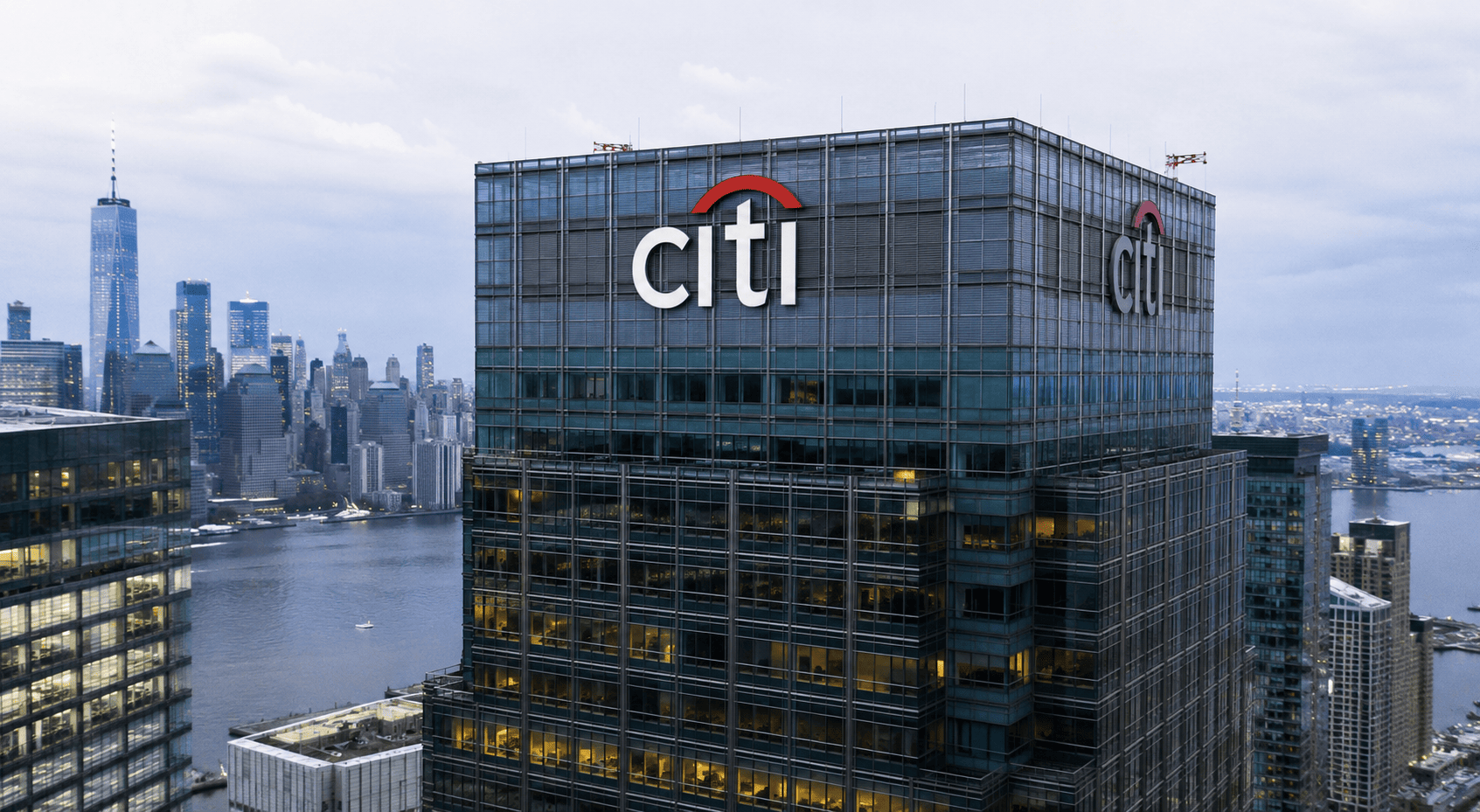
Citigroup delivered a standout second-quarter performance, reporting a 45% year-over-year increase in net income to $5.8 billion, or $3.15 per share, significantly surpassing analyst expectations of $2.74 per share. Revenue climbed 14% to $24.8 billion, marking the bank's highest quarterly top line in a decade. The results underscore the momentum from Citi's ongoing restructuring and its ability to capitalize on volatile markets and a resurgent dealmaking environment.
Trading Revenue Surges Amid Market Volatility
Heightened geopolitical tensions and shifting macroeconomic conditions provided a tailwind for Citi's trading desks. Equities trading revenue jumped 45% year over year, while fixed-income markets revenue rose 7%. Within fixed income, rates and currency trading edged up 1%, but commodities and other fixed-income revenue surged 25%, reflecting the impact of oil price swings linked to the US-Iran conflict.
The broader market volatility, compounded by the ongoing rally in AI-related stocks, prompted investors to rebalance portfolios and adjust risk exposure, fueling trading activity across Wall Street. This environment also led to renewed inflation concerns, causing investors to reassess expectations for the Federal Reserve's interest rate path.
Investment Banking Posts Strong Growth
Investment banking was a key growth driver, with revenue rising 44% to $1.55 billion. Total banking revenue increased 34% to $1.92 billion, despite a decline in corporate lending. The bank benefited from a lighter regulatory environment under the Trump administration, which boosted executive confidence in pursuing acquisitions, and growing demand for AI-related assets that supported dealmaking.
Global M&A volumes have already surpassed $3 trillion this year, with Citi advising on transactions worth over $300 billion, according to Dealogic. Notable mandates included underwriting SpaceX's $75 billion initial public offering and advising on the $44.8 billion combination of Unilever and McCormick's food businesses.
Profitability Targets on Track
Citi's return on tangible common equity (ROTCE) reached 13% in the quarter, at the upper end of its long-term target range of 11% to 13% for 2027 and 2028. The earnings growth comes as CEO Jane Fraser continues a broad overhaul that includes selling consumer businesses, reducing management layers, and strengthening risk and control functions.
The bank's shares have gained 20.6% year to date, outperforming many Wall Street peers as investors respond positively to the restructuring. The strong results align with broader trends seen across major US lenders, with JPMorgan, Goldman Sachs, Wells Fargo, and Bank of America also reporting higher quarterly profits.
For context on the broader market environment, the AI-driven stock rally has diverged from a sluggish US economy, while Bitcoin's recent dip highlights ongoing volatility across asset classes. Additionally, TSMC's Q2 revenue beat underscores the strength of AI-related demand that has also benefited trading activity.
This article is for informational purposes only and does not constitute financial advice.