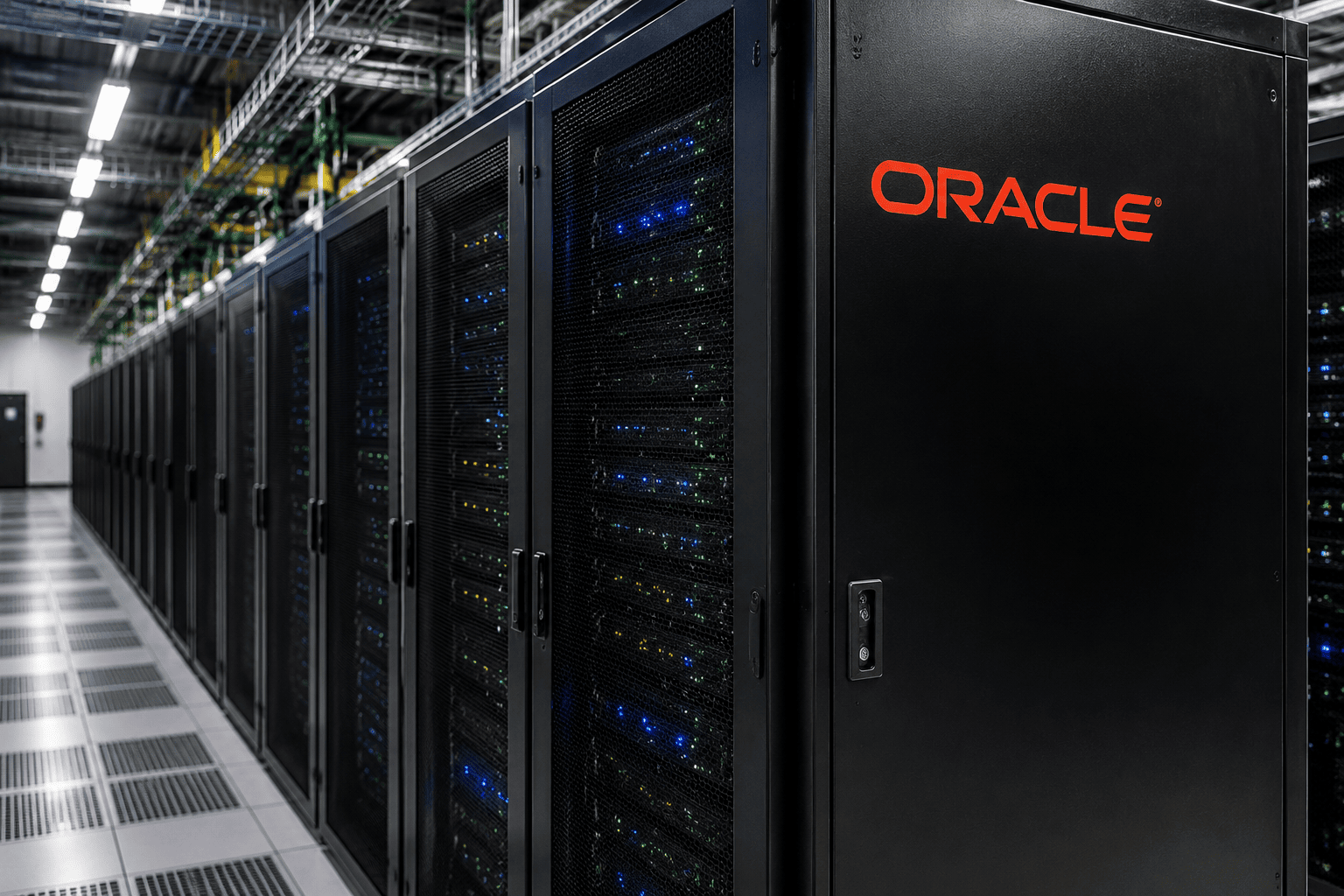
Oracle Corporation (ORCL) has extended its sharp decline, falling below a key support level as rising bond yields signal growing investor unease over the company's debt burden. The stock touched $131.50, its lowest since April last year, representing a drop of over 62% from its all-time high. The sell-off has erased roughly $60 billion from co-founder Larry Ellison's net worth, now estimated at $187 billion.
Strong Revenue Growth Fails to Stem the Tide
Oracle's financial performance remains robust by most metrics. In its fiscal fourth quarter, revenue surged 21% year-over-year to $19.2 billion, driven by a 93% jump in cloud infrastructure revenue to $5.8 billion. Cloud applications revenue rose 10% to $4.1 billion. For the full fiscal year, revenue climbed 17% to $67 billion, while operating cash flow increased 54% to $32 billion.
The company's remaining performance obligations (RPO), a key measure of future revenue, expanded by $85 billion in Q4 to reach $638 billion. Major clients include Applied Intuition, SoundHound (SOUN), Admiral, and Kobalt. Wall Street analysts project first-quarter revenue of $19.12 billion, up 28% year-over-year, with full-year revenue expected to hit $90 billion this year and $130 billion next year.
Debt and OpenAI Exposure Raise Red Flags
Despite the top-line growth, investors are increasingly focused on Oracle's ballooning debt and its heavy reliance on OpenAI. Approximately $300 billion of the company's RPO is tied to a contract with OpenAI, which begins in 2027. OpenAI's growth has shown signs of deceleration amid intensifying competition from Anthropic and other AI startups.
Oracle's capital expenditures surged 162% in the last fiscal year, resulting in negative free cash flow of $24 billion. Total debt stood at $130 billion at year-end, with plans to raise an additional $40 billion through debt and equity. The company has already raised $43 billion in debt sales and $5 billion in equity. As a result, bond yields have spiked: the yield on Oracle's 2034 bonds jumped to 6.518% from a year-to-date low of 5.34%, while 2038 bonds yield 6.70% and 2027 bonds yield 4.56%.
Analyst Sentiment Remains Bullish Despite Sell-Off
While the market's mood has soured, many analysts see the current price as a buying opportunity. Keycorp recently reiterated its overweight rating, and Wedbush's Dan Ives set a price target of $240. Bernstein has a target of $325, while Wolfe Research placed a target of $225. According to MarketBeat, the average analyst target for ORCL stands at $268, implying significant upside from current levels.
Technical Picture Points to Further Weakness
The daily chart shows ORCL has broken below the critical support level of $134.95, which had held in February and April. The stock now trades below all major moving averages and the oversold level on the Murrey Math Lines tool. It also remains under the Supertrend indicator, suggesting bearish momentum could persist. Near-term downside targets include $120 and potentially $100. However, some analysts anticipate a long-term recovery as investors rotate from semiconductor names to hyperscalers like Oracle.
For broader market context, the recent sell-off in tech stocks has been exacerbated by geopolitical tensions and rising oil prices, as seen in the Dow's 138-point drop. Meanwhile, other AI-related names like Tesla have also faced headwinds amid geopolitical jitters and anticipation of AI milestones.
This article is for informational purposes only and does not constitute financial advice.