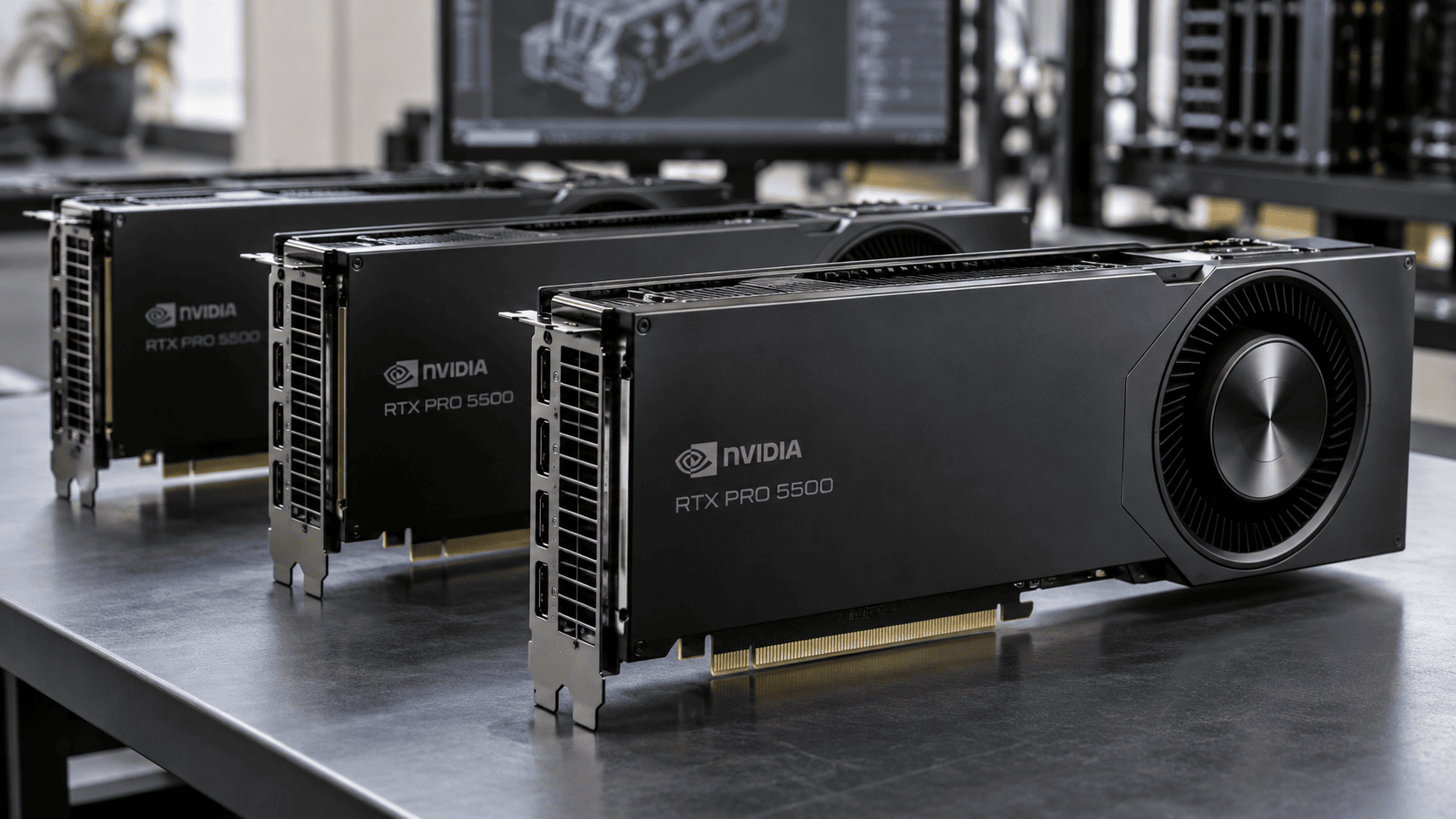
Chinese technology giants ByteDance, Alibaba, and Tencent have collectively ordered more than 3 million units of Nvidia's RTX PRO 5500 workstation graphics cards, with a combined potential value exceeding $35 billion, according to a Reuters report citing two sources familiar with the matter.
The orders underscore the persistent demand for Nvidia hardware in China even as Washington tightens export controls on advanced semiconductor technology. The RTX PRO 5500, designed for powerful professional workstations rather than large-scale AI data centers, remains one of Nvidia's most capable chips still available to Chinese buyers.

However, Nvidia has cautioned customers and partners that it cannot guarantee full delivery. One source told Reuters that Nvidia informed partners they might receive only 5% to 10% of the quantities they requested. Another source indicated the company could manufacture no more than 3 million RTX PRO 5500 cards globally in 2027, while total orders from Chinese customers have already exceeded 6 million units.
The cards are priced at approximately $11,400 each, placing the potential combined value of the three companies' purchases above $35 billion. This scale of demand, previously unreported, highlights the substantial appetite for Nvidia's computing hardware in China despite restrictions limiting access to its most advanced products.
US export controls reshape China's AI chip market
Washington's export controls have sharply curtailed China's access to Nvidia's leading AI processors. The Blackwell-based B300 data-center chip cannot be sold to Chinese buyers under current rules, while exports of the Hopper-based H200 are reviewed case by case and remain subject to licensing conditions.
Nvidia CEO Jensen Huang has stated that US restrictions reduced the company's share of China's AI data-center chip market from a near monopoly to effectively nothing. Yet the demand for the RTX PRO 5500 suggests Nvidia still holds a substantial potential market in China through less powerful products that remain available.
The restrictions have also intensified pressure on China's domestic semiconductor industry as companies race to develop advanced AI models and Beijing seeks to deploy the technology across industries. Huawei has gained market share as Chinese firms turn toward domestic suppliers, but local chipmakers generally struggle to match leading American products, partly because separate restrictions limit their access to foreign equipment needed for advanced semiconductor manufacturing.
Nvidia criticizes restrictions as competition intensifies
An Nvidia spokesperson noted that Chinese manufacturers of workstation chips and graphics cards have experienced "unprecedented growth since 2022," when the restrictions were first imposed. The spokesperson added that "US firms continue to be restricted by a combination of outdated US export controls, which cover gaming products released nearly a half a decade ago, and China's own limit on US imports."
The rush for RTX PRO 5500 cards illustrates the challenges facing Chinese technology companies seeking powerful computing hardware while navigating restrictions imposed by both Washington and Beijing. For Nvidia, these orders represent potential demand in a market where its access to advanced AI computing sales has been severely constrained. Its ability to capitalize on that demand, however, will depend on production capacity, export rules, and the policies governing US chip imports into China.
This article is for informational purposes only and does not constitute financial advice.