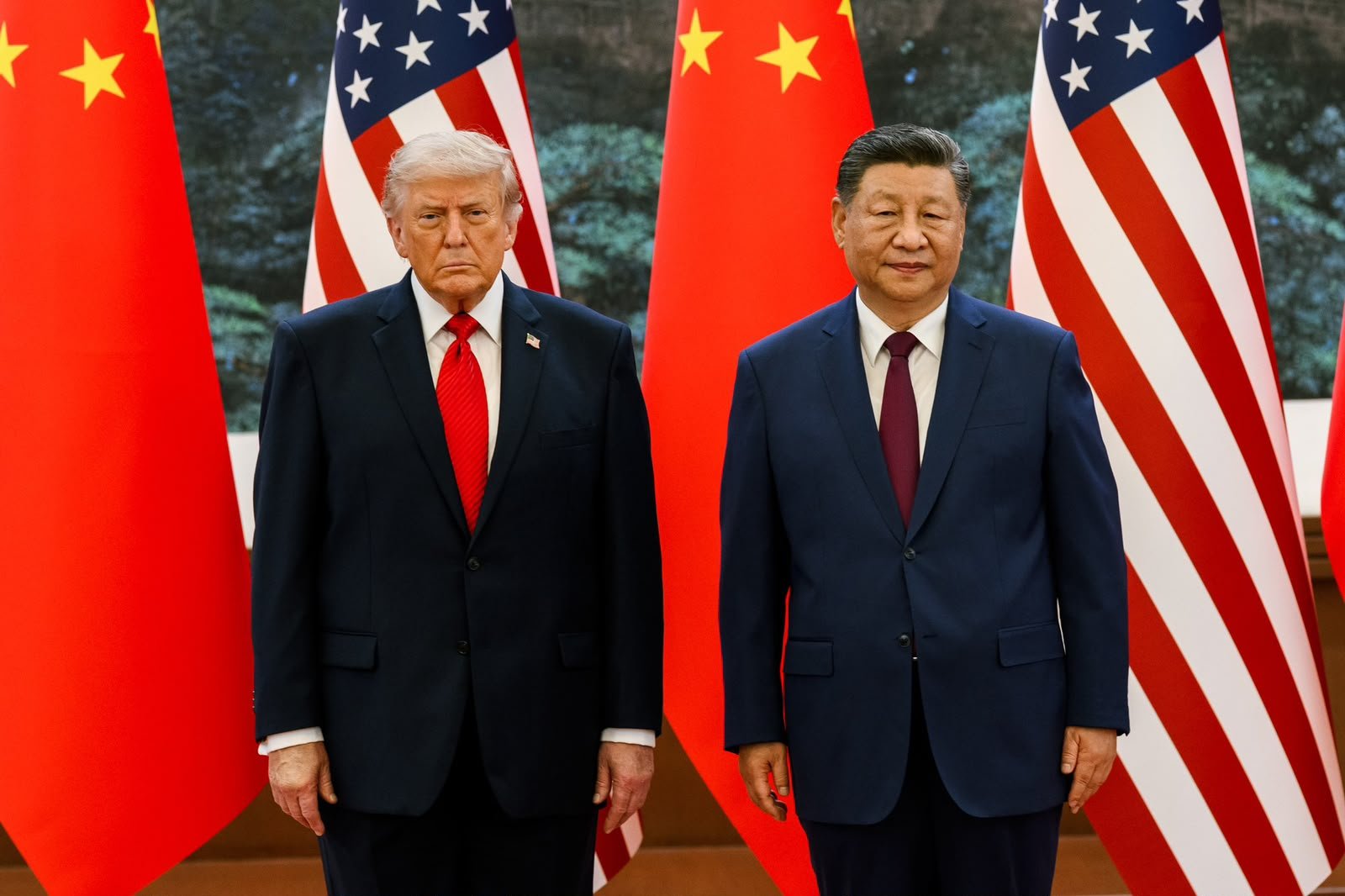
China's rare earth magnet shipments to the United States fell sharply in August, according to official customs data released Sunday, just days before President Donald Trump and Chinese President Xi Jinping are set to meet in Washington. The decline underscores the ongoing tension over critical minerals, which remain a key point of leverage in bilateral trade negotiations.
August shipment data
Shipments of rare earth magnets to the US totaled 512 tonnes in August, a 20% drop from July and 13% below the same month last year. This decline comes after a period of recovery from a low of 46.4 tonnes in May 2025, which followed Trump's sweeping "liberation day" tariffs. Despite the rebound, prices remain elevated, and industry groups are concerned that Beijing could tighten supply again, threatening production across sectors from automobiles to defense equipment.

Rare earths as leverage
Rare earths are among dozens of Chinese-controlled critical minerals essential for advanced manufacturing and high-tech hardware. China is the world's largest producer, and Beijing has used access to these materials as leverage in trade talks since the introduction of US tariffs last year. Washington believes China has not fully honored its commitment to uninterrupted supply, a key component of the one-year trade truce agreed upon in Busan last November.
Pre-summit meetings
US Treasury Secretary Scott Bessent and Chinese Vice Premier He Lifeng met in New York on Sunday ahead of the summit. Bessent told reporters that the two sides agreed to establish a dialogue mechanism for artificial intelligence and discussed extending the trade truce. The meeting is part of ongoing efforts to lay groundwork for the upcoming summit, which is expected to address a range of issues including trade, technology, and geopolitical tensions.
Analyst perspectives
Capital Economics analysts noted in a research note that the pace of decline in Chinese rare earth metal shipments to the US is now the fastest since the pandemic. "Beijing appears willing to test the limits of the truce. It has deliberately kept licence approvals slow and selective," the analysts said. This suggests that while official export controls are in place, the Chinese government may be using administrative measures to influence supply.
Independent supplier actions
Beyond official controls, some Chinese rare earth suppliers are independently declining to ship to the US, according to three sources cited by Reuters earlier this month. A handful of firms have refused shipments since early August, when China sanctioned the Responsible Business Alliance, a US supply-chain monitor. Suppliers grew wary of being punished for complying with its due diligence framework. Reuters reported at least four instances where firms declined to send material, fearing it could be resold to sanctioned end users. This reflects a broader trend among Chinese companies to avoid geopolitical entanglement altogether.
Western supply chain efforts
Over the past year, the US and European countries have stepped up efforts to build a non-Chinese rare earths supply chain. However, many analysts believe any meaningful shift remains years, if not decades, away. China has also curbed rare earth exports to dozens of Japanese companies this year, following remarks by Japanese Prime Minister Sanae Takaichi about Tokyo's role in a hypothetical conflict over Taiwan. Chinese rare earth magnet exports to Japan fell 17% year-on-year in August, while exports to Germany fell 22%, according to customs data.
Capital Economics noted that while Beijing has not applied the same pressure to European supply as it has to the US, Europe's reliance on Chinese rare earths leaves the bloc "in a difficult position" amid ongoing China-EU trade tensions. The upcoming summit between Trump and Xi will likely see rare earths as a central topic, with both sides seeking to protect their interests. For investors, the situation highlights the strategic importance of rare earths and the potential for supply disruptions to impact global markets. For more on the broader trade dynamics, see our coverage of the Trump-Xi summit agenda and the diverging US and China yields.
This article is for informational purposes only and does not constitute financial advice.

