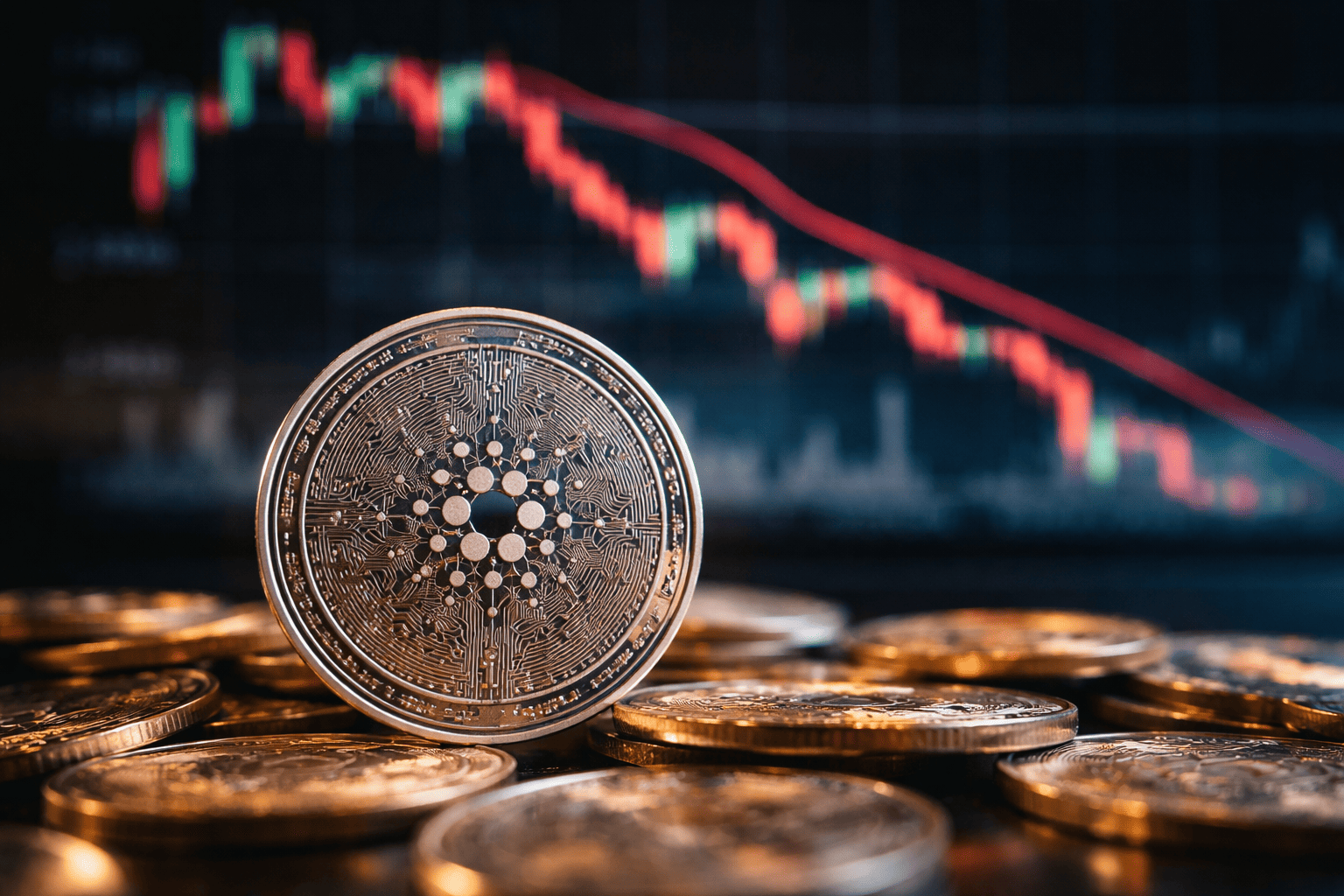
Cardano (ADA) has experienced a dramatic decline, with its market capitalization dropping from over $91 billion to approximately $5.7 billion, erasing more than $85 billion in value. The token currently trades at $0.1590, down over 95% from its all-time high of $3.00 reached in 2021. This prolonged downturn reflects fundamental challenges within the network, which has failed to gain traction among developers and users.
Network Growth Stalls
Launched in 2017 by Ethereum co-founder Charles Hoskinson, Cardano was initially hailed as a superior alternative to Ethereum, offering lower transaction costs, faster speeds, and a peer-reviewed, proof-of-stake consensus mechanism. However, years after its launch, the network has not lived up to its early promise. Data shows that Cardano has become a so-called 'ghost chain,' with minimal developer activity and declining usage across key sectors.

In the decentralized finance (DeFi) space, Cardano's total value locked (TVL) has fallen to just $88 million, down from over $700 million in early 2023. Major protocols like Minswap, Liqwid, Dano Finance, and SundaeSwap have seen activity wane. Similarly, in the real-world asset (RWA) tokenization market—which now holds over $15 billion in assets—Cardano holds zero market share. The stablecoin ecosystem on Cardano is also negligible, with total stablecoins valued at less than $45 million, compared to the industry's $315 billion.
Decentralized exchange (DEX) activity further underscores the network's struggles. Over the past 30 days, Solana-based protocols handled $50 billion in volume, while Cardano processed just $87 million. This stark contrast highlights the network's inability to compete with more vibrant ecosystems.
Failed Initiatives
Efforts by Hoskinson and the Cardano team to revitalize the network have not yielded results. A partnership with Pyth Network in late 2023 aimed to make it the platform's primary oracle, hoping to attract developers. However, adoption has not materialized. The launch of Midnight, a zero-knowledge-based privacy network, has similarly failed to draw significant developer interest. The upcoming Leios upgrade, which promises faster transaction processing through parallel computing, remains unproven in its ability to reverse the network's fortunes.
Broader market conditions have also contributed to Cardano's decline. Bitcoin and many altcoins have retreated sharply this year, and several Ethereum alternatives—including Ziliqa, Algorand, EOS, and IOTA—have similarly failed to gain widespread adoption. This pattern suggests that the market's enthusiasm for 'Ethereum killers' has largely faded.
For investors monitoring Cardano, recent price action has been weak. As noted in our earlier coverage, Cardano Drops 11% as Whales Accumulate 370M ADA Amid Market Uncertainty and Cardano Bearish Pressure Intensifies as Derivatives and On-Chain Data Weaken, bearish signals persist. Additionally, Cardano Stalls Below $0.170 as Weak Derivatives Signal Limited Upside suggests limited near-term upside potential.
In summary, Cardano's dramatic loss of value reflects a network that has failed to achieve the adoption and developer activity necessary to sustain its market capitalization. Without a significant catalyst, the token's outlook remains uncertain.
This article is for informational purposes only and does not constitute financial advice.