
Oil prices tumbled on Thursday as market participants rapidly priced out the geopolitical risk premium following a historic interim peace agreement between the United States and Iran. The deal, which focuses on reopening the Strait of Hormuz and resuming Iranian crude exports, sent Brent crude sliding below $79 a barrel, while West Texas Intermediate dropped toward $76, extending the retreat from conflict-driven highs.
Supply Relief Triggers Sharp Sell-Off
The market's reaction was swift and decisive, reflecting a fundamental shift in near-term supply expectations. The 14-point memorandum establishes a 60-day negotiation window and guarantees toll-free passage through the Strait of Hormuz, a critical chokepoint for global energy flows. The accord also aims to restore full traffic through the waterway within 30 days, a timeline that caught many traders off guard.
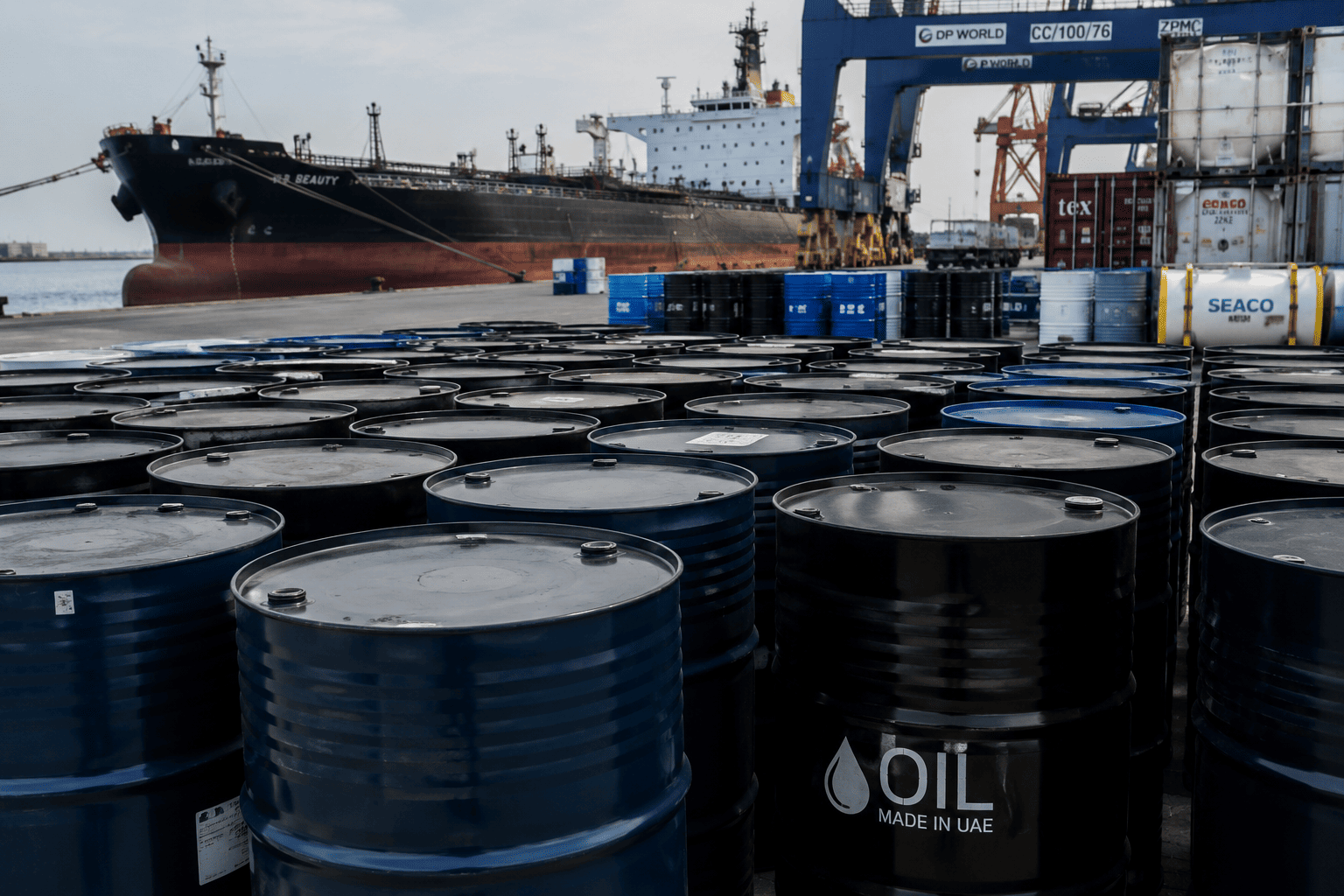
Brent futures were down 89 cents, or 1.12%, at $78.66 a barrel at 0005 GMT, while US West Texas Intermediate fell 98 cents, or 1.28%, to $75.81. The move reversed Wednesday's bounce, which followed President Donald Trump's warning that military action could resume if Tehran failed to comply.
“The sell-off extended as energy markets continued to aggressively price in a faster-than-expected return of Iranian barrels following the recent US-Iran memorandum of understanding,” IG market analyst Tony Sycamore said in a note.
Uncertainty Lingers Despite Diplomatic Breakthrough
While the agreement lowers the probability of an immediate supply shock, implementation remains a critical test. The most contentious issues, including Iran's nuclear programme, have been deferred to the next phase of talks. The deal also requires the US and its partners to develop a $300 billion recovery financing plan for Iran, adding another layer of complexity.
Oil traders are now balancing two opposing forces: the prospect of returning barrels and the risk that diplomacy stalls. The Strait of Hormuz has historically carried a large share of global oil and gas flows, so even a partial reopening would have meaningful implications for refiners, freight markets, and inflation expectations.
IEA Warns of Potential Oversupply
The International Energy Agency added to the bearish sentiment on Wednesday, warning that a successful reopening could turn this year's shortage into a large surplus next year. Its latest forecasts suggest supply may exceed demand by 5.05 million barrels per day in 2027 as Middle East production returns to the market.
Monetary policy is also adding downward pressure. The Federal Reserve held rates at 3.50%-3.75%, but new projections showed nine of 18 policymakers now expect a rate increase this year. Higher borrowing costs could slow economic activity and curb fuel demand, making the crude market more sensitive to any sign of oversupply.
Market Implications and Broader Context
The direction is now clear: oil is trading less on fear of disruption and more on the possibility that supply comes back faster than demand can absorb it. For investors, this shift has broad implications across asset classes. The FTSE 100 Drops 0.7% as Hawkish Rate Bets and Political Turmoil Weigh on London Markets, reflecting the interconnected nature of geopolitical and monetary risks.
Meanwhile, the Bitcoin Stalls Below $65K: Geopolitical Jitters, Weak Institutional Demand, and Strategy Concerns highlights how broader uncertainty continues to weigh on risk assets. Even in the crypto space, the Solana Drops Below $70 as Institutional Inflows Rise Amid Bearish Price Action shows that bearish sentiment is not confined to traditional markets.
As the 60-day negotiation window opens, all eyes will be on the pace of implementation and the willingness of both sides to address the harder questions. For now, the war premium has been stripped away, but the road ahead remains fraught with uncertainty.
This article is for informational purposes only and does not constitute financial advice.