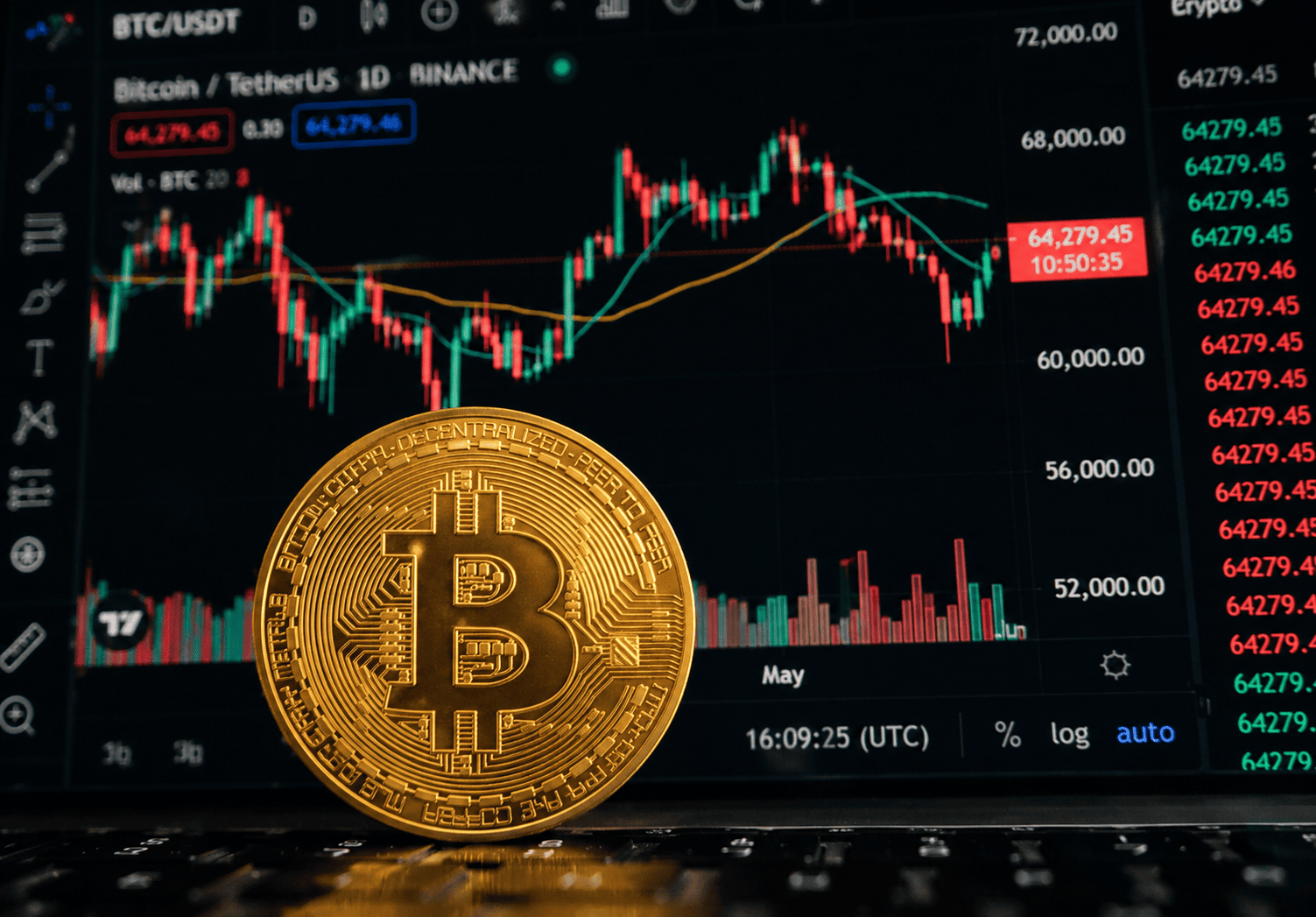
Bitcoin continues to trade below the $65,000 threshold, failing to reclaim the level despite a brief weekend rally that pushed the cryptocurrency to $64,522 on Sunday. The asset has since retreated toward $64,000, posting a 2.4% decline over the past seven days and remaining well off its recent highs near $67,000. A confluence of factors—ranging from geopolitical tensions to weakening institutional interest and corporate-specific headwinds—has kept Bitcoin pinned below this psychologically important mark.
Geopolitical Uncertainty Weighs on Sentiment
Volatility returned to markets after traders reacted to developments in the Middle East. Optimism surrounding US-Iran diplomatic talks in Switzerland initially supported risk assets and triggered a short squeeze that lifted Bitcoin. However, sentiment quickly soured as renewed concerns about trade disruptions near the Strait of Hormuz prompted profit-taking. The rapid shift in mood underscores how fragile risk appetite remains in the current environment.

Institutional Demand Remains Tepid
Data from CryptoQuant shows that the Coinbase Premium Index—a key gauge of US institutional demand—has been predominantly negative throughout 2026. Persistent negative readings suggest that professional investors have not yet returned to the market in force. Similarly, US-listed Bitcoin exchange-traded funds have recorded $4.7 billion in net outflows since May, indicating continued caution among ETF investors and institutions. Analyst Darkfost noted that institutional participants typically wait for confirmation and performance before committing capital, and current conditions have not provided that signal.
Strategy's Preferred Stock Adds Pressure
Market attention has also turned to Strategy's STRC preferred stock, which has fallen below its $100 par value. Some commentators view this decline as a potential obstacle for the company's Bitcoin acquisition mechanism. The situation drew further scrutiny after reports emerged that Strategy sold a small amount of Bitcoin to fund preferred dividend payments—a move that some observers interpreted as a setback for institutional confidence in the broader crypto ecosystem.
Technical Resistance and Liquidity Dynamics
On the technical front, Bitcoin faces a formidable resistance zone between $67,000 and $68,000, identified by Volume Profile data as the largest concentration of recent trading activity. Traders view this area as a critical barrier that must be reclaimed before momentum can improve. The Chaikin Money Flow indicator has recovered from deeply negative levels reached during the June selloff but remains slightly below zero, suggesting capital inflows have improved but have not turned decisively positive.
Liquidation data from CoinGlass highlights the $64,800 to $65,200 range as a key area to watch. The largest concentration of short liquidations sits in this zone, creating a potential liquidity target if buyers continue to push higher. Trader Lennaert Snyder and others have noted this possibility, though the pattern of Monday weakness—six out of the past six Mondays have marked local pivot highs before price moved lower—adds a note of caution.
Macro Risks and Bearish Projections
Outside of crypto, several well-known market commentators have warned about risks facing traditional financial markets. GMO co-founder Jeremy Grantham has described the current artificial intelligence boom as a speculative bubble, while investor Michael Burry has compared recent market behavior to the final stages of the Dot-com era. Economist Gary Shilling has warned that a US recession is "almost inevitable" by year-end and has projected a potential 20% to 30% decline in stocks.
Technical analyst Jesse Olson has taken the bearish scenario further, suggesting Bitcoin could fall toward $23,980 if equities were to suffer a crash exceeding 50%. The projection is based on a long-term volume-weighted support line extending from the 2022 bear market low. While such a scenario remains speculative, it highlights the downside risks that some analysts are monitoring.
For now, Bitcoin remains in a holding pattern, constrained by weak institutional demand, geopolitical uncertainty, and technical resistance. The path of least resistance appears lower until buyers can decisively reclaim the $67,000–$68,000 zone and sustain positive money flow.
This article is for informational purposes only and does not constitute financial advice.