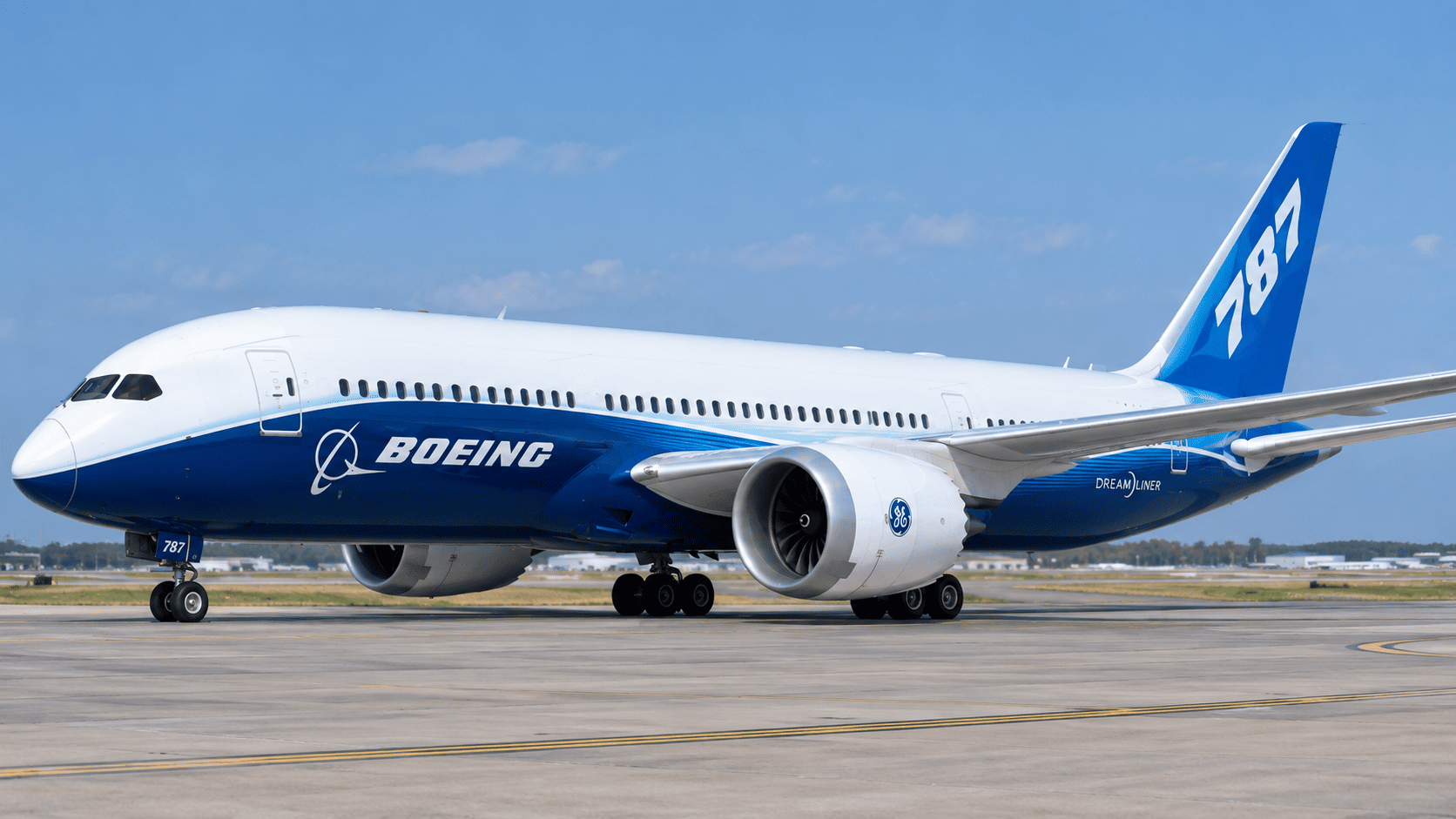
Boeing's stock advanced roughly 3% in premarket trading on Wednesday after the aerospace giant clinched a contract valued at over $20 billion from the U.S. Navy and Pentagon to develop its next-generation fighter jet. The agreement covers the F/A-XX Strike Fighter, a sixth-generation aircraft intended to replace the Navy's aging F/A-18 Super Hornets.
The new fighter will incorporate an open mission systems architecture, advanced mission systems, and extended operational range, according to Boeing. This win marks the company's second major sixth-generation fighter program in about a year, following the Air Force's selection of Boeing's F-47 in 2025.

Northrop Grumman, a rival bidder, saw its shares fall about 4% in premarket trading. The contract solidifies Boeing's position in next-generation military aviation, a significant shift for a defense unit that has faced years of challenges.
Analysts at RBC Capital Markets described the award as a "near-complete reversal of Boeing's defense trajectory," noting that entering 2025 the company faced a credible risk of exiting fighter production altogether. The deal effectively removes Lockheed Martin and Northrop Grumman from the next-generation fighter program for the foreseeable future.
However, JPMorgan analysts cautioned that the defense win alone won't determine Boeing's broader financial recovery. They emphasized that the most meaningful financial development will be progress in boosting commercial aircraft production and cash flow per plane at Boeing Commercial Airplanes. This distinction keeps the commercial operations at the heart of the investment narrative.
Boeing shares have fallen about 18% year-to-date and roughly 10% over the past month, reflecting persistent concerns about the commercial business. A sharp 7% drop on Monday followed reports of a new software glitch on the 737 MAX, prompting the FAA to delay certification of the MAX 10 until the issue is resolved. FAA Administrator Bryan Bedford said the agency hasn't concluded whether it's a safety-of-flight issue but will delay certification until satisfied.
The certification delay adds another hurdle to Boeing's efforts to increase deliveries and improve cash generation. Additionally, a union vote could lead to a strike in October if no agreement is reached, posing a larger financial risk due to potential cash burn and balance-sheet pressure.
Despite these headwinds, UBS reiterated a Buy rating with a $275 price target, more than 46% above Tuesday's close. The bank argues that the recent selloff has priced in near-term setbacks while assigning limited value to Boeing's normalized earnings potential. UBS forecasts about $20 billion in free cash flow by 2030 and notes that at around $184 a share, the market is pricing Boeing at only about $7.7 billion in free cash flow.
UBS views the MAX 10 software issue as manageable, noting that Boeing has known about it for years and twice concluded it posed no safety risk. The FAA review could take weeks to months, though UBS sees a resolution within weeks as more likely. The bank also highlights Boeing's backlog as a long-term support, with a 2028 free cash flow estimate of $15.15 per share, implying a valuation of about 12 times that figure versus 29 times for the S&P 500.
This article is for informational purposes only and does not constitute financial advice.

