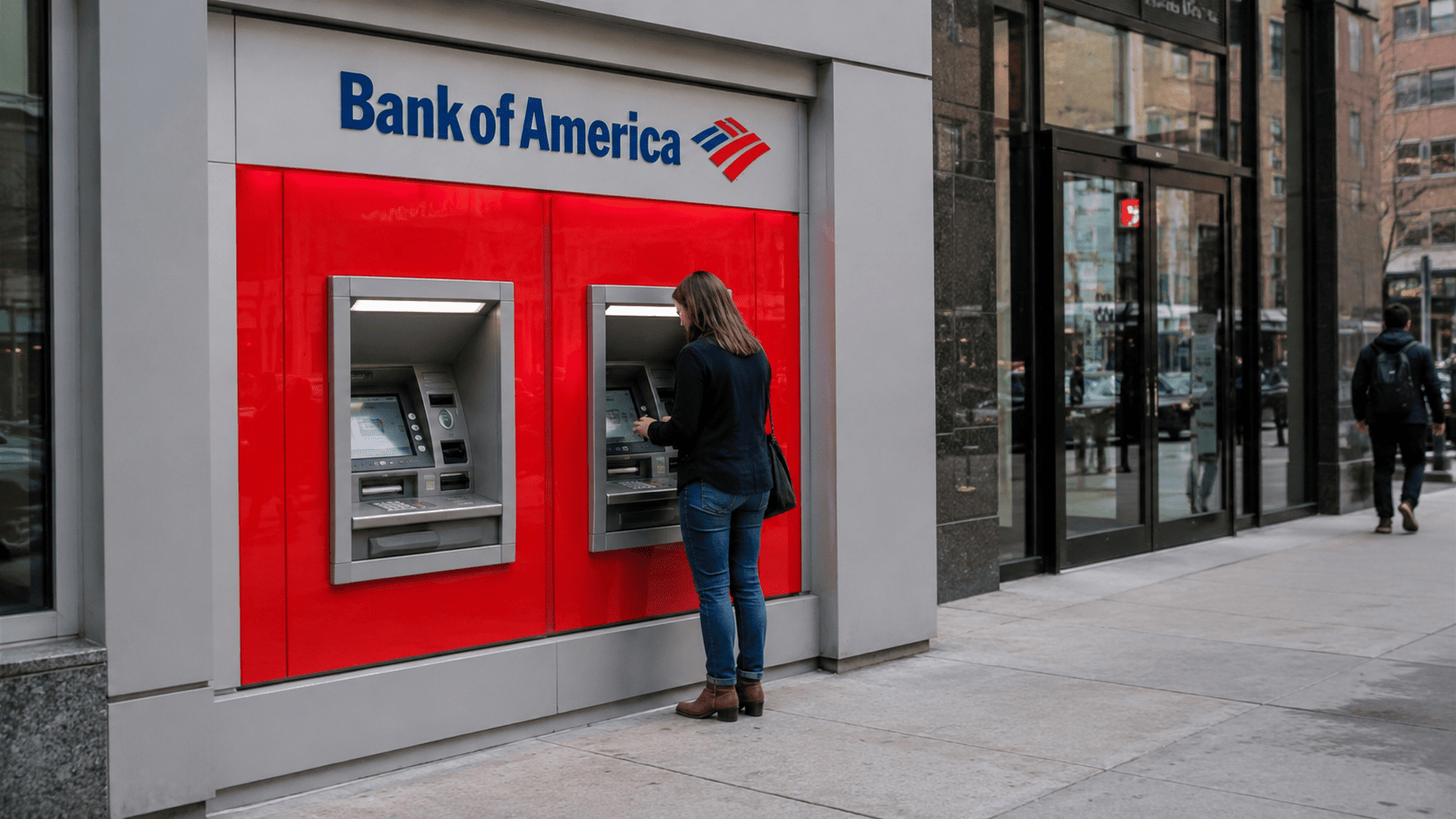
Bank of America (NYSE: BAC) shares came under pressure on Tuesday after the company's chief executive offered a cautious outlook for the third quarter, citing a slowdown in key revenue streams. The stock was marginally higher in early trading but remains roughly 8% below its recent high, reflecting investor concerns about the bank's near-term growth trajectory.
Q3 guidance signals a pullback in capital markets activity
Speaking at the Barclays Global Financial Services Conference, CEO Brian Moynihan said investment banking fees are expected to decline by as much as 20% year-over-year in Q3, landing between $1.6 billion and $1.8 billion. He also projected that trading revenue would remain roughly flat compared with the same period last year, with strength in equities offset by weakness in fixed income.

These figures fall short of Wall Street's expectations, suggesting that the robust capital markets environment seen earlier in the year may be cooling faster than many analysts had anticipated. The bank's own performance in the first half of 2026 was notably strong, with investment banking fees surging 50% and trading revenue jumping 33% in the second quarter alone.
Broader industry headwinds weigh on the sector
Moynihan attributed the slowdown to broader industry conditions rather than bank-specific issues, noting that the overall investment banking market is down roughly 10% across the board. The persistent "higher-for-longer" interest rate environment continues to dampen deal-making and financing demand, squeezing advisory fees and underwriting activity.
The rapid deceleration has prompted a repricing of Bank of America shares, and the warning has also dragged down peers such as Goldman Sachs and Morgan Stanley, which are similarly exposed to capital markets cycles.
Long-term outlook remains mixed
Despite the near-term softness, Moynihan emphasized that the bank's deal pipeline remains robust, particularly in the middle-market segment. He also highlighted the bank's sustainable dividend yield of approximately 2.15%, which continues to attract income-focused investors even amid price volatility.
For context, the broader financial sector has faced headwinds from slower AI-driven growth expectations, though Bank of America's challenges are more directly tied to capital markets activity.
What investors should watch
The key question for the upcoming earnings season is whether this Q3 slowdown represents a temporary lull in deal timing or a more durable structural shift in the financial landscape. Until that becomes clear, investors should brace for continued volatility in bank stocks.
Bank of America's guidance also comes amid a broader market environment where some high-growth sectors are experiencing sharp corrections, underscoring the importance of diversification.
While the immediate outlook is cautious, the bank's long-term fundamentals—including its deposit base and digital banking platform—remain intact. However, the near-term revenue trajectory will likely hinge on the pace of any recovery in deal-making and trading activity.
This article is for informational purposes only and does not constitute financial advice.

