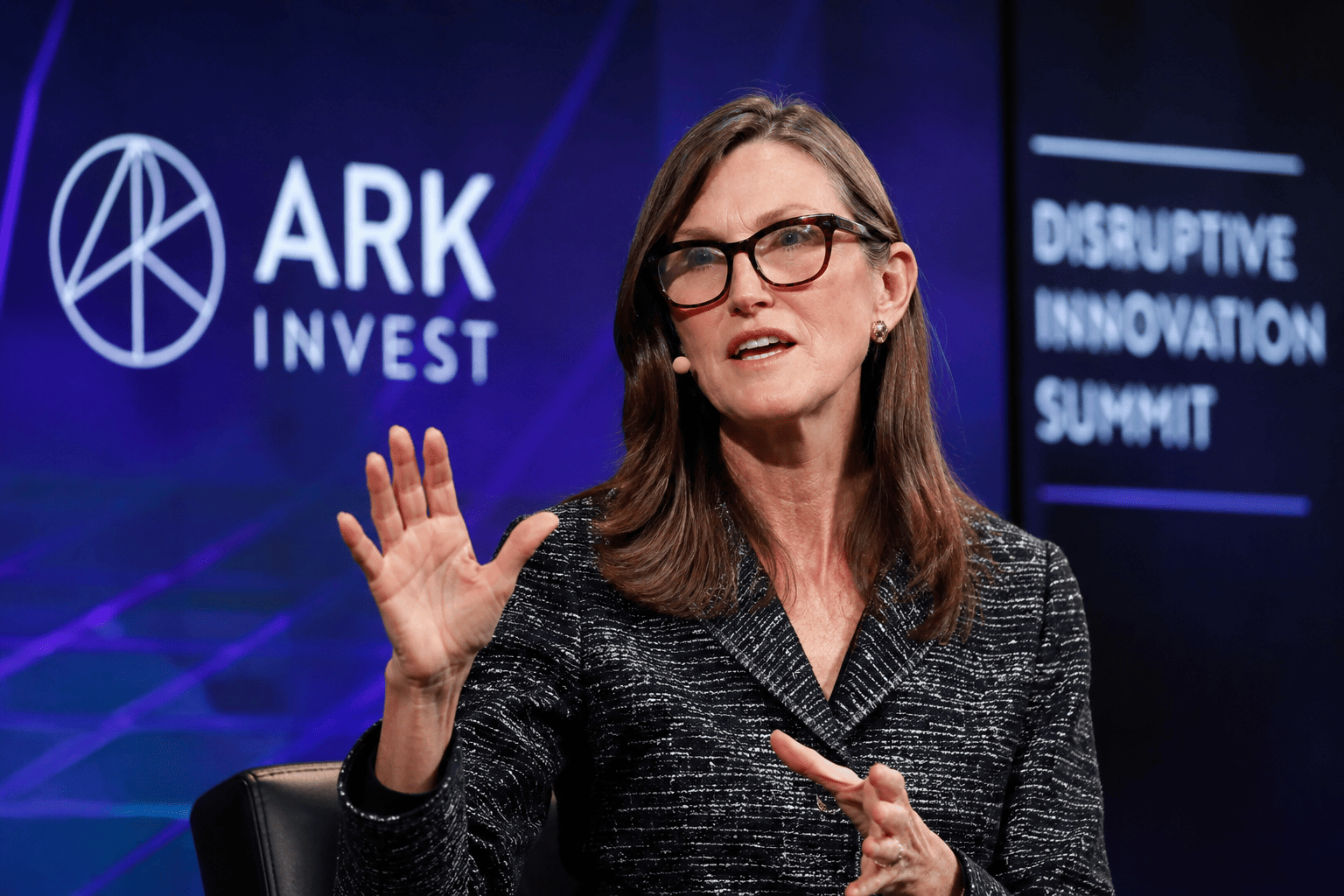
Cathie Wood's Ark Innovation Fund (ARKK) has been trading in a narrow range between $72.68 and $82.35 since April, reflecting a period of stagnation that contrasts sharply with the broader market's gains. Over the past 12 months, ARKK has risen only 9%, while the Nasdaq 100 Index has surged 28%. Year-to-date, the fund is down 1.82%, compared to a 15.90% jump in the Nasdaq 100, highlighting its failure to participate in the artificial intelligence (AI)-driven rally.
This persistent underperformance raises a fundamental question for investors: what is the point of paying a 0.75% expense ratio for a fund that consistently lags behind low-cost index ETFs like the Vanguard S&P 500 ETF (VOO), which charges just 0.03%? The fee differential means that a $10,000 investment in ARKK costs $75 annually, versus $3 for VOO and $15 for the Invesco QQQ Trust (QQQM). Over time, these costs compound and further erode returns.
Key Holdings Drag Down Performance
ARKK's struggles are largely tied to its top holdings, many of which have declined sharply. Tesla, the fund's largest position, has fallen to $375 from its all-time high of $500, weighed down by valuation concerns—its forward price-to-earnings ratio stands at 185—and intensifying competition from Nio, BYD, XPeng, and Li Auto. Tempus AI, the second-largest holding, has dropped over 50% from its peak last year, while CRISPR Therapeutics (CRSP) has declined 32% over the same period.
Other major positions have also suffered. Robinhood stock has fallen 36%, Shopify has slumped 35%, and SpaceX, which recently went public, has crashed over 30% from its all-time high. Coinbase and Circle Internet have been hit by the ongoing crypto market sell-off, with Coinbase's trading volume declining and the market capitalization of USDC dropping from a record $80 billion to $74 billion. Roblox, Palantir, and CoreWeave have all retreated from their 2025 highs.
Long-Term Track Record Raises Red Flags
ARKK's underperformance is not a recent phenomenon. Over the past five years, the fund has lost 35%, while the Nasdaq 100 Index has gained 103%. A $10,000 investment in ARKK five years ago would now be worth $6,500, compared to $20,300 in the Nasdaq 100 (excluding dividends). Since its inception, ARKK has returned 275%, but the Nasdaq 100 has surged 600% over the same period.
While ARKK can outperform during strong Tesla rallies, history suggests that these bursts are temporary and the fund eventually lags. This pattern aligns with broader data from S&P Global, which shows that 90% of active funds have underperformed the S&P 500 over the past 15 years. ARKK's high fee structure exacerbates this disadvantage, making it an expensive bet on a strategy that has yet to deliver consistent long-term results.
For investors seeking exposure to innovation and AI, low-cost broad-market ETFs like VOO or QQQM have captured the AI momentum without the single-theme drawdowns and high fees. As Cathie Wood shifts her bets toward names like SpaceX, the fund's concentrated portfolio continues to face headwinds from regulatory pressures, competition, and market volatility.
In the current environment, where chip selloffs pressure the Nasdaq and Micron's plunge raises questions about AI valuations, ARKK's lack of diversification and high cost make it a questionable choice for investors focused on long-term wealth accumulation.
This article is for informational purposes only and does not constitute financial advice.