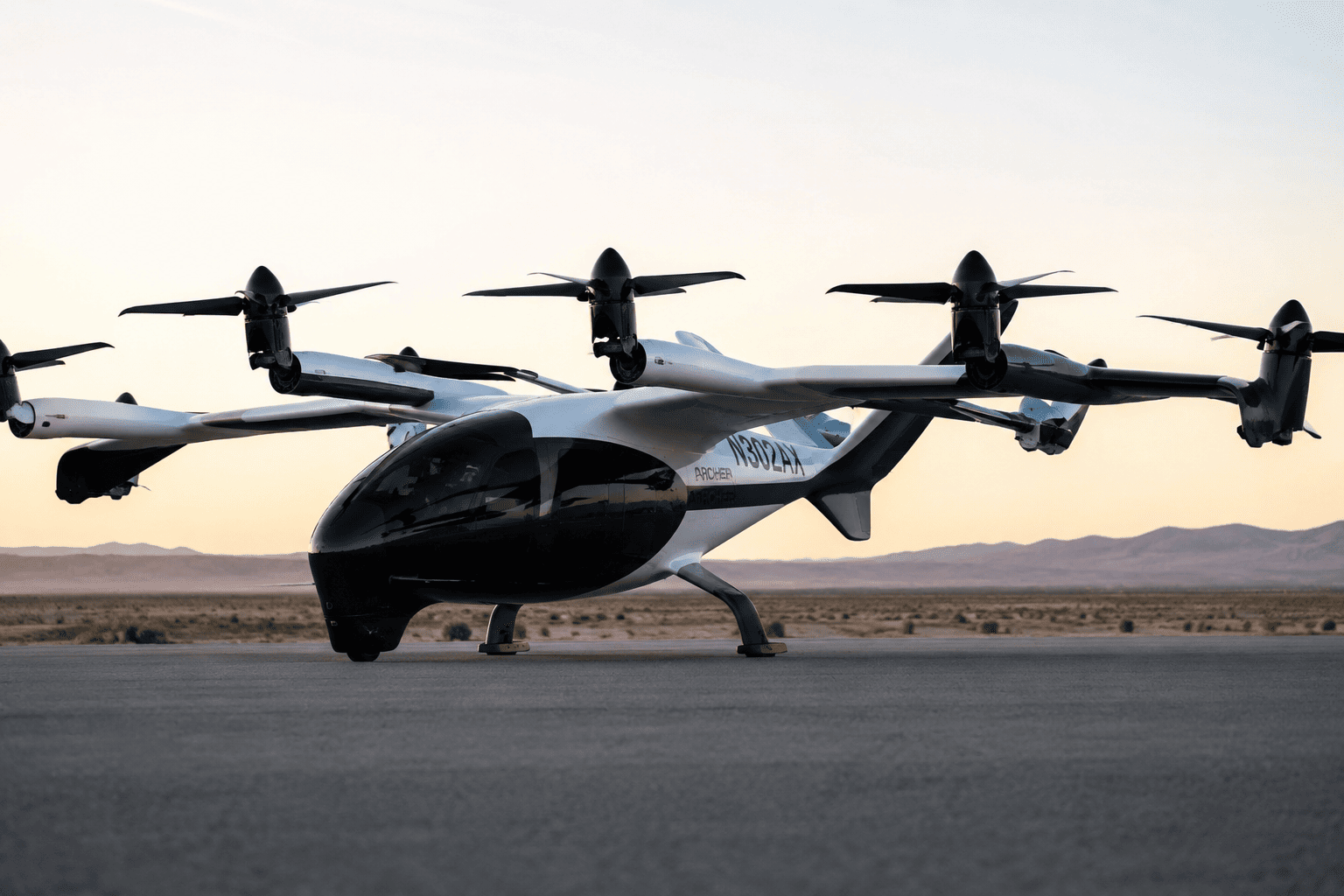
Archer Aviation (NYSE: ACHR) saw its shares climb approximately 15% in Monday trading following the announcement that the electric air taxi developer will acquire three Boeing subsidiaries: autonomous aviation unit Wisk Aero, drone manufacturer Insitu, and airspace technology provider SkyGrid. The all-stock transaction is set to give Boeing a nearly 20% stake in the combined entity, along with a seat on Archer's board and continued access to Wisk's autonomous flight technology through a long-term collaboration agreement.
This acquisition marks one of the most significant consolidations in the emerging electric vertical takeoff and landing (eVTOL) sector, as companies race to commercialize urban air mobility and autonomous aviation. Archer's move extends its reach beyond piloted air taxis into autonomous flight, military drones, and airspace management, positioning it as a diversified advanced aviation platform.

Expanding Beyond Air Taxis
The deal significantly broadens Archer's business scope. Last month, the company unveiled a new autonomous aircraft platform developed jointly with defense technology firm Anduril Industries. With the addition of Wisk's autonomous flight systems, Insitu's military-grade unmanned aircraft, and SkyGrid's airspace management capabilities, Archer aims to strengthen both its commercial and defense operations.
The companies stated that the combination would create an integrated platform spanning autonomous flight, artificial intelligence, drones, and air traffic management. In a joint statement, they highlighted that the three businesses bring nearly two million combined flight hours, providing a strong foundation for Archer's ZEE artificial intelligence platform. Archer's CEO Adam Goldstein called the acquisition "transformational," noting it marks a "watershed moment" for the company and the future of physical AI in aerospace and defense.
Boeing's Strategic Shift
For Boeing, the transaction aligns with CEO Kelly Ortberg's strategy to simplify the company and focus on core commercial aircraft, defense, and space operations. Under the agreement, Boeing will receive nearly 20% ownership in Archer, the right to purchase up to $200 million worth of Archer shares at predetermined prices over the coming years, and a board seat. Boeing will also retain access to Wisk's autonomous flight technology for future aircraft through a technology-sharing agreement.
Brian Yutko, Boeing vice president and former Wisk CEO, described the deal as a "win-win," stating that it will create an industry leader in the advanced aviation market. Since taking the helm in August 2024, Ortberg has emphasized the need to reset priorities and create a leaner, more focused organization.
From Rivals to Partners
The acquisition also marks a dramatic shift in the relationship between Archer and Wisk, which were previously embroiled in a legal dispute over alleged trade secret theft. That conflict was settled in 2023, with Boeing making an undisclosed investment in Archer as part of the agreement. Wisk was founded in 2019 through a partnership between Boeing and Kitty Hawk, the aviation startup backed by Google co-founder Larry Page.
Archer is targeting commercial eVTOL operations by late this year or early next year, and the addition of autonomous flight capabilities is increasingly valuable as regulators move toward approving pilotless aircraft. The deal reflects a growing convergence between commercial aviation, defense systems, artificial intelligence, and autonomous flight—areas that many industry executives expect to define the next phase of aerospace innovation.
For investors, this acquisition underscores the rapid consolidation in the eVTOL space and the strategic importance of autonomous technology. As Archer integrates these new assets, its ability to execute on its roadmap will be closely watched. The broader market context, including recent moves in defense and aerospace stocks, suggests heightened interest in companies bridging aviation and AI.
While the deal is subject to regulatory approvals, it signals a major step forward for Archer's diversification strategy. The company's expanded portfolio could also benefit from AI-driven advancements in aviation, as seen in other sectors. However, investors should remain mindful of the risks inherent in early-stage aviation technologies and the competitive landscape.
This article is for informational purposes only and does not constitute financial advice.