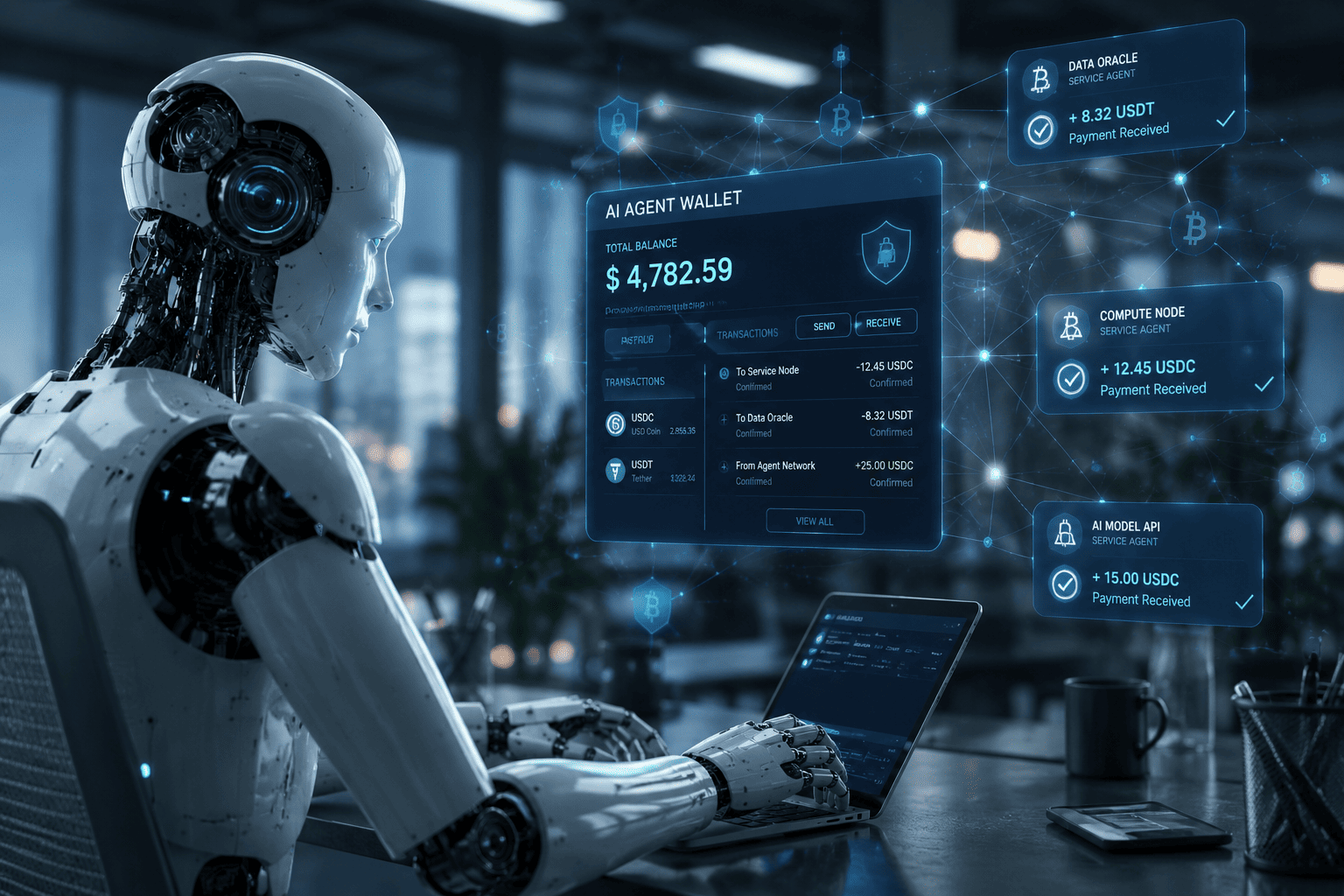
The rise of autonomous AI agents is prompting blockchain developers to rethink how software participates in the economy. According to Franklin Templeton Digital Assets, agentic commerce could reach $3 trillion to $5 trillion by 2030, but that growth depends on solving critical issues around payments, security, and accountability.
Aptos Co-Founder and CEO Avery Ching argues that the infrastructure supporting AI agents must handle transactions that are fast, low-cost, programmable, and auditable. In a recent interview, he outlined what that infrastructure could look like and where blockchain fits into the emerging agent economy.

Reliability and authority are key
Ching emphasized that the biggest hurdle is not model capability but reliability. "The remaining problems are around the infrastructure," he said. Agents need to keep data confidential, run reliably over long periods, and prove what they did. For commerce, they need identity and payment capabilities, but also boundaries.
"You should be able to give an agent access to capital with a spending limit, define who it can transact with and what it can buy, and have a provable record of what happened and why," Ching explained. This would allow agents to move from recommending transactions to completing them autonomously.
Speed and cost matter
When asked whether transactions per second (TPS) is the deciding factor, Ching said the entire system properties matter. "What matters is whether the overall decentralized financial system is secure, fast, scales, and low cost," he said. Aptos, which tops Franklin Templeton's throughput rankings, was designed for high-throughput, low-latency environments, making it suitable for machine-driven activity.
First use cases: agent-to-agent payments
Ching sees the first real-world use case as agents paying for goods and services directly. "Today, agents are mostly read-only in an economic sense," he noted. Once an agent can pay another service on a per-request basis, a new kind of network emerges. Agents can discover what they need, pay for it, and continue tasks without manual approval. Eventually, agents will negotiate and transact with each other at machine speeds, making machine-to-machine commerce real.
Accountability and auditability
On accountability, Ching said there isn't one answer for every situation, but the system should make it possible to know exactly what happened. "If an agent spends money, accesses data, or sends information somewhere, you should be able to trace the action back to the policy and authority it was operating under, with an immutable ledger," he said. Users or enterprises define what agents can do, developers enforce controls, and infrastructure provides a tamper-proof record.
Programmable money allows agents to have their own keys, spending caps, and approved counterparties. "You can give an agent enough authority to be useful without giving it unlimited authority," Ching said. As agents become more autonomous, auditability becomes as important as the payment itself.
Why blockchain over existing payments?
Ching acknowledged that not every AI interaction needs a blockchain. The question is what happens when software needs to transact with software it doesn't have a prior commercial relationship with. Existing payment systems work well for humans with accounts and established counterparties, but agents may need to discover services, pay fractions of a cent, and move on. Blockchain-based programmable payments can handle these microtransactions efficiently and transparently.
As the agent economy grows, the infrastructure that supports it will determine whether the projected $5 trillion market becomes reality. For now, Ching's vision points to a future where autonomous software participates in the economy under clear rules and with provable records.
This article is for informational purposes only and does not constitute financial advice.