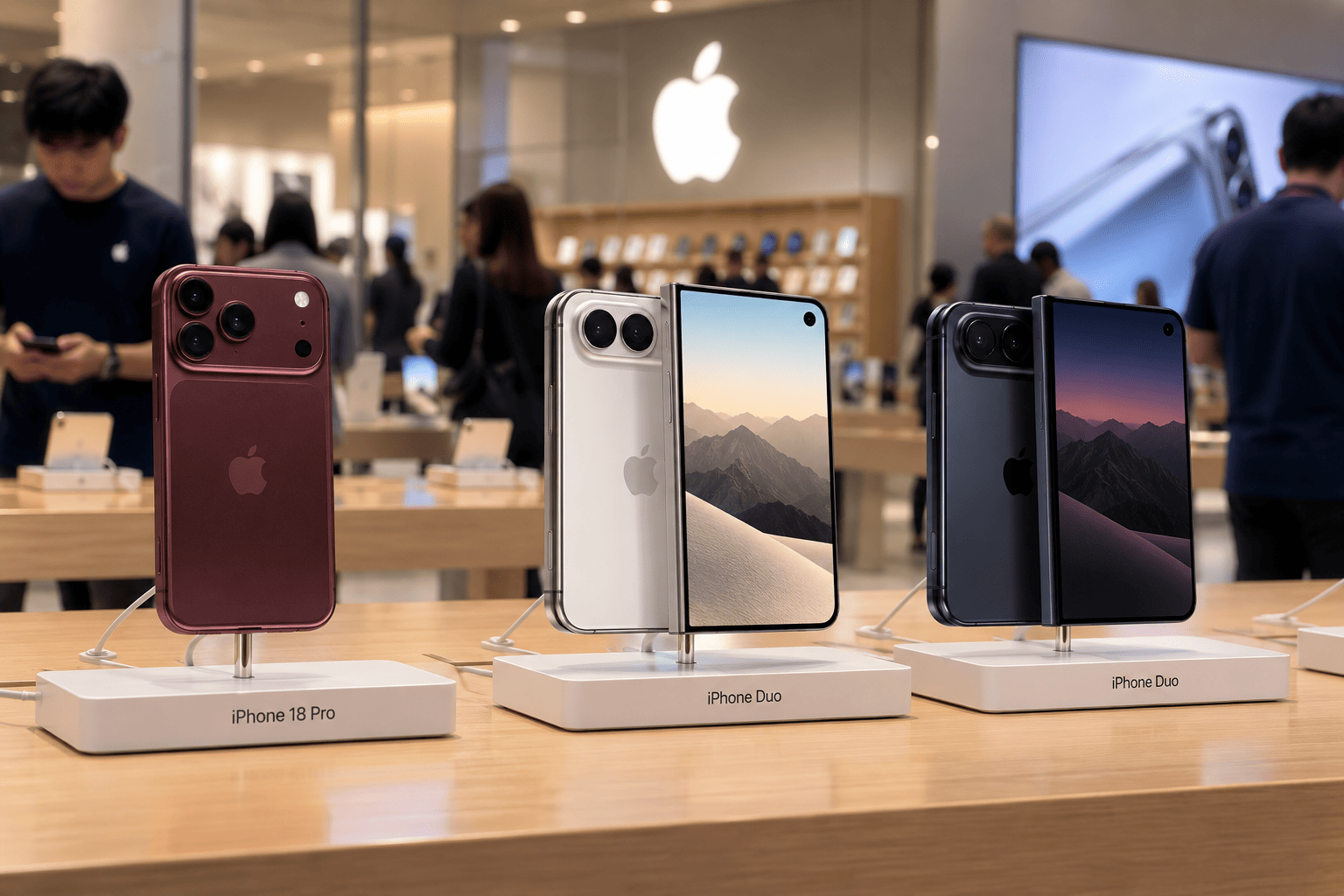
Apple Inc. (AAPL) shares traded roughly 1% lower on Tuesday, reflecting cautious market sentiment even as the technology sector showed relative resilience. The decline comes as investors digest the initial demand signals for the iPhone 18 lineup, the rollout of a redesigned Siri, and analyst commentary on the company's growth prospects.
Redesigned Siri enters beta with iOS 27
Apple released iOS 27 on Monday, introducing its long-awaited Siri overhaul in beta form, just days before the latest iPhones hit store shelves. The update brings the delayed AI-powered assistant back into focus as Apple seeks to expand its consumer artificial intelligence offerings.

Users must opt in through the Settings app to access the new Siri, and some may be placed on a waitlist before gaining access, according to CNBC. Apple first unveiled the more personalized, AI-driven Siri in 2024, but the upgrade was postponed last year.
The timing of the rollout aligns with the company's hardware refresh cycle and could provide an additional incentive for customers to upgrade. Analysts have also pointed to Apple's large installed base and aging iPhone fleet as potential catalysts for a broader replacement cycle.
Analysts see growth potential from iPhone cycle
Gene Munster of Deepwater Asset Management expects Apple's staggered iPhone launch schedule to push some growth into the March and June quarters. Wall Street currently anticipates roughly 14% to 15% growth in the March quarter, according to Munster, who believes growth could approach 20% as delayed product launches contribute to sales.
Munster also highlighted Apple's pricing power, noting that previous price increases had minimal impact on customer retention, suggesting strong ecosystem loyalty. Dan Ives of Yorkville Ives sees another catalyst in the installed base, estimating that around 300 million iPhones have not been upgraded in more than four years. That creates a sizable replacement opportunity as Apple adds more AI capabilities.
Ives also expects the planned foldable iPhone, referred to as Duo, to eventually account for 15% to 20% of sales among Pro and Pro Max customers. He anticipates limited customer churn from a roughly $100 price increase, though he cautioned that Apple's pricing power has limits as higher memory costs pressure margins.
iPhone 18 lead times trail last year
Evercore ISI reiterated an Outperform rating and $365 price target on Apple following the start of pre-orders for the iPhone 18 Pro and Pro Max. Pre-orders began on September 12, with devices scheduled to launch on September 18.
Average delivery times for the Pro Max stood at 25 days, compared with 19 days last year, while the Pro showed 16 days versus 12 days previously. However, JPMorgan said early delivery lead times for the iPhone 18 Pro and Pro Max were tracking below last year's iPhone 17 launch.
JPMorgan's analysts, led by Samik Chatterjee, reported that global at-home delivery timing averaged seven days for the Pro and 19 days for the Pro Max, versus 15 and 24 days a year earlier. In the US, which accounts for about 34% of iPhone shipments, lead times were two days for the Pro and 22 days for the Pro Max, compared with four and 21 days last year.
China recorded the largest year-over-year shift, with lead times of 13 days for the Pro and 21 days for the Pro Max, versus 30 days for both models last year. JPMorgan expects the foldable Duo to gain traction in China, where consumers are already familiar with foldable devices from domestic manufacturers.
The bank cautioned against drawing firm conclusions from the early data, noting that supply allocations can differ from previous years. Tracking how lead times evolve over time will be important for assessing underlying demand.
As analysts continue to monitor early demand signals for the iPhone 18 lineup, investors may also want to consider broader tech trends, such as the recent memory stock volatility and the AI-driven growth at Oracle, which could influence sentiment across the sector.
This article is for informational purposes only and does not constitute financial advice.

