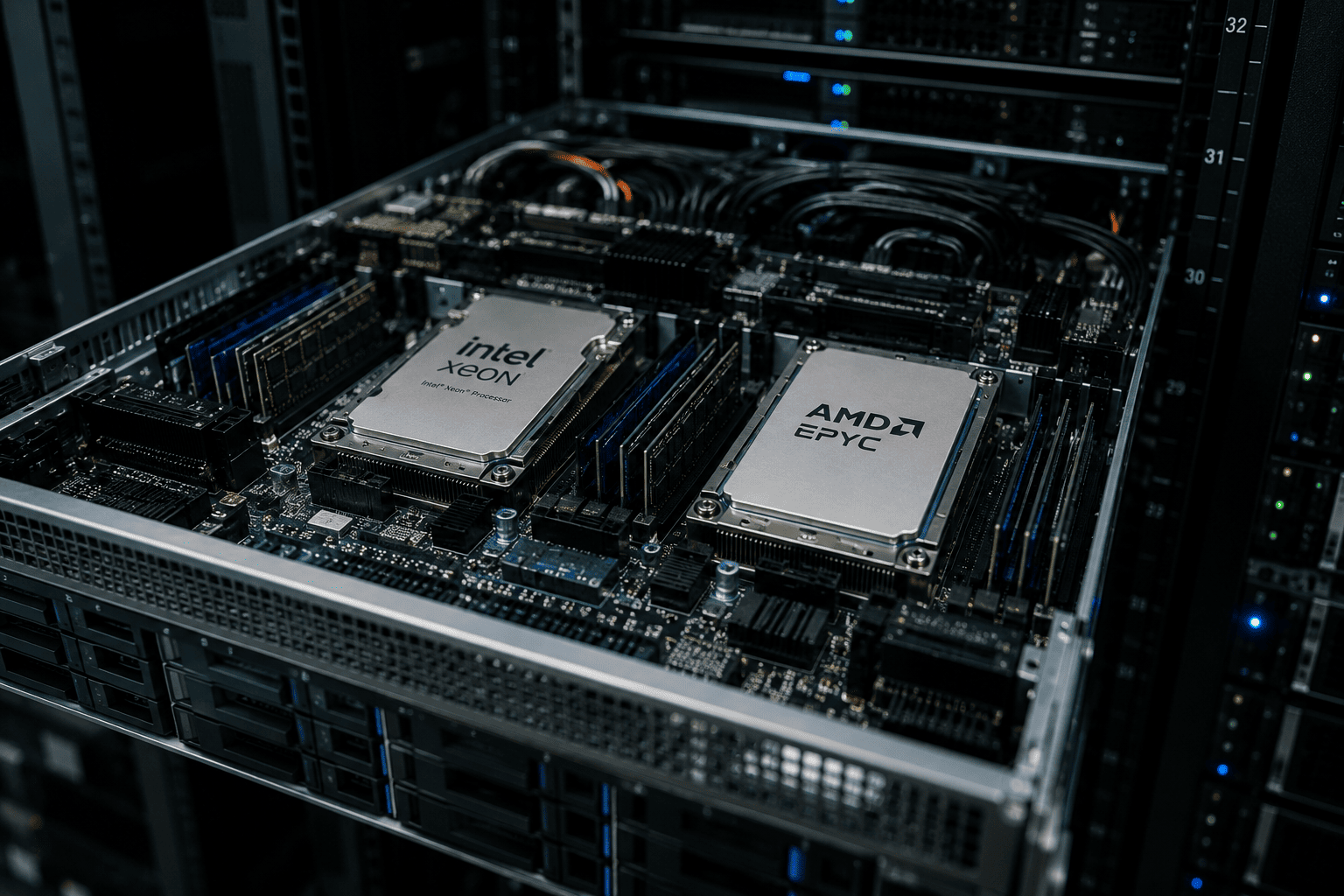
Shares of AMD and Intel each surged approximately 13% on Thursday, leading a broad semiconductor rebound after Microsoft's quarterly earnings eased fears that massive AI infrastructure investments were not generating returns. The rally reversed several sessions of losses for the chipmakers, which had been under pressure from concerns over AI spending, valuations, and intensifying competition.
The iShares Semiconductor ETF (SOXX) rose more than 8% on the day, reflecting a sector-wide recovery. Microsoft reported stronger-than-expected Azure cloud growth, which helped restore investor confidence in the long-term payoff of AI-related capital expenditures. The positive sentiment spread across the chip industry, with many names recouping recent declines.

Susquehanna raises AMD target on data center momentum
Analyst Christopher Rolland of Susquehanna reiterated a Buy rating on AMD and lifted his price target to $500 from $450, citing stronger prospects for the company's data center business. He expects AMD to deliver improved financial results and guidance, driven primarily by server CPUs and data center GPUs.
Rolland noted that server CPU demand could exceed expectations as the total addressable market expands, while new customer wins support a ramp-up of the MI450 data center GPU. He now forecasts more than $31.5 billion in data center revenue for 2026, with both server processors and GPUs accelerating significantly during the fourth quarter of that year.
The analyst highlighted AMD's AI roadmap, pointing to continued MI350 GPU growth in the first half of 2026 followed by a "significant ramp" later in the year as the MI450 platform and Helios infrastructure launch. Initial deployments are expected to be led by customers including OpenAI and Meta. Rolland also noted AMD's 2-gigawatt infrastructure agreement with Anthropic, with the first 1-gigawatt deployment expected in the first half of 2027. Management is targeting AI-related revenue in the "tens of billions" of dollars by 2027.
Rolland added that CEO Lisa Su has increased AMD's estimate for the 2030 server CPU market to around $220 billion, reflecting growing demand from agentic AI workloads, where some applications now require CPU-to-GPU ratios greater than one. Beyond AI infrastructure, Susquehanna expects AMD's client PC business to outperform the broader market through enterprise market share gains and pricing improvements, while embedded demand strengthens in FPGA applications serving AI, aerospace, and test equipment.
Intel benefits from improving server economics
Intel also received positive commentary from Wells Fargo, which highlighted improving pricing trends across the company's server processor business. Analyst Aaron Rakers noted that Intel's latest quarterly filing showed shipments of Xeon server processors increased 9% year over year, while average selling prices jumped 48% over the same period.
Rakers also pointed to stronger profitability in Intel's data center operations. The company's Data Center and AI segment reported a 56% gross margin, improving by 8.4 percentage points from the previous quarter. In addition, revenue from Intel's custom AI chip business tripled from a year earlier while generating $1.84 billion in operating income, underscoring stronger financial performance within its AI-related operations.
The rally in AMD and Intel comes after a period of heightened volatility in the semiconductor space, driven by concerns over AI spending sustainability and competition from Chinese chipmakers. For more context on the recent selloff, see our coverage of how chip stocks fell on AI spending doubts and the broader impact of China's CXMT IPO on semiconductor sentiment.
As the market digests Microsoft's results, investors are watching for further catalysts from upcoming earnings reports and AI-related announcements. The strong rebound suggests that while near-term volatility may persist, the fundamental thesis around AI infrastructure spending remains intact for leading chip suppliers.
This article is for informational purposes only and does not constitute financial advice.