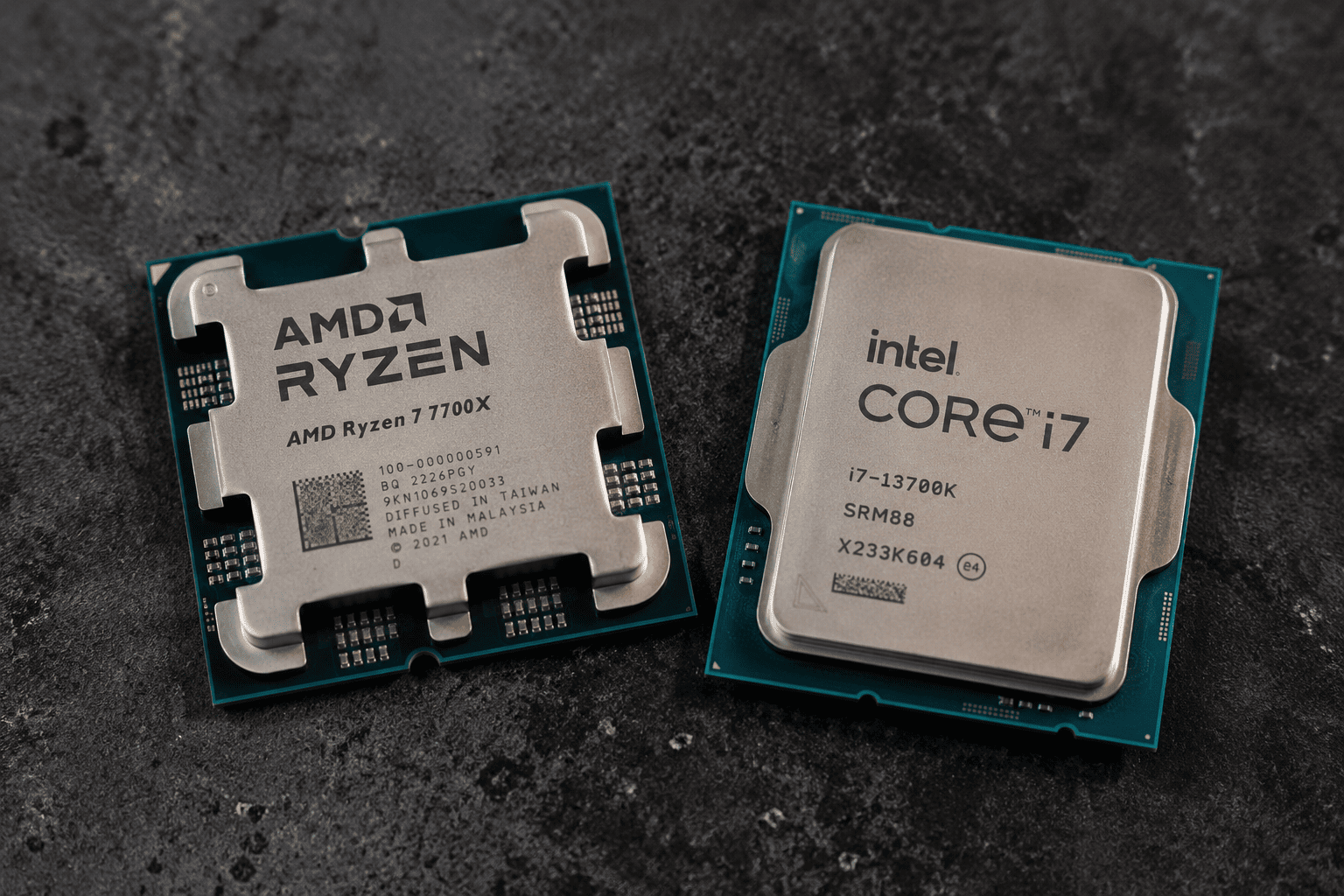
Shares of Intel and AMD came under heavy selling pressure on Tuesday, extending a broader rout in global semiconductor stocks as investors reassessed competitive dynamics and capital expenditure risks.
Intel stock fell roughly 6%, while AMD dropped about 8%, as the selloff spread from Asian markets. South Korea's Kospi plunged 10% and Japan's Nikkei declined 4%, driven by weakness in chipmakers.

China's CXMT reshapes memory chip landscape
A key catalyst was the blockbuster market debut of Chinese memory-chip maker ChangXin Memory Technologies (CXMT). The company raised 57.92 billion yuan ($8.6 billion) in its Shanghai IPO, Asia's largest listing of 2026, and saw its shares surge 466% on the first day, pushing its market capitalization to roughly $487 billion—making it the most valuable company on mainland Chinese exchanges.
The strong debut underscored growing optimism about China's semiconductor ambitions and heightened fears that domestic manufacturers could increasingly challenge established global memory suppliers. Apple has reportedly begun testing CXMT memory chips for devices sold in China, and the company could gain additional customers if US restrictions ease.
Nomura analyst Donnie Teng expects CXMT's market share gains to accelerate, noting that “strong demand for agentic AI will drive a more than sevenfold increase in global memory usage” by 2030. Morningstar also highlighted CXMT's position to benefit from China's push for semiconductor self-reliance, despite remaining behind global leaders technologically.
AI spending concerns weigh on sector
Investor sentiment also weakened amid growing scrutiny over artificial intelligence spending by major technology companies. A Wall Street Journal report that Nvidia could provide roughly $250 billion in financing support for OpenAI's planned data center project raised fresh questions about how aggressively semiconductor companies are investing in AI infrastructure and their own customers.
Intel, during its recent earnings, raised its 2026 capex outlook from $18 billion to $20 billion and indicated further increases for 2027. The report came ahead of earnings from Microsoft, Meta Platforms, Amazon, and Apple, with investors expected to closely examine whether massive AI investments are producing adequate returns. Growing competition from China added another layer of uncertainty after reports emerged that Chinese companies have begun producing advanced chipmaking equipment domestically.
The broader market also reflected these concerns, with the Nasdaq sliding as chip stocks extended their selloff ahead of the Federal Reserve and Big Tech earnings.
AMD expands AI infrastructure despite selloff
Despite Tuesday's decline, AMD continued expanding its artificial intelligence infrastructure footprint. The company announced an agreement with Core Scientific to secure access to as much as 2.5 gigawatts of AI-ready data center capacity. The partnership initially provides AMD customers access to more than 500 megawatts of capacity beginning in 2027, with room for future expansion. Core Scientific, which has increasingly shifted from cryptocurrency mining toward AI and high-performance computing, will also collaborate with AMD on physical data center design and deployment of AMD chips and software.
Wall Street analysts remain largely optimistic on AMD despite the recent weakness. Among 45 analysts covering the stock, the consensus rating is "Strong Buy," including 35 Strong Buy ratings, two Moderate Buys, and eight Holds. Mizuho analyst Vijay Rakesh recently reiterated a Buy rating while raising his price target to $625, implying approximately 26.3% upside from current levels.
For Intel, the Wall Street consensus is Moderate Buy, based on 11 Strong Buy ratings, one Moderate Buy, 31 Holds, and two Strong Sells among 45 analysts. The contrasting outlooks reflect differing views on each company's ability to navigate the intensifying competitive landscape and rising capital demands.
The selloff also weighed on other chip-related names, as seen in the Dow's modest gains being overshadowed by chip stock declines on China competition fears.
This article is for informational purposes only and does not constitute financial advice.