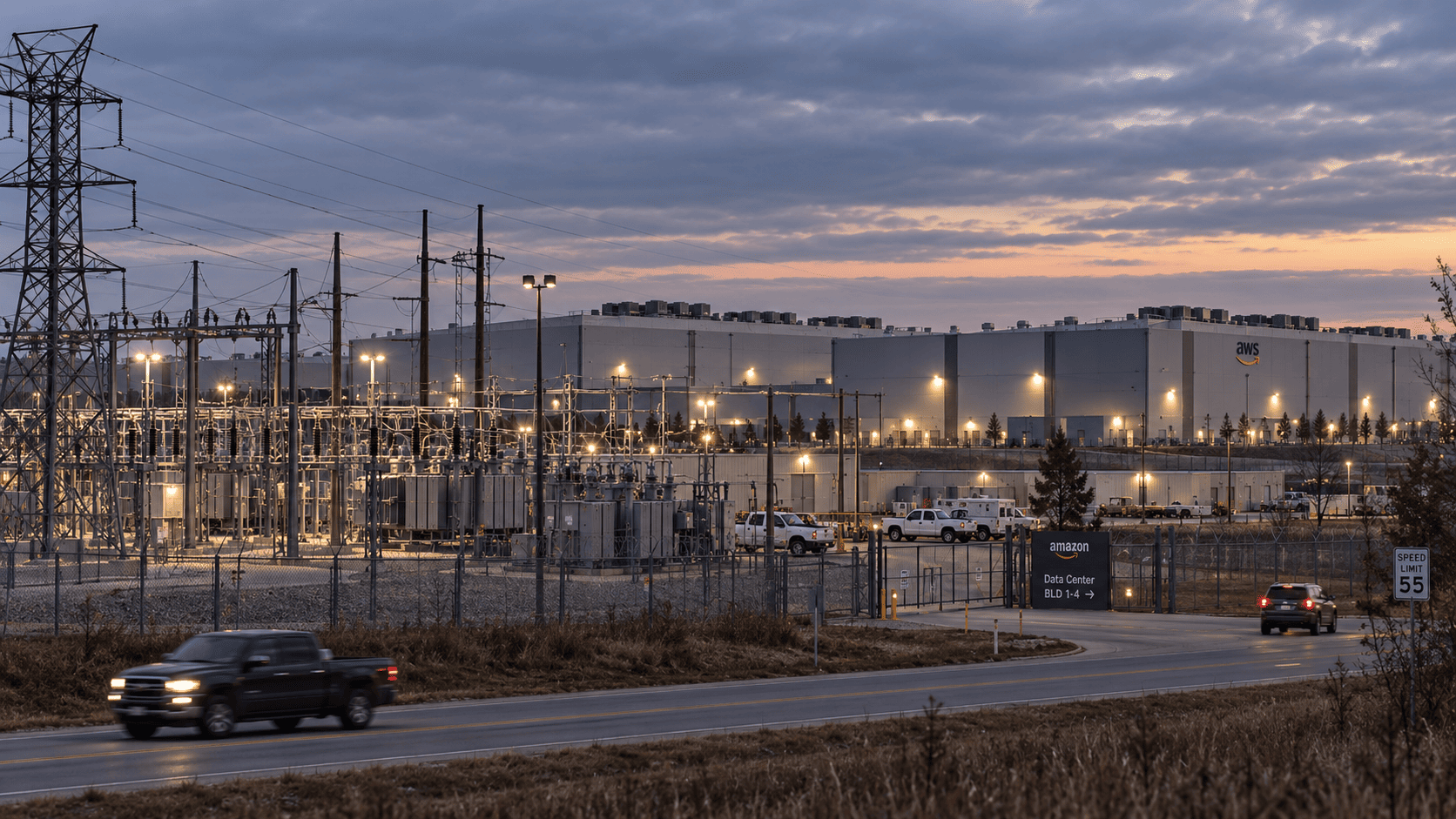
Amazon's massive data-center expansion in Ohio is hitting a potential snag as state lawmakers reconsider the tax incentives that helped make the region a cloud-computing hub. The company has invested nearly $40 billion in Ohio since 2015, but a growing political backlash over the cost of these breaks could alter the economics of its AI infrastructure push.
The immediate financial impact on Amazon's balance sheet is likely minimal, but the broader implications for its AI expansion are significant. If more states follow Ohio's lead and demand higher contributions from Big Tech, the return hurdles on new data centers could rise, potentially affecting Amazon's capital allocation decisions.

Ohio's Tax Break Under Scrutiny
Ohio's sales-tax exemption for data-center equipment cost the state more than $1.5 billion in 2025, far exceeding earlier estimates of around $136 million. Governor Mike DeWine paused new exemption requests in May while lawmakers review the program. Some legislators are pushing for a full repeal, while bipartisan proposals would require data centers to shoulder more of the costs associated with grid upgrades driven by their electricity demand.
Morgan Stanley analyst Ariana Salvatore noted on the firm's podcast that "the biggest debate far and away is on data center pushback," identifying Ohio as a state where development could become more conditional. This sentiment reflects a broader trend, with more than ten states reconsidering similar incentives as concerns over electricity, water usage, and infrastructure costs grow.
AWS Growth Remains Robust, but Costs Are Rising
Amazon's cloud division, AWS, reported second-quarter revenue of $42.2 billion, up 37% year-over-year—its fastest growth in 18 quarters. The company also revealed that its AI business has surpassed a $25 billion annual revenue run rate, growing at triple-digit rates. Amazon plans to spend roughly $220 billion on capital expenditures in 2026 to keep pace with demand.
Amazon has argued that investments in servers and networking can pay back in under three years, while data centers have a lifespan of over three decades. However, these returns are sensitive to operating costs, including taxes and power infrastructure. Mawer Investment Management analyst Irena Petkovic highlighted the risk: "You can be right, but still be wrong," meaning even if AI adoption is massive, investor returns could disappoint if pricing, margins, or financing costs move against infrastructure owners.
Financing and the Broader Market Context
Amazon is already financing its buildout aggressively. On Wednesday, it raised £4.25 billion (about $5.76 billion) in its first sterling bond sale. Hyperscalers have issued more than $200 billion in debt this year, underscoring the scale of investment. While Amazon's balance sheet remains strong, each additional tax, grid contribution, or financing cost raises the bar for new projects.
D.A. Davidson analyst Gil Luria has cautioned against extrapolating AWS's growth indefinitely. He told MarketWatch that forecasts of AWS reaching $1 trillion in annual revenue are "bold speculation," and projecting today's growth far into the future is "more than ambitious." Amazon maintains it cannot build capacity fast enough to meet demand, but the Ohio situation shows that policy and infrastructure costs can shift the calculus at the margin.
For investors, the key takeaway is that while Amazon's AI momentum is undeniable, the regulatory and cost environment is evolving. States like Ohio are becoming test cases for how much of the infrastructure burden will fall on tech giants. As Amazon's custom chip deals and AI supply chain dynamics play out, the cost of building and operating data centers will remain a critical variable.
This article is for informational purposes only and does not constitute financial advice.

