The AI trade has already survived one serious test this year. Semiconductor stocks plunged in June and July as investors questioned whether extraordinary valuations, leverage, and enormous infrastructure spending could be justified by future returns. Just weeks later, the sector has rebounded, with Micron reaching a trillion-dollar valuation and Nvidia heading into another closely watched earnings report. So has the market moved past the bubble fears, or has the next phase simply become harder to navigate?
That was the focus of the latest episode of Zero Sum, where Invezz's Lead News Editor Harsh Vardhan spoke with David Morrison, senior market analyst at Trade Nation, about the semiconductor rebound, Nvidia's looming earnings, SpaceX's volatile debut, and the risks building underneath the AI boom.
Semiconductor sell-off was a reality check, not necessarily a reversal
Morrison attributed the summer sell-off to several factors arriving at once. Semiconductor stocks had surged sharply earlier in the year as investors broadened the AI trade beyond Nvidia into companies including Micron, AMD, Marvell Technology, and SK Hynix. That rally eventually became difficult to sustain. Morrison pointed to excessive gains, leverage, and growing questions over when AI infrastructure spending would translate into meaningful returns. Concerns also emerged around the increasingly complex financing relationships between companies in the AI ecosystem.
The turning point came when earnings from major hyperscalers showed that the spending was already producing real business growth. Amazon and Microsoft, Morrison said, demonstrated that revenues from cloud computing were beginning to catch up with the enormous sums being invested in infrastructure. "They could actually see revenues coming off the spend." That helped restore confidence and sparked a sharp rebound across chip stocks.
Micron offers a real-world test of AI demand
The strongest evidence that AI demand is not purely a promise may be coming from the companies supplying the infrastructure. Micron's high-bandwidth memory (HBM) demand is a case in point. The company has secured contracts covering production well into the future, with capacity sold out before the chips are even made. Morrison sees that as evidence that investors are no longer simply betting on hypothetical AI demand. "It's evidence we're not just betting on growth and future growth." But he also offered an important caveat: semiconductor technology evolves rapidly, meaning investors still need to understand exactly what products are being contracted and whether today's hardware remains competitive as newer generations emerge. That uncertainty matters because AI infrastructure can be built on an enormous scale, but technology can change before the economics of that investment have fully played out.
The circular financing debate around AI has not gone away
If the AI trade has a major unresolved risk, it may be the increasingly interconnected flow of capital between its biggest players. Morrison acknowledged that the growing number of private placements and investments between AI-linked companies can create the impression that businesses are effectively supporting one another's valuations. "It does look like there's a lot of, you know, backscratching going on." Yet he also offered the bullish interpretation: companies putting substantial capital into the same ecosystem are demonstrating that management teams remain deeply committed to the AI opportunity. That leaves investors with a difficult question. Are these transactions genuine strategic investments that strengthen the ecosystem, or are companies increasingly helping reinforce each other's valuations? The answer may become clearer as the industry moves from aggressive investment toward the point where those investments are expected to generate returns.
SpaceX shows how quickly sentiment can overpower a strong growth story
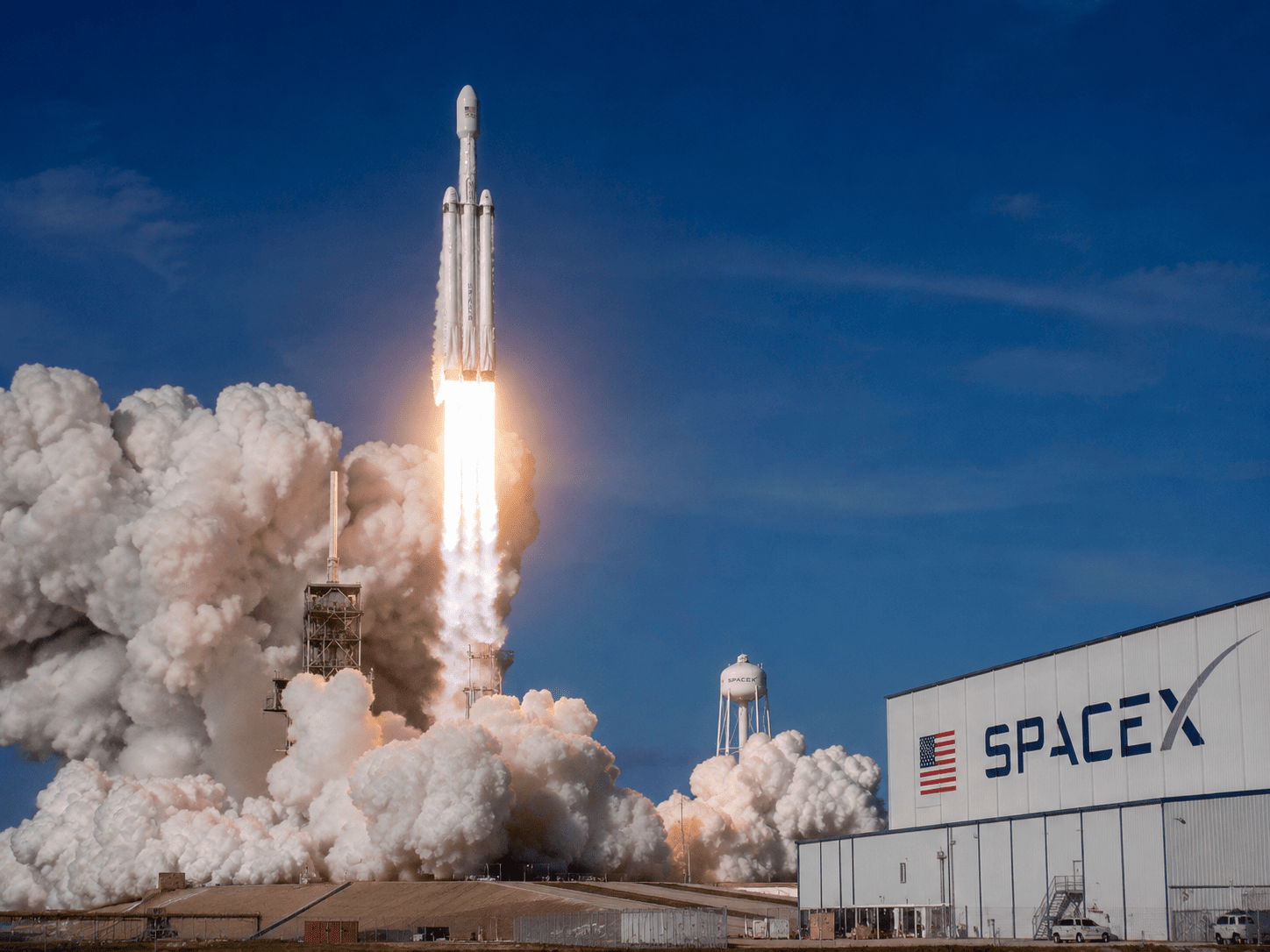
The post-IPO performance of SpaceX provided another example of the volatility surrounding the broader technology trade. After pricing its IPO at $135, the stock surged to roughly $230 before falling below $105. Morrison argued that the decline was partly shaped by the market's anticipation of lockup expirations following the company's Q2 earnings, which allowed early private investors to finally sell their shares. Because investors knew that a large volume of stock could eventually reach the market, the price had time to adjust before those shares became freely available. The subsequent rebound highlights another feature of the current market: strong sentiment can coexist with significant supply and valuation risks. For more on SpaceX's recent moves, see SpaceX's second share unlock.
The AI boom may still have room to run
The scale of AI infrastructure spending is now large enough that even the world's biggest technology companies cannot simply fund everything from excess cash. Morrison noted that some hyperscalers have turned increasingly to bond markets and, in some cases, equity issuance to finance their expansion. That marks a significant change from the earlier phase of the technology cycle, when the largest companies generated more than enough cash to fund investment while also returning money to shareholders. For investors already sitting on large gains, Morrison's message was therefore less about predicting the exact top and more about controlling downside risk. He also suggested that investors with substantial paper gains should consider stops rather than assuming a stock will eventually return to a previous high after a major decline. Most importantly, he cautioned against leverage. "These things are volatile enough as they are," Morrison said. Leveraged ETFs and other products can magnify losses, while daily resets can make their performance particularly difficult to understand over longer periods. For a deeper look at the chip sector's dynamics, check out Micron's $2,000 target and Nvidia's upside potential.
This article is for informational purposes only and does not constitute financial advice.