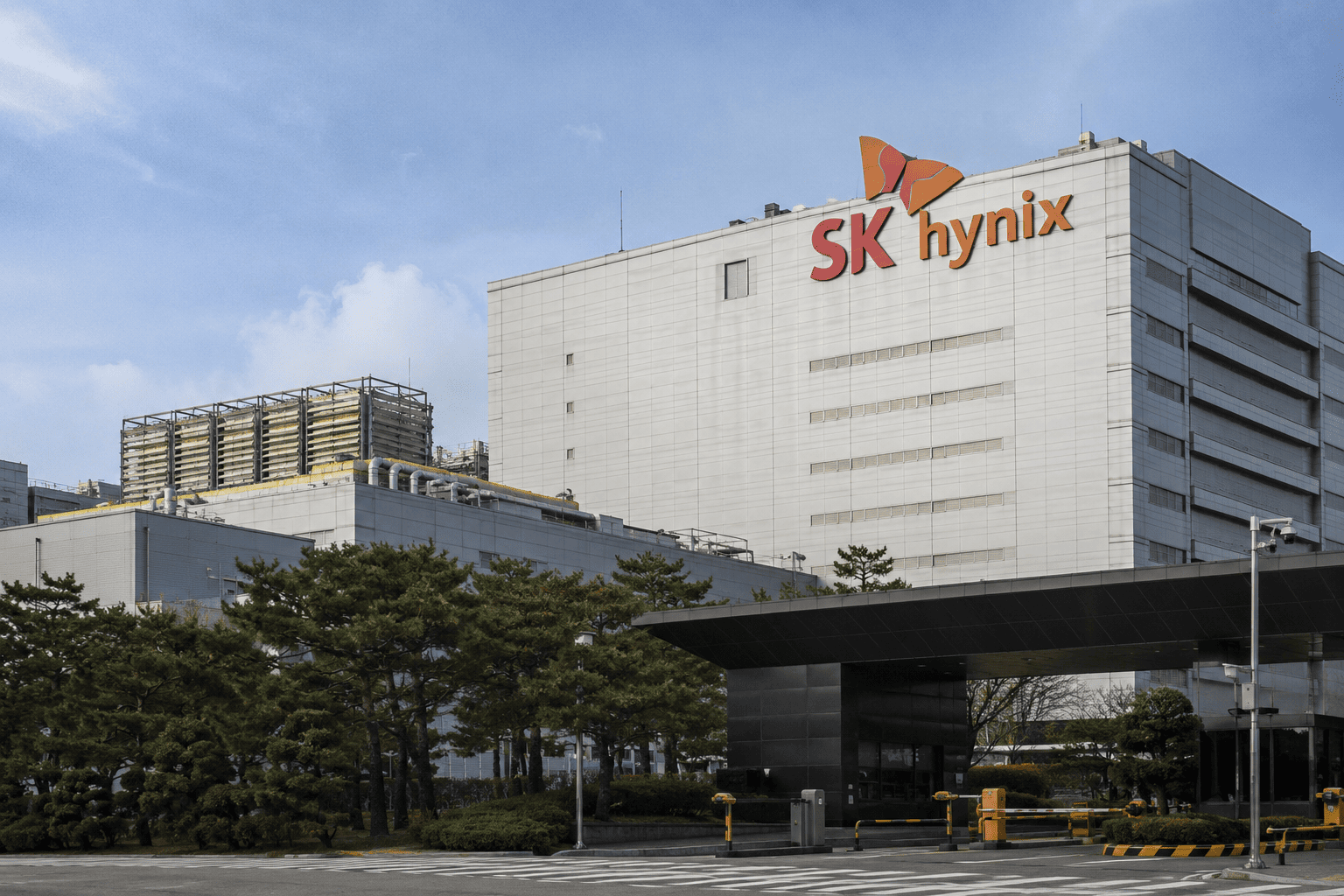
SK Hynix has overtaken Samsung Electronics to become South Korea's most valuable publicly traded company, a landmark shift driven by the global artificial intelligence boom and soaring demand for high-bandwidth memory (HBM) chips. The milestone underscores how AI is reshaping the semiconductor landscape, elevating specialized memory makers over diversified electronics giants.
Shares of SK Hynix rose 5.7% on Monday, pushing its market capitalization to approximately 2,082.5 trillion won ($1.5 trillion), narrowly edging past Samsung Electronics' 2,081.3 trillion won (excluding preferred shares). Samsung, however, argued that including preferred shares would value it at about 2,252 trillion won. Regardless of the calculation, the symbolic overtaking marks a dramatic reversal for a company that once teetered on the brink of collapse.
SK Hynix has emerged as a primary beneficiary of the AI infrastructure buildout, supplying HBM chips to key customers such as Nvidia and Alphabet's Google. HBM is a vertically stacked memory chip that offers faster performance and lower power consumption, making it essential for AI processors. Unlike conventional memory, HBM chips are tightly integrated with AI accelerators, creating high barriers to entry and giving suppliers significant pricing power.
The company's market value has surged more than 340% this year, making it the world's most valuable memory chipmaker by market cap, ahead of both Samsung and Micron. This rally reflects a broader trend where AI-related investments by tech giants like Microsoft, Google, and Meta have fueled a rebound in memory demand after a severe downturn in 2023, when SK Hynix posted an annual operating loss of 7.73 trillion won. By 2024, the company swung to a record operating profit of 23.5 trillion won.
Analysts attribute SK Hynix's success to its strategic decision to continue investing in HBM during the memory market slump, a bet that paid off handsomely. By 2025, SK Hynix captured 61% of the global HBM market, far ahead of Samsung's 17% and Micron's 21%. This focus on specialized memory contrasts with Samsung's broader portfolio, which includes logic chips, smartphones, and televisions—a diversification that has diluted its AI exposure.
SK Hynix's journey from near-collapse to market leadership is one of South Korea's most remarkable corporate turnarounds. In 2002, then-Hynix Semiconductor was on the verge of being sold to Micron after an aggressive expansion left it drowning in debt. The deal fell through, and the company remained under creditor control for nearly a decade. Its shares once traded as low as 135 won in 2003, earning it the label of a penny stock. The company was later acquired by SK Group, a family-run conglomerate, in a move that faced strong opposition at the time.
SK Group Chairman Chey Tae-won, in a book published in January, explained his vision: “What I really wanted to accomplish when we acquired Hynix was to transform it from a commodity memory producer into a mainstream semiconductor company whose products are indispensable.” He added, “In the past, it did not matter whether memory came from Hynix, Samsung, or Micron. They were interchangeable commodity products. HBM is different. If SK Hynix’s HBM is replaced with another product, the AI system may not function properly. What used to be a peripheral component has become a core component.”
The shift in market leadership has broader implications for South Korea's corporate landscape, where Samsung Electronics had held the top spot since 2000. As AI continues to drive demand for specialized chips, companies like SK Hynix are well-positioned to benefit, while traditional conglomerates may need to adapt their strategies. For investors, the rise of HBM underscores the growing importance of niche semiconductor suppliers in the AI era. For more on AI-driven market movements, see our coverage of Celestica's stock drop and Barclays' upgraded chip equipment forecast.
This article is for informational purposes only and does not constitute financial advice.