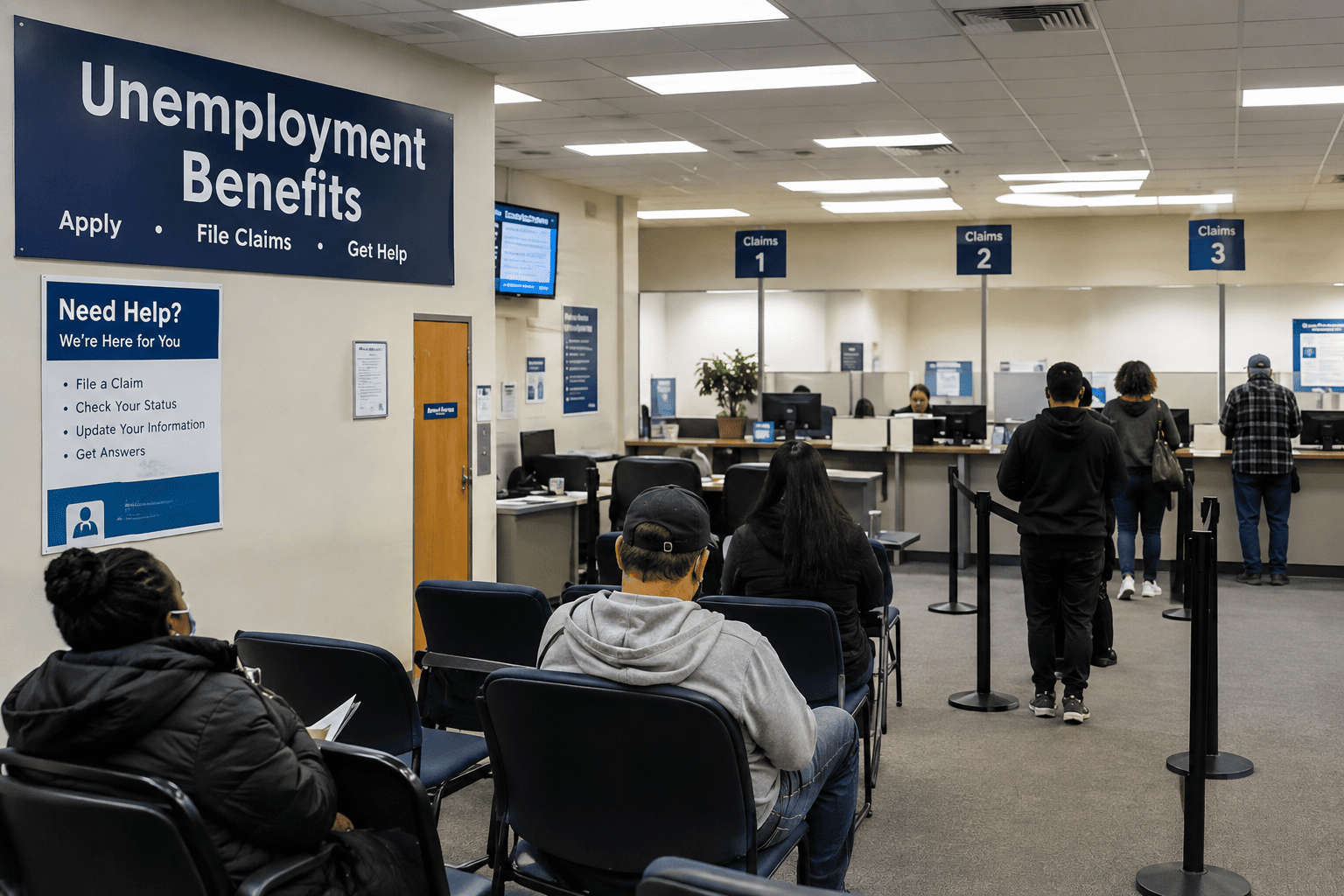
New applications for US unemployment benefits edged lower last week, while announced layoffs also declined in September, reinforcing a picture of a labor market that remains resilient even as economic headwinds intensify.
The Labor Department reported Thursday that initial claims for state unemployment benefits slipped by 1,000 to a seasonally adjusted 197,000 for the week ended September 26. That figure came in below the 200,000 that economists polled by Reuters had anticipated.

Claims continue to hover near levels not seen in 57 years, a sign that employers are still hesitant to shed workers despite elevated energy costs and geopolitical tensions. Analysts attribute this resilience to solid domestic demand and healthy corporate profit margins, which are helping to shield employees from widespread job cuts.
September Layoffs Decline
A separate report from outplacement firm Challenger, Gray & Christmas showed that planned layoffs by US-based employers fell 18% in September to 43,281. Announced job cuts were also 20% lower than a year earlier.
So far this year, employers have announced 573,195 layoffs, a 39% drop from the same period in 2025. Third-quarter planned layoffs declined 43%, further underscoring the limited scale of job reductions despite economic uncertainty.
However, the slowdown in layoffs has not translated into aggressive hiring. Employers announced plans to hire 90,787 workers in September, a sharp increase from the 12,325 planned hires in August, but still 23% below last year's level and the lowest September tally since 2011.
Challenger, Gray & Christmas noted that the typical seasonal uptick in hiring that begins in September failed to materialize. "Companies are in a wait-and-see period right now," said Andy Challenger, chief revenue officer at the firm. "Employers are facing high energy costs, an uncertain war in Iran, a rate hike that could make hiring more expensive, plus the likelihood of surging healthcare costs."
Fed Policy Adds to Hiring Uncertainty
The Federal Reserve last month raised its benchmark overnight interest rate by 25 basis points to a range of 3.75%-4.00%, its first increase in three years, and signaled that further hikes could follow. Higher borrowing costs can raise financing expenses for companies, potentially making them more cautious about expanding their workforces.
The latest claims report also showed continuing claims, which track individuals receiving unemployment benefits after their initial week of aid, fell by 11,000 to a seasonally adjusted 1.701 million in the week ended September 19. Although continuing claims remain near the lower end of their range this year, the data suggest that some workers who lose their jobs are taking longer to find new employment.
Consumer Confidence in Jobs Weakens
Other indicators point to a labor market that may be less comfortable for workers than the low level of initial claims implies. A Conference Board survey showed the share of consumers describing jobs as "plentiful" fell in September to its lowest level since February 2021, while the proportion saying jobs were "hard to get" rose to its highest level in more than 5-1/2 years.
The weekly claims data do not directly feed into September's employment report because the latest figures fall outside the survey period. Economists surveyed by Reuters expect nonfarm payrolls to have increased by 90,000 in September, following a gain of 162,000 in August. The unemployment rate is forecast to remain at 4.1% for a third consecutive month, although economists see risks skewed toward a higher reading.
Together, these indicators suggest a labor market characterized less by widespread job losses than by cautious hiring, with companies retaining workers while limiting the pace at which they add new employees.
This article is for informational purposes only and does not constitute financial advice.

