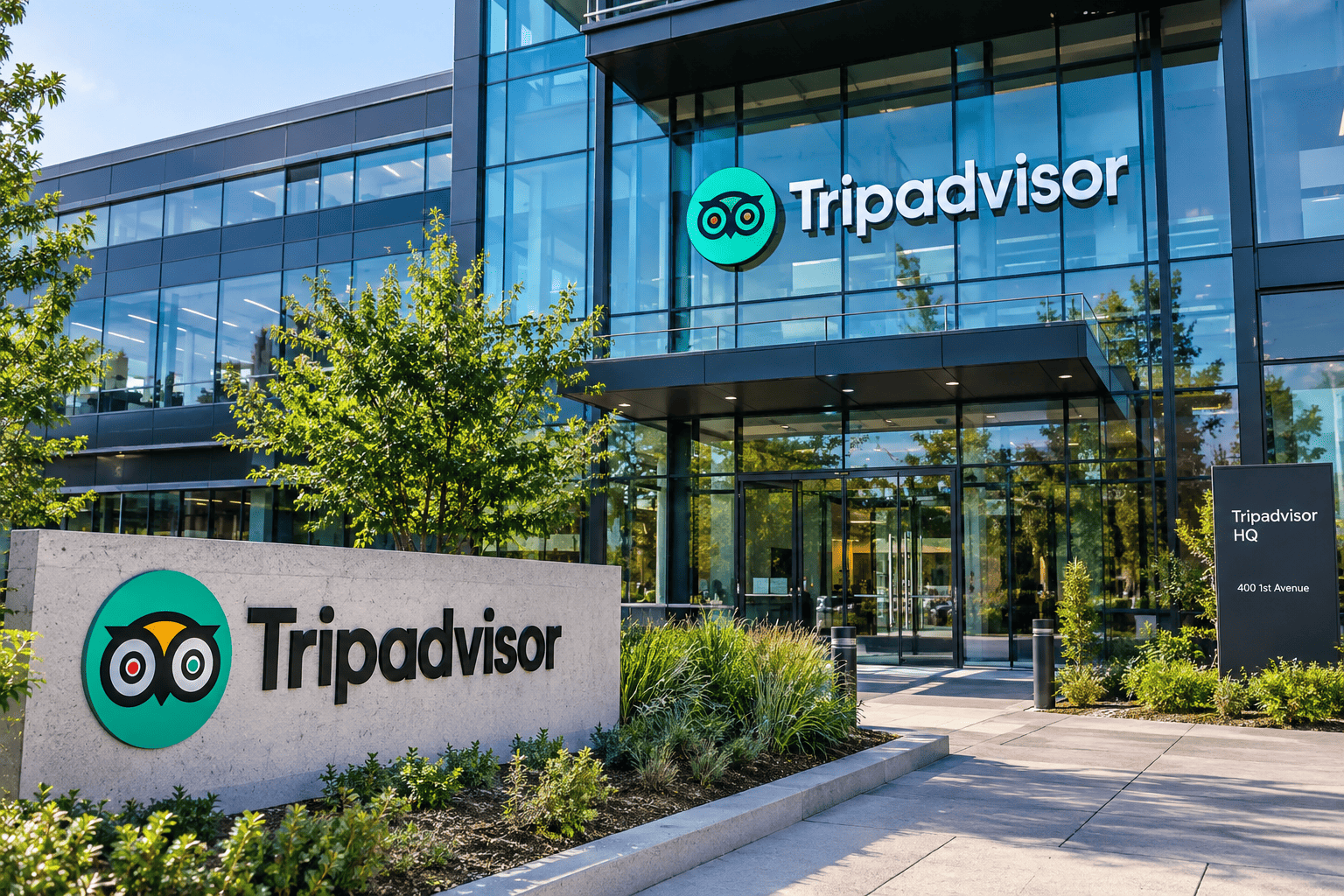
TripAdvisor's stock has tumbled to a historic low, underscoring the deepening challenges facing the travel platform. Shares fell to $8.82 on Thursday, marking the lowest point in the company's trading history and extending a decline that began nearly a decade ago when the stock peaked at $98.80 in 2014. The current price sits well below the $17.50 per share offer that a mystery buyer, widely speculated to be Apollo Global Management, had previously made for the company.
Revenue and profit pressures intensify
The company's latest earnings report revealed a 7% year-over-year drop in revenue for the June quarter, totaling $441 million. The decline was driven primarily by its Hotels and Other segment, which saw revenue fall 21% to $163 million. In contrast, its Experiences business generated over $278 million during the quarter, providing some offset but not enough to stem the overall slide.

Looking ahead, analysts anticipate the weakness will persist. Consensus estimates project third-quarter revenue to decline 17.8% to $453 million, with a further 17% drop in the fourth quarter to $340 million. For the full year, revenue is expected to reach $1.58 billion, down 16.2% from the prior year.
Meanwhile, competitors in the travel sector are faring better. Airbnb's annual revenue is projected to grow 15% to $14.16 billion, while Booking Holdings is expected to see an 8.7% increase to $29 billion. This divergence highlights TripAdvisor's unique struggles.
Traffic slump and competitive threats
A key factor behind TripAdvisor's woes is declining engagement on its platform. According to SimilarWeb data, the website attracted 100 million visitors last month, a 3.27% decrease from the previous month. The rise of AI-powered travel planning tools, such as those from OpenAI and Anthropic, has intensified competition and further eroded TripAdvisor's booking volumes.
Management has taken steps to address the situation. The company recently agreed to sell TheFork to American Express for $700 million, a move aimed at strengthening its balance sheet and improving capital allocation. Additionally, executives have indicated they are exploring other avenues to unlock shareholder value, with a potential sale being the most likely outcome. However, given the current stock price, securing a better offer than the one previously rejected appears unlikely.
Analyst sentiment turns bearish
Wall Street has grown increasingly pessimistic about TripAdvisor's prospects. UBS Group analysts lowered their price target from $15 to $12, while B. Riley Financial cut theirs from $13 to $12. Cantor Fitzgerald also reduced its target from $10 to $9. These revisions reflect concerns about sustained revenue declines and the competitive landscape.
Technical outlook points to further downside
From a technical perspective, the weekly chart shows TripAdvisor stock in a prolonged downtrend. The shares have broken below the key support level of $8.82, which had held in March and May of this year. The stock is trading below all major moving averages, indicating that bears remain in control. It has also fallen beneath the pivot and reverse level of the Murrey Math Lines tool. Based on this analysis, the next potential support lies at the Ultimate Support level of $6.25.
Investors should note that while the company is exploring strategic alternatives, the fundamental challenges—declining revenue, falling traffic, and intense competition—remain significant. The path forward is uncertain, and the stock's trajectory suggests more pain may be ahead.
This article is for informational purposes only and does not constitute financial advice.

