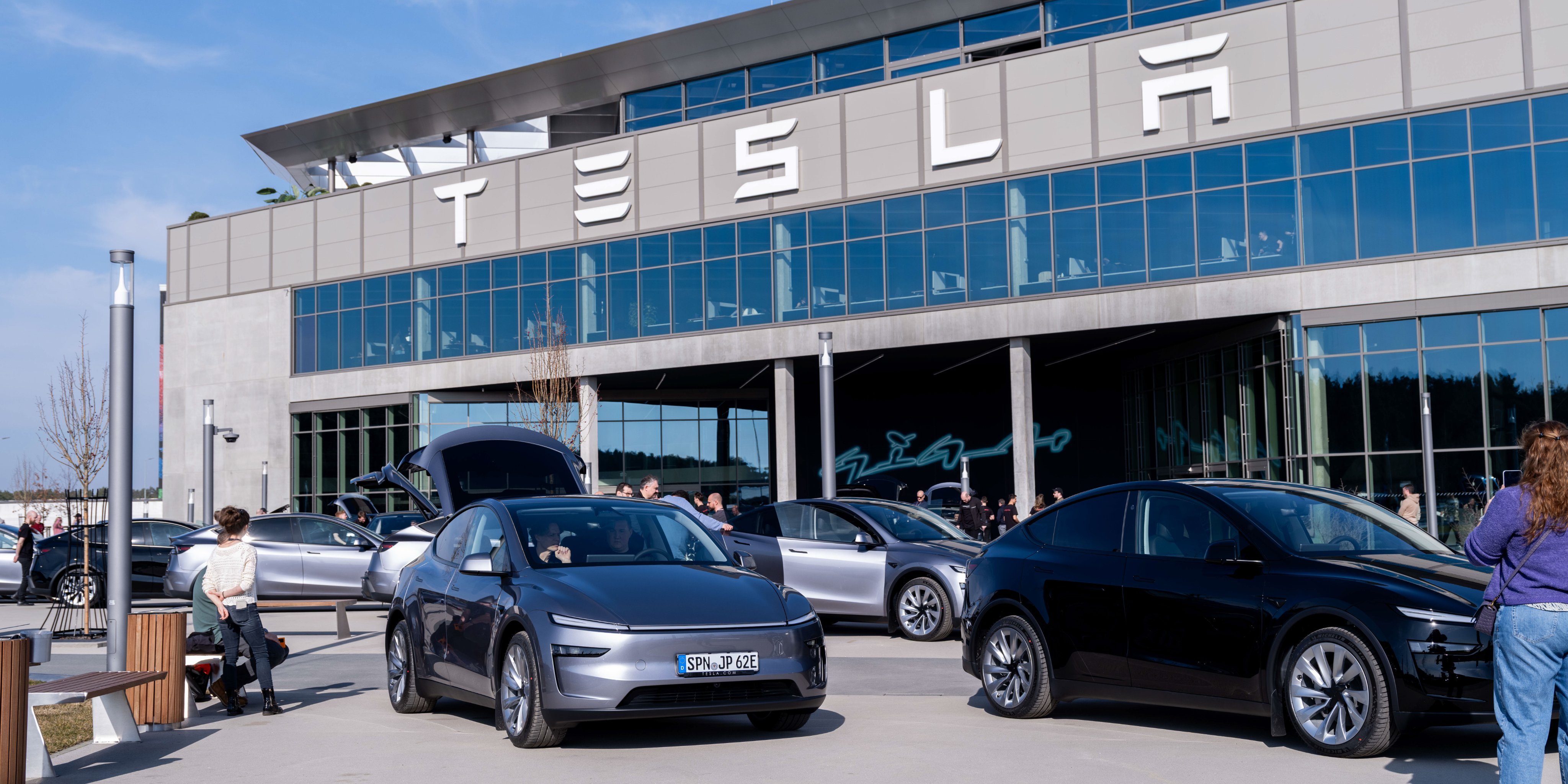
Tesla shares declined nearly 2% on Thursday, stretching their losing run to a fourth straight session as a broad technology selloff and speculation about a possible combination with SpaceX weighed on sentiment. The stock has now shed roughly 18% year to date, with investors weighing the company's artificial intelligence ambitions, a coming product reveal and the prospect of a major corporate restructuring under CEO Elon Musk.
Attention has shifted toward the idea of Tesla merging with SpaceX, a transaction that would fold Musk's automotive, space and AI interests more tightly together. Barclays analyst Dan Levy said Thursday that such a deal could be announced before Tesla's annual shareholder meeting on December 6, framing it as another step in Musk's broader AI strategy.

What a SpaceX tie-up could look like
Under the scenario outlined by Barclays, SpaceX would likely be the acquirer, with the transaction structured as an all-stock deal in which Tesla investors would receive SpaceX shares. On current valuations, SpaceX carries a market capitalization of about $2.1 trillion against roughly $1.5 trillion for Tesla. Musk would hold approximately 37% of the combined entity on those figures while retaining about 57% of its voting power, according to the analyst.
Musk has recently hinted at the possibility of combining the businesses, noting that Tesla overlaps "on so many fronts with SpaceX." A merger would bring together Tesla's electric vehicle and robotics operations with SpaceX's space technology and the two firms' wider AI efforts.
Roadster reveal draws the spotlight
Tesla is also preparing to unveil its long-promised Roadster sports car on Thursday at a SpaceX test facility in Texas. The company is expected to demonstrate a version of the vehicle capable of flying, adding to anticipation around the long-delayed model. Musk has described the planned debut as potentially "one of the most spectacular demos ever."
Even so, questions persist about the Roadster's commercial impact and whether the launch can meaningfully shift investor expectations. Andrew Rocco, a stock strategist at Zacks Investment Research, said the product could generate substantial excitement but may not move the company's financial performance. "It's going to be an exciting product. Likely, it's going to build a lot of hype, but I don't think that it's going to be a needle mover," Rocco told Bloomberg, adding that Musk "loves to build hype around the brand." The reveal thus becomes another test of Tesla's ability to convert product announcements into durable investor confidence.
Tech weakness and inflation add pressure
Tesla's slide also unfolded against a difficult backdrop for technology stocks, as worries about AI spending and financing costs weighed on companies tied to the sector. Investors have been reassessing the scale of investment needed to build AI infrastructure and whether those commitments can generate adequate returns, pressuring valuations across parts of tech.
The Philadelphia Semiconductor Index fell for a seventh consecutive session, and the Nasdaq composite also closed lower. Macro conditions added to the uncertainty: US wholesale inflation accelerated in September to its highest level since 2022, stoking concerns that price pressures could linger and limit the Federal Reserve's room to ease policy. Earlier in the day, UBS projected another Fed rate increase in March 2027, extending its forecast for the central bank's tightening cycle.
Higher interest rates can weigh on equity valuations by raising borrowing costs and making bonds more attractive relative to stocks. The prospect of prolonged monetary tightening has therefore added another source of pressure for growth-oriented companies, leaving Tesla caught between product-driven optimism and a tougher rate and spending environment.
This article is for informational purposes only and does not constitute financial advice.