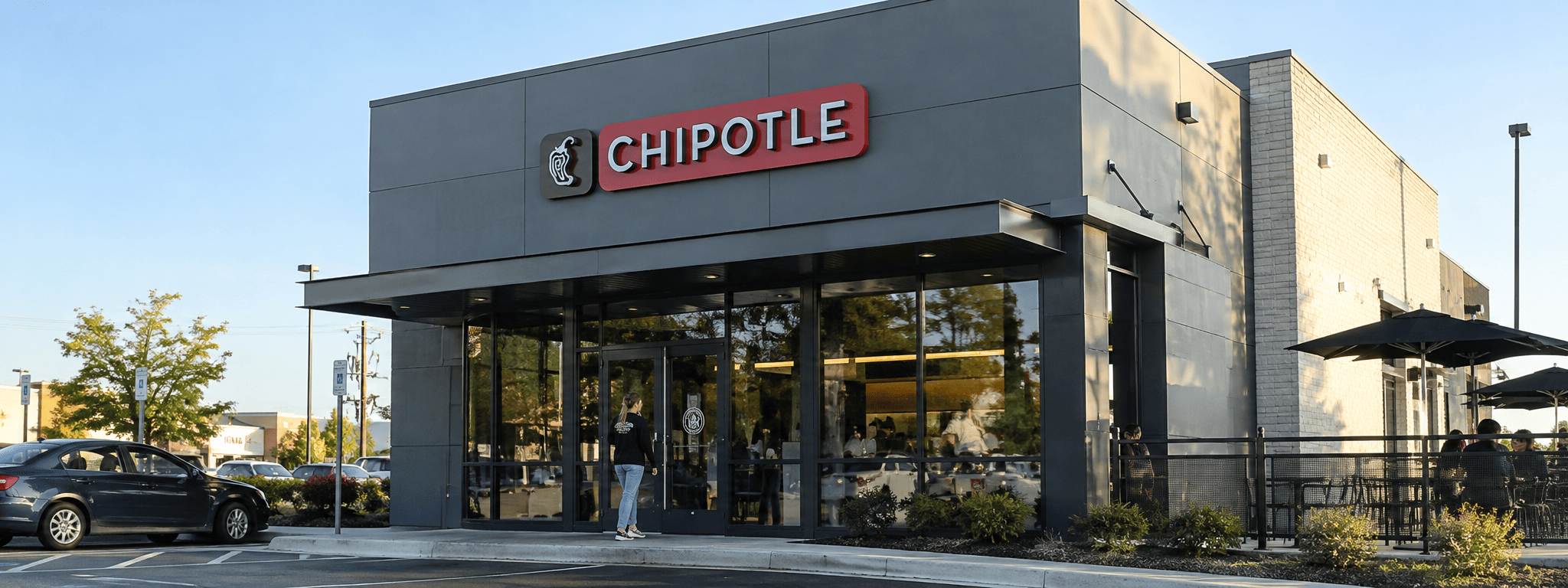
Wall Street was rattled on Thursday after the Financial Times reported that Starbucks (SBUX) had spent recent months working with advisers to explore a potential takeover of Chipotle Mexican Grill (CMG). The news sent Chipotle shares up as much as 7%, while Starbucks fell over 3%, as investors weighed the possibility of the largest fast-casual deal in retail history.
The speculative tie-up stems from CEO Brian Niccol, who led Chipotle before taking the helm at Starbucks. However, beneath the executive familiarity lies a corporate combination that makes virtually no sense financially or operationally.

Balance sheet strain and a lack of strategic overlap
From a purely financial perspective, a mega-merger of this scale would create immense structural friction. CMG carries a market cap of about $39 billion. Adding a standard M&A premium of 20% to 30% pushes a final transaction price toward $50 billion – a staggering figure even for Starbucks, which is currently valued at around $107 billion.
Financing a takeover of this size would force SBUX to either take on an overwhelming debt burden or drastically dilute its shareholders through equity issuance. Compounding this financial drag is the complete lack of supply-chain synergies between a coffee giant focused on beans and dairy and a Mexican grill dependent on cold-chain assembly and daily hand-prep fresh produce.
Chipotle deal might prove a distraction for Starbucks CEO
Beyond the balance sheet, the move presents an alarming operational distraction at a key juncture. CEO Brian Niccol was brought to Starbucks specifically to fix its internal issues – streamlining overcomplicated menus, restoring barista staffing levels, and addressing long morning wait times.
Attempting to absorb and integrate an entirely separate fast-casual restaurant empire while mid-turnaround risks derailing Starbucks' core recovery. Furthermore, managing two distinct dayparts – Starbucks’ morning beverage rush and Chipotle’s heavy lunch and dinner traffic – yields few cost efficiencies. Instead of unlocking hidden value, overseeing two disparate supply chains under one corporate roof would only split management’s focus when it’s needed the most.
The verdict: A high-priced fantasy that Wall Street will reject
While exploratory talks frequently occur when ambitious corporate executives evaluate expansion options, a completed transaction remains exceptionally improbable. The immediate divergence in market reaction – Chipotle rallying on buyout speculation while Starbucks shares slipped – underscores Wall Street’s profound skepticism.
Beyond the financial dilution and management distraction, any proposed merger uniting two major fast-casual leaders would face intense antitrust scrutiny from regulators. Ultimately, assembling a conglomerate loosely modeled on multi-brand holding structures does not solve Starbucks' immediate retail challenges. Investors brought Niccol on board to perfect the coffee experience, not to build a bloated, debt-laden dining empire.
Note that Wall Street analysts currently rate both Starbucks Inc. and Chipotle Mexican Grill stocks at Overweight, with mean price targets signaling significant upside from current levels.
This article is for informational purposes only and does not constitute financial advice.

