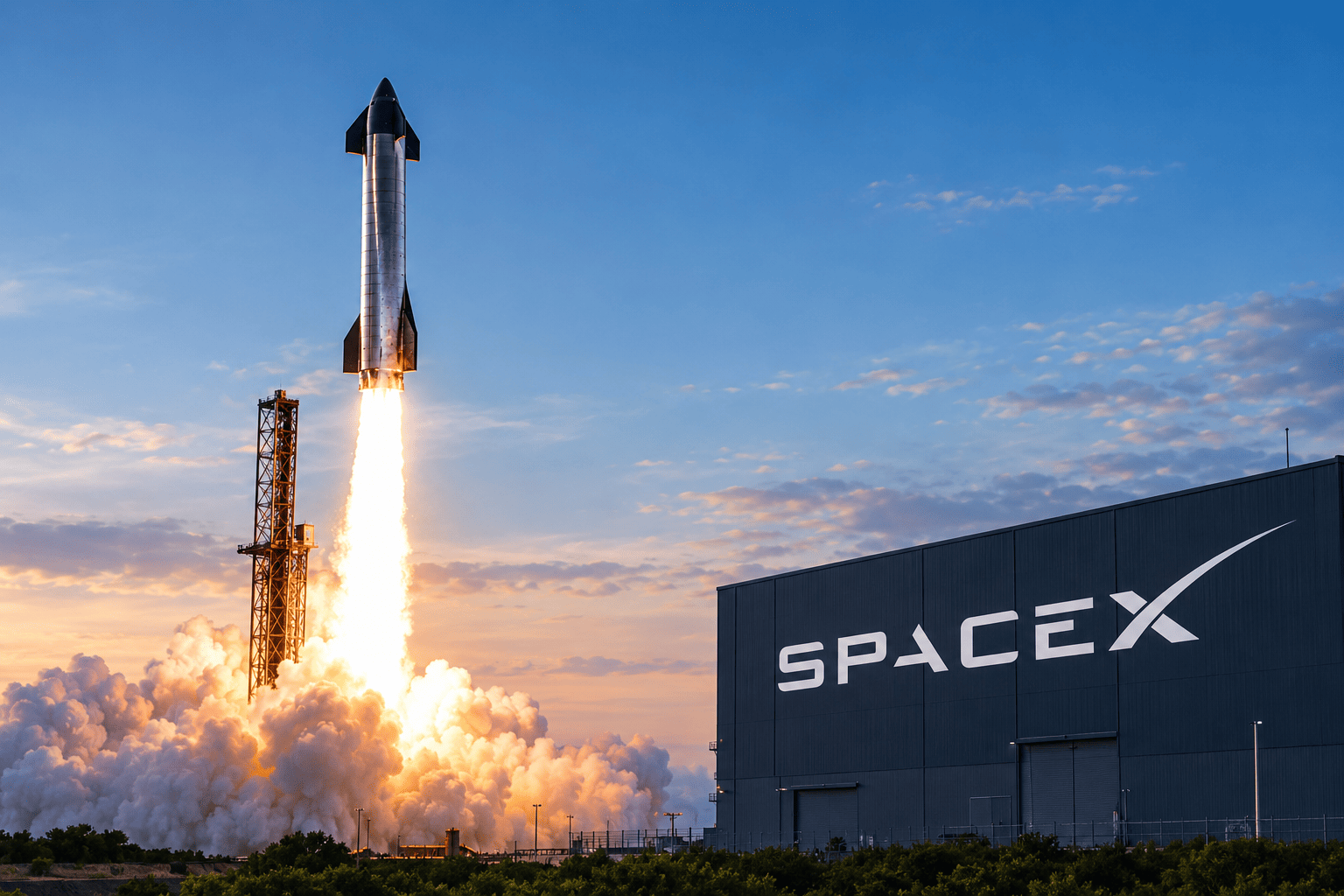
SpaceX (SPCX) shares fell approximately 1.6% in early trading Wednesday, snapping a three-day winning streak as a broader market sell-off, driven by surging Treasury yields, weighed on equities. The stock traded at $169.05, down from its previous close, while all three major U.S. stock indexes also opened lower.
The decline followed a robust run for the stock, which had gained 7.35% on Friday and another 7.63% on Monday. Tuesday saw a modest 0.49% advance after an early 2% jump. The pullback comes as investors digest a sharp rise in long-term bond yields, with the 10-year Treasury yield climbing to 5.36%—a 24-year high—and the 30-year yield rising about 7 basis points to 5.73%. Higher long-term yields can pressure risk assets as borrowing costs and valuation metrics are reassessed.

Adding to the pressure, SpaceX is reportedly planning to raise approximately $40 billion in new debt, according to the Financial Times. The proceeds are intended to finance purchases of Nvidia chips for its data centers. The proposed package would include about $10 billion in bank loans and $30 billion of investment-grade debt, led by Apollo Global Management, with the transaction expected to close in 2027.
This planned borrowing comes on top of an already substantial debt load. As of June 30, SpaceX reported $38.4 billion in debt and $1.1 billion in finance-lease liabilities, though it also held roughly $100 billion in cash and marketable securities. The combination of a sharp recent rally, renewed bond market pressure, and the sizable new debt plan converged to halt the stock's upward momentum.
The recent rally had been fueled by a series of operational successes. Last week, SpaceX completed a full orbital test of Starship and deployed all 26 Starlink V3 satellites despite an engine outage during ascent. The company also launched four astronauts to the International Space Station in under eight hours and assisted Google in deploying its Project Suncatcher in orbit.
Analyst commentary further boosted sentiment. Morgan Stanley's Adam Jonas reiterated an "Overweight" rating with a $300 price target, citing future potential. Goldman Sachs raised its 12-month price target to $230 from $220, maintaining a "Buy" rating. Expansion in artificial intelligence and defense businesses also served as catalysts.
Wednesday's decline reflects a confluence of factors: profit-taking after a strong run, rising yields, and concerns about the company's increasing leverage. Investors will likely watch for further details on the debt plan and its impact on SpaceX's balance sheet and growth strategy.
This article is for informational purposes only and does not constitute financial advice.

