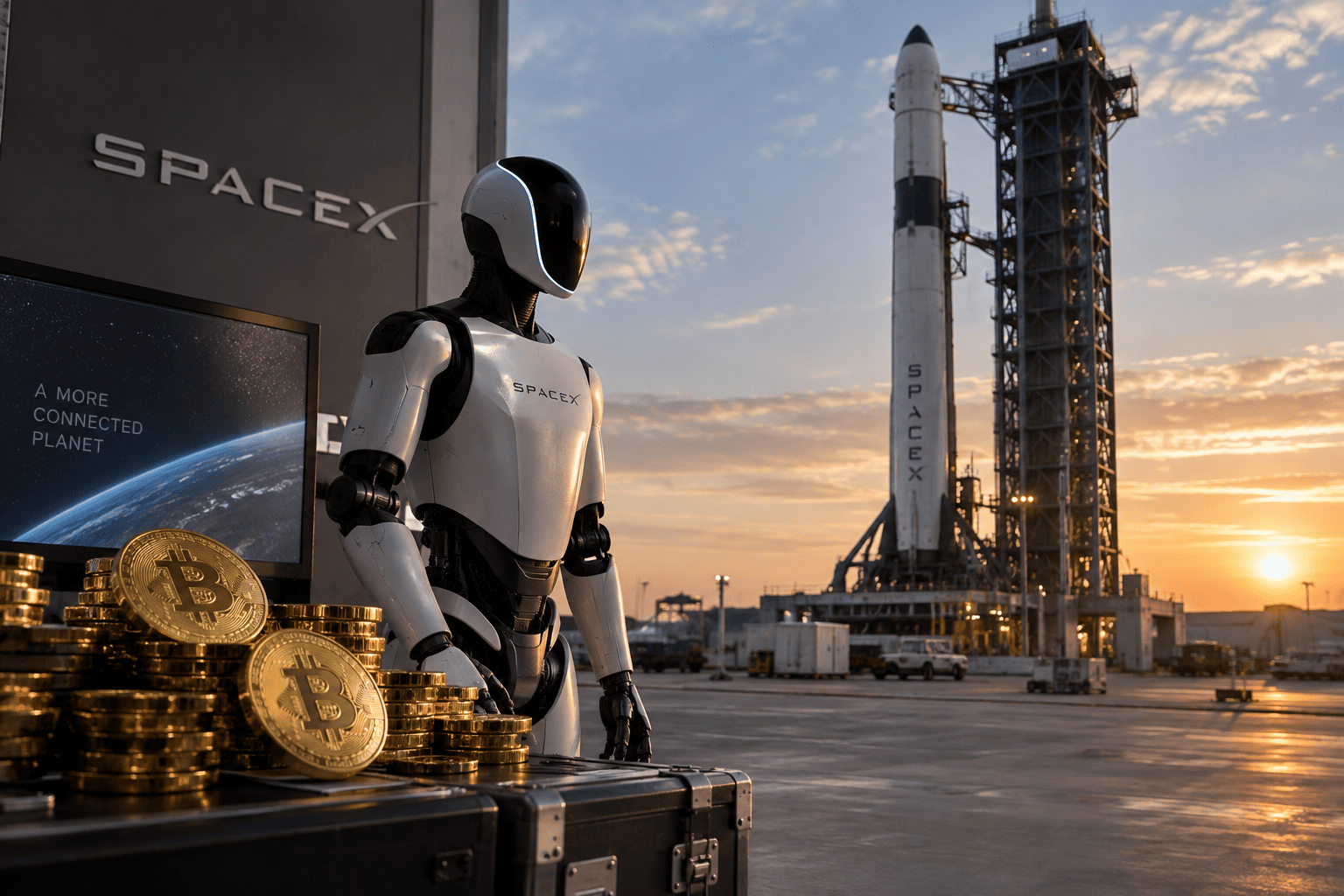
SpaceX shares have retreated from their all-time high, trading around $143.50 this week, down from a recent peak of $154. The pullback comes amid broader concerns about artificial intelligence safety, but the company's fundamentals remain strong. With revenue growing rapidly, especially in its AI business, and a major Starship launch on the horizon, the next five years could bring significant upside for investors.
Revenue growth remains the core catalyst
SpaceX's latest earnings report showed revenue jumped 92% year-over-year to $7.2 billion in the second quarter, with all three business segments contributing to the surge. The AI segment is a key driver, and the company has secured several large contracts, including a $1 billion per month deal announced last week, a $1.25 billion monthly agreement with Anthropic, a $950 million deal with Google, and a $150 million contract with Reflection AI.

Analysts project continued acceleration. Yahoo Finance data estimates SpaceX will generate $44.76 billion in revenue this year, up from $18 billion last year, and $109 billion next year. Goldman Sachs forecasts revenue could exceed $474 billion by 2030, while Morgan Stanley sees it reaching $3.4–$3.5 trillion by 2040. These projections underscore the scale of growth expected from the company's AI and space operations.
Wall Street remains bullish
Despite the recent dip, top analysts are optimistic. William Blair reiterated its outperform rating, and Pivotal Research initiated coverage with a buy rating and a $220 price target. Oppenheimer's Timothy Horan has an outperform rating and a $280 target, while Bernstein, Morgan Stanley, and Wolfe Research have also maintained positive stances. The average analyst price target is $221, implying substantial upside from current levels. Some analysts see the stock reaching $500 or more within five years.
Starship launch could be a milestone
The upcoming Starship mega-rocket launch, scheduled for September 22, is another potential catalyst. The company plans to deploy the first batch of third-generation Starlink satellites, with 26 V3 satellites set for orbit. This will be the second launch since SpaceX went public in June. A successful mission would mark a major step toward retiring the Falcon 9 and Falcon Heavy rockets, enhancing the company's competitive position.
Capital expenditure to peak and normalize
One key risk is rising capital expenditure. In the second quarter, capex jumped to $18.36 billion, up from $10 billion a year earlier, driven largely by AI infrastructure investments. The company is building data centers and its Terafabs plant, but it holds over $100 billion in cash to fund these projects. History suggests that heavy investment phases eventually taper off, leading to improved profitability. Similar patterns were seen with Meta Platforms, Alphabet, and Netflix after their IPOs.
For investors, the next five years could be transformative for SpaceX. The combination of robust revenue growth, analyst optimism, and upcoming milestones like Starship suggests the stock has room to climb, despite short-term volatility. As always, investors should consider their own risk tolerance and do thorough research before making decisions.
This article is for informational purposes only and does not constitute financial advice.

