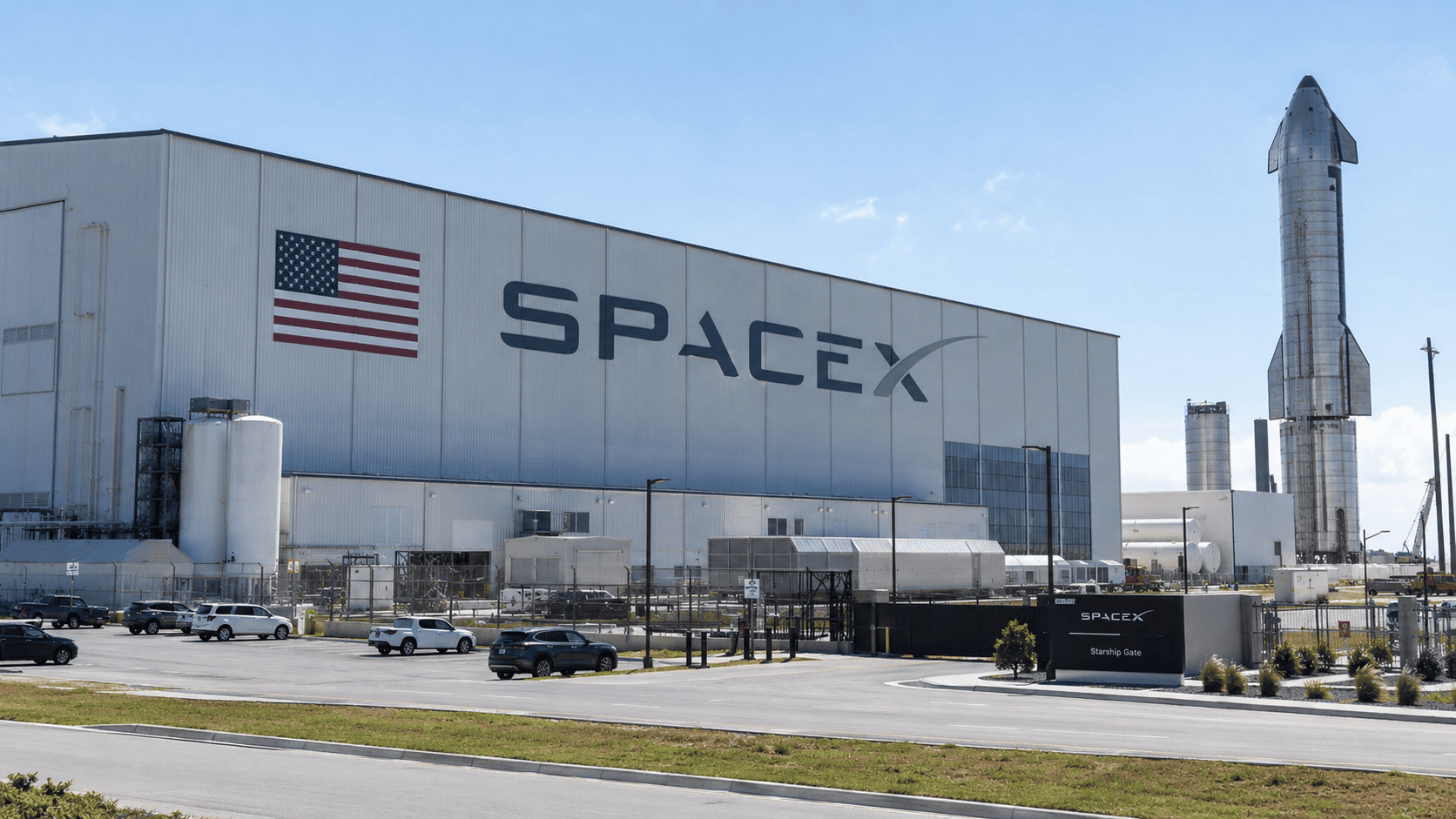
SpaceX is set to release its third-quarter earnings on Tuesday, with investors closely examining whether its rapidly expanding artificial intelligence operations can generate enough revenue to offset the massive costs of its infrastructure buildout. The report will provide a key test of whether Elon Musk's vision of integrating AI computing, satellite connectivity, and space-based infrastructure can deliver sustainable financial returns, or if mounting capital requirements and borrowing needs will emerge as significant risks.
According to FactSet data, SpaceX is expected to post earnings per share of 13 cents, a turnaround from the nine-cent loss recorded in the June quarter. Revenue is projected to reach $12.8 billion, marking a 64% increase year-over-year. In the second quarter, the company reported revenue of $7.8 billion, a net loss of $541 million, and AI-related capital expenditure of $15.8 billion. Since its IPO in June, SpaceX stock has declined over 8%.
AI Revenue Surge and Infrastructure Spending
A significant portion of the anticipated revenue growth is expected to come from SpaceX selling access to computing resources needed for AI model development and deployment. Deutsche Bank analyst Edison Yu estimates that AI revenue nearly tripled from the June quarter to approximately $6 billion, as reported by MarketWatch. Yu also calculates that the handful of customers signed to purchase AI computing capacity represent $54.5 billion in annualized run-rate revenue, which accounts for more than half of SpaceX's $100 billion year-end revenue target.
However, generating that revenue requires substantial investment in data centers, computing hardware, and supporting infrastructure. SpaceX must expand capacity to serve both internal AI development and external clients, while its ambitions to establish data centers in space could add another expensive dimension to the buildout. Yu noted in a client memo on Monday that he estimates SpaceX spent $19 billion in capital expenditure last quarter, primarily on AI computing infrastructure. Wall Street expects total capital expenditure to reach $67 billion by year-end, according to FactSet.
Financing Needs Emerge as Key Risk
The scale of SpaceX's investment plans raises questions about how the company will finance its expansion without straining its balance sheet. One analyst has estimated that infrastructure spending could reach as much as $336 billion in 2027. SpaceX reportedly aims to borrow $40 billion to finance Nvidia chips for its data centers, following a $25 billion debt raise just a few months ago. The concern is that expenditure could continue to balloon as SpaceX invests in data centers such as Colossus and AI products including Grok and its agent, Grok Bot.
Morgan Stanley analyst Adam Jonas identified financing as a major concern for investors. "Need for additional financing remains a key overhang for sentiment, especially given the recent neocloud debt saga," Jonas wrote in a note published Monday. "This is the biggest risk to our model, and we do not want to downplay it — although a hypothetical world where SpaceX cannot raise financing likely has much broader implications for the economy and the rest of an investor's portfolio." Jonas expects SpaceX to issue $60 billion, $80 billion, and $90 billion in debt in 2027, 2028, and 2029, respectively.
Evercore ISI projects SpaceX will exit 2026 with an annualized revenue run-rate of approximately $104 billion, with AI doing "most of the heavy lifting." The firm estimates capital expenditure could reach around $151 billion in 2027. The gap between anticipated revenue and infrastructure costs will be central to investors' assessment of whether the company's AI ambitions can produce sustainable returns.
Starlink and Starship Remain Core to Growth
Beyond AI, investors will monitor the performance of Starlink, SpaceX's satellite-internet business, and its efforts to compete more directly with traditional telecoms like AT&T and T-Mobile. Connectivity revenue, which includes Starlink, rose 66% to $4.3 billion in the second quarter. Earlier this month, SpaceX announced it would buy some low-band spectrum, moving closer to its ambition of becoming a mobile carrier and broadening its reach beyond satellite broadband.
Investors are also looking for updates on when Starship will fly again. The rocket is central to SpaceX's plans to deploy satellites and potentially support future space-based computing infrastructure. SpaceX last launched the giant rocket in September, briefly sending it into orbit for the first time and deploying 26 of its new satellites. "We believe that SPCX's unrivaled launch capabilities represent the foundational competitive advantage that enables all other parts of its business," bullish Citi analysts led by John Godyn said in a recent note, as reported by MarketWatch.
Tesla Results Put Merger Speculation in Focus
SpaceX and Tesla are scheduled to report third-quarter results on consecutive days this week, giving investors a chance to assess the financial performance of Musk's two most valuable companies amid growing speculation about a potential merger. The results will test whether Starlink's steady growth and Tesla's automotive profits can help support the enormous AI spending that has become central to the merger debate. Barclays suggested last week that a deal could be announced before Tesla's annual meeting, with SpaceX the likely acquirer.
This article is for informational purposes only and does not constitute financial advice.