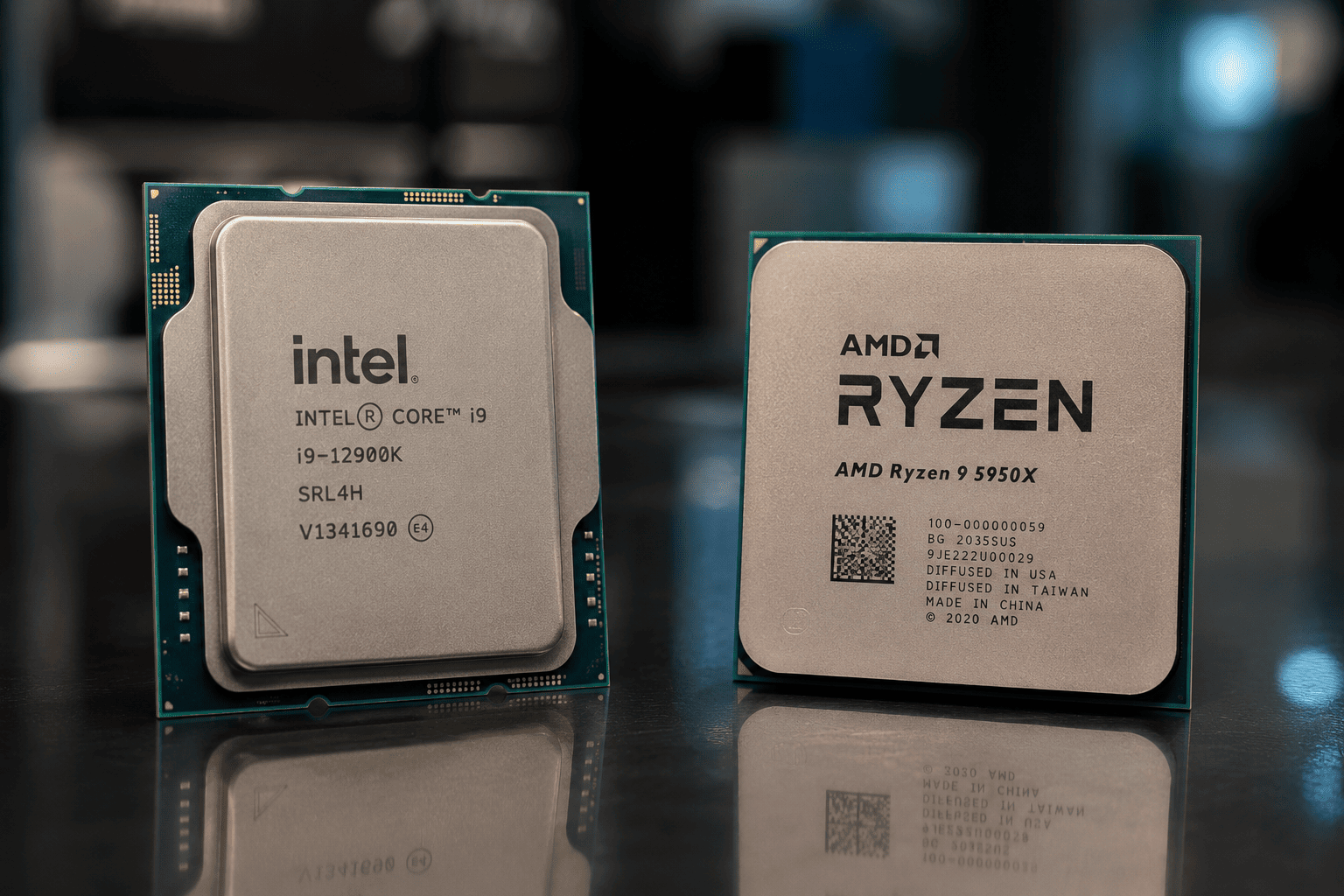
Shares of Intel and AMD climbed on Monday, recovering from a difficult week as investors bought the dip and a drop in crude prices added support to the broader market. Intel rose more than 4% at the open, while AMD gained over 3%.
The move came after JPMorgan upgraded Intel to Neutral from Underweight, citing improved execution under CEO Lip-Bu Tan and growing demand for AI computing that could support earnings growth. Analyst Harlan Sur said the risk-reward profile had become more balanced as the stock approached the bank's $85 price target.
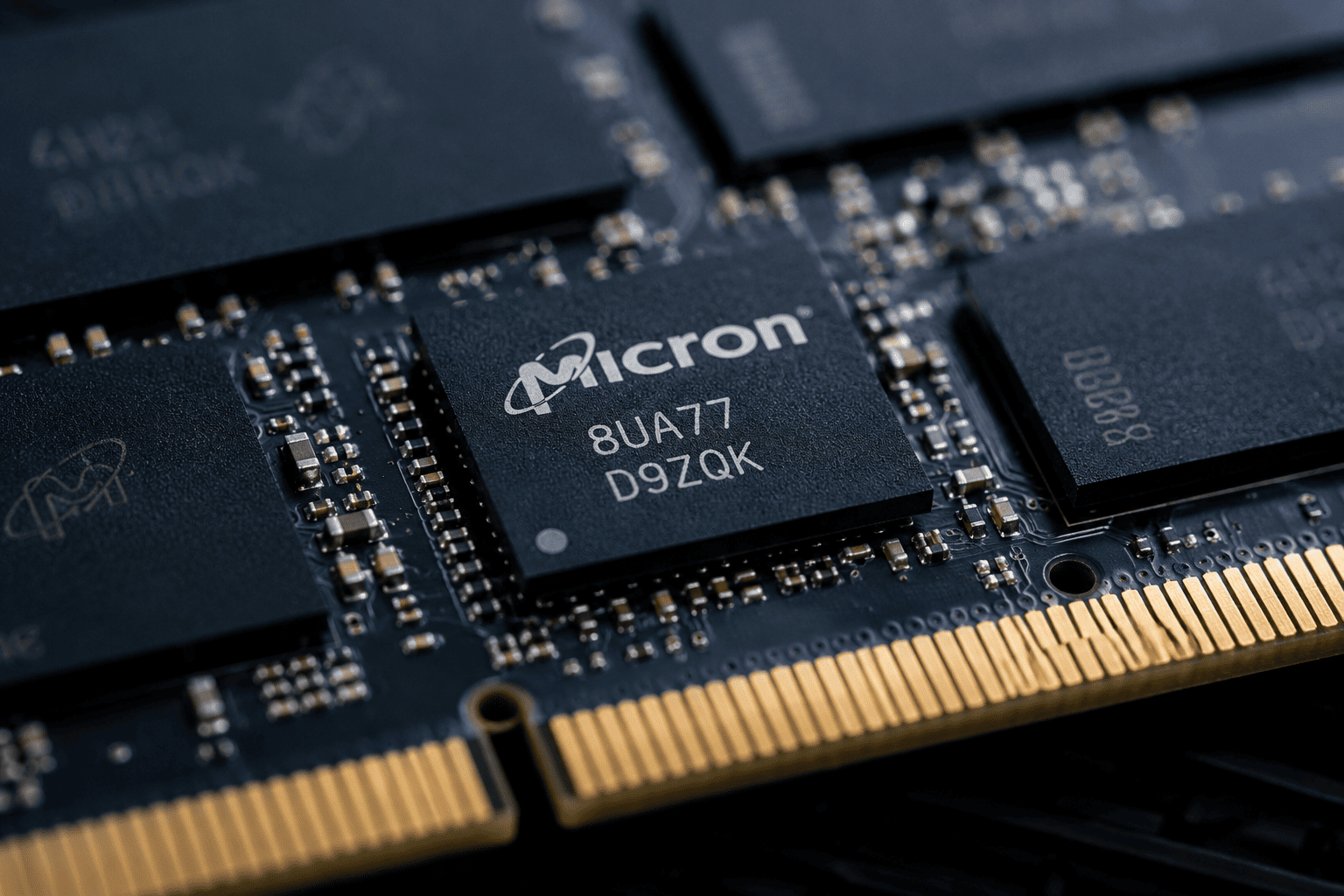
Intel shares have pulled back about 36% from their June peak, compared with a decline of 20% to 25% across the broader semiconductor group, Sur noted. Since JPMorgan downgraded Intel in November 2022, the company's share of server x86 CPU revenue has fallen from 77% to 53%, while its PC CPU market share has declined from 81% to 68%.
Sur expects Intel to lose further market share over the next few quarters, particularly in server CPUs. However, he sees potential support for earnings from increasing demand for computing resources and a tight supply chain for advanced chips. "We believe increasing agentic AI workloads (CPU-intensive) and a very tight supply chain for leading-edge silicon should drive continued positive EPS revisions in the upcoming earnings season and through CY27," Sur said.
JPMorgan's earnings-per-share estimates for 2028 are about 15% above consensus, suggesting the bank sees room for earnings expectations to improve. The upgrade also highlighted improvements in Intel's manufacturing operations and foundry business under Tan.
Sur said Intel had made progress on yields, manufacturability, compatibility between foundry processes and design rules, and advanced packaging. The company has also been pursuing new customer engagements. However, Intel's external foundry business remains small compared with industry leader TSMC. Intel generated barely $1 billion in annualised external foundry revenue in the first half of 2026, versus $150 billion for TSMC.
Sur said the improvements extended beyond manufacturing. "More importantly, since Lip Bu Tan's appointment to CEO, we believe the team's execution and competitiveness in their core client/datacenter compute market has improved, the team's execution on next-gen manufacturing has significantly improved," he said. JPMorgan will continue to monitor Intel's data centre CPU roadmaps, AI computing strategy, foundry customer engagements and pipeline of application-specific integrated circuit design wins.
In a separate announcement, Intel said it had enabled day-zero support for Meta Platforms Inc.'s Muse Spark Open, an 816-billion-parameter AI model, across its Xeon processors and upcoming GPU D-series. The company said it had successfully tested the model on four GPU D-series cards, each equipped with 160 GB of memory. Intel said the cards' air-cooled design allows them to be deployed in conventional data centres, potentially reducing infrastructure complexity.
The broader market also opened higher, with the S&P 500 gaining about 0.6% and the Nasdaq rising more than 1% at the open. Brent crude futures fell 1.3% to $108.40 a barrel after settling at a five-month high on Friday, while US crude futures slipped 0.3% to $101.15 a barrel.
This article is for informational purposes only and does not constitute financial advice.