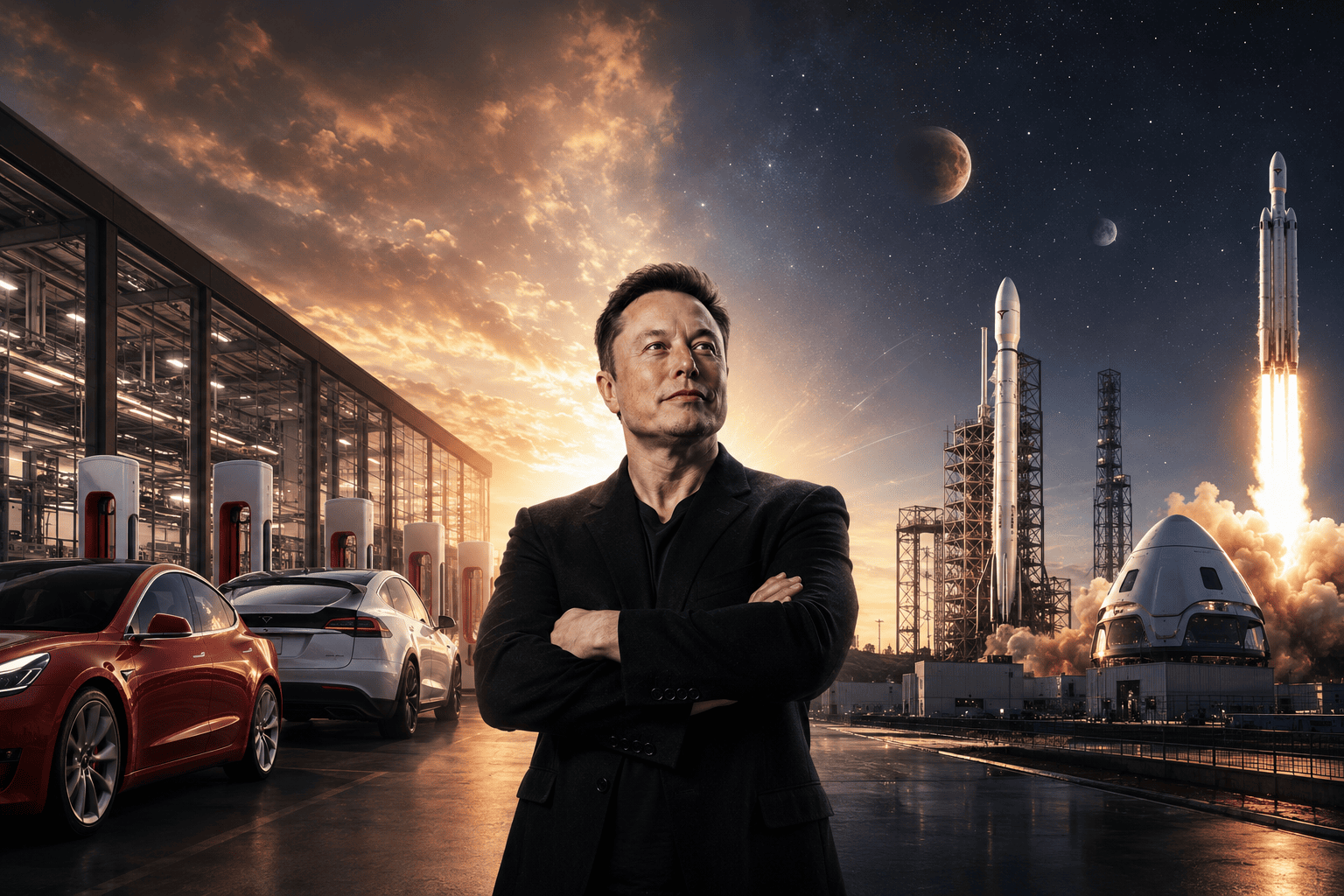
SpaceX (SPCX) has officially begun trading on the Nasdaq, but the conversation on Wall Street has already shifted to a far larger question: could Elon Musk merge his rocket company with Tesla (TSLA)? What was once a fringe idea is now being discussed by analysts, investors, and even company insiders.
According to a CNBC report, Musk has discussed the possibility of combining Tesla and SpaceX with colleagues. One current Tesla employee told CNBC that many workers have long expected such a transaction, while another source noted that shared challenges around computing power and energy infrastructure have increased collaboration between the businesses.
Shared Resources and AI Ambitions Fuel Merger Speculation
The case for a merger rests heavily on the growing operational overlap between the two companies. SpaceX disclosed in its IPO filing that it purchased $697 million worth of Tesla Megapack battery storage systems during 2024 and 2025 to support xAI-operated data centers in Memphis. The company also spent approximately $131 million on Tesla Cybertrucks in 2025. Earlier collaborations included Tesla supplying solar equipment and automotive components to SpaceX, while SpaceX helped develop specialized materials used in Tesla's Cybertruck.
Artificial intelligence is emerging as the strongest force pulling the companies together. Tesla's autonomous driving systems, robotaxi platform, and Optimus humanoid robot initiative are all heavily dependent on AI. SpaceX, meanwhile, is pursuing AI-driven projects ranging from Starlink connectivity services to proposed orbital data centers. Wedbush analyst Dan Ives wrote, “Step by step the holy grail could be combining SpaceX and Tesla in some way to give the connected tissue between both disruptive tech stalwarts looking to lead the AI Revolution.”
Analysts point to multiple areas of potential integration. Tesla's robotaxis could eventually rely on Starlink connectivity, while AI systems developed through xAI could serve as conversational interfaces for Tesla's vehicles and Optimus robots. The two companies are also expected to collaborate on Terafab, a proposed semiconductor manufacturing facility in Texas involving Tesla, SpaceX, and Intel.
Capital Demands and Ease of Execution Create Incentive
Beyond operational synergies, financing requirements could encourage a combination. SpaceX's IPO filing revealed that the company spent more than $10 billion on capital expenditures during the first quarter of 2026 alone, resulting in approximately $9 billion of negative free cash flow. The company is investing aggressively in Starship development, AI infrastructure, data centers, and other large-scale projects. Tesla is facing its own spending surge, with capital expenditures potentially exceeding $25 billion this year as it ramps up investments in artificial intelligence, robotics, and autonomous transportation.
Some analysts believe combining balance sheets could help support those ambitions. Tesla currently holds roughly $45 billion in cash, potentially providing additional financial flexibility for SpaceX's long-term projects. Reuters columnist Robert Cyran argued that a merger could also simplify questions about Musk's allocation of time and resources. “Pooling the companies would also superficially eliminate the awkward question of which corporate child Musk favors,” he wrote. Morningstar analysts see similar strategic logic, noting that “the most important additional reason a merger makes sense is that Tesla and SpaceX CEO Elon Musk wants to consolidate his companies into one conglomerate.”
Not Everyone Is Convinced
Despite growing speculation, several analysts remain skeptical that a merger is imminent. Oppenheimer, which recently initiated coverage of SpaceX with an Outperform rating and a $190 price target, acknowledged that a future merger is “plausible” but believes both companies are likely to remain separate public entities. The brokerage argued that maintaining two publicly traded companies provides Musk with greater access to capital markets, stating that his “longer-term vision of AI is best served by diversified, flexible access to capital” and that “having two public currencies supports that strategy most effectively.”
With SpaceX closing at $161 on its first session, putting it at a valuation of roughly $2 trillion, and Tesla trading at a market cap of over $1 trillion, a combined entity could be valued at approximately $3.7 trillion, making it the largest corporate merger in history. For now, investors are watching closely as the story unfolds. For more on the SpaceX debut, see our coverage on Dow Adds 353 Points on SpaceX Debut, Iran Deal Optimism and SpaceX IPO Sends Ripples: RKLB, SPCE, LUNR, SATS Tumble as SPCX Opens at $150.
This article is for informational purposes only and does not constitute financial advice.