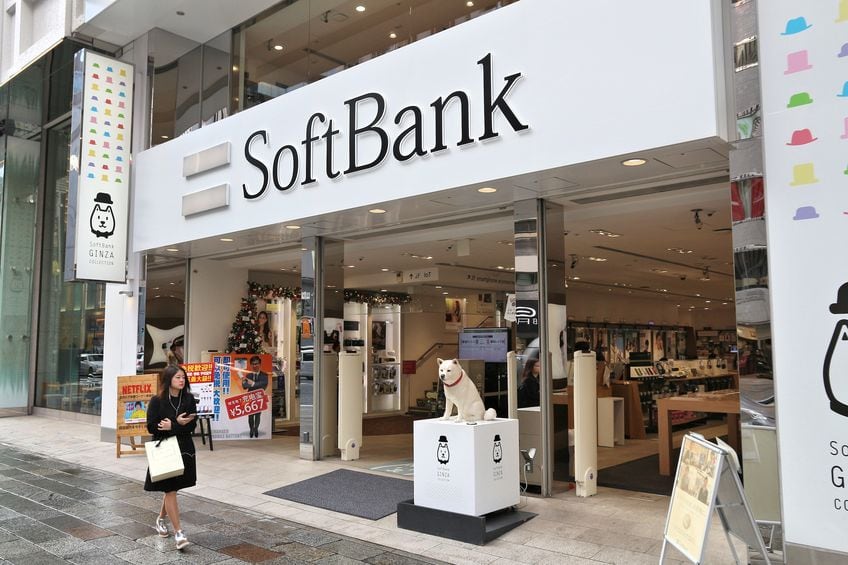
SoftBank Group is tapping debt markets once again to finance its deepening commitment to OpenAI, announcing a bond offering of more than $11 billion. The move, led by founder Masayoshi Son, underscores the conglomerate's aggressive pivot toward artificial intelligence and its willingness to borrow heavily to fund that vision.
The Japanese investment giant plans to issue $10 billion in dollar-denominated notes and €1 billion in euro-denominated debt, with the bulk of the proceeds earmarked for a third $10 billion follow-on payment to OpenAI. This financing is not just another borrowing spree; it replaces shorter-term bridge funding with longer-dated obligations, giving SoftBank additional runway for OpenAI's growth to translate into tangible value while materially increasing shareholders' exposure to leverage costs.

Longer maturities, but higher stakes
The dollar bonds will mature in 3.5, 5.5, and 7.5 years, while the euro notes carry four- and six-year maturities. Pricing is expected on September 24, with settlement scheduled for September 29, according to the term sheet. This structure is significant because SoftBank has relied on bridge financing to fund its OpenAI expansion.
Bloomberg Intelligence analyst Kirk Boodry noted that issuing bonds "pushes the maturity out by several years," reducing refinancing urgency. The benefit is largely about timing: longer maturities give OpenAI more room to expand revenue, raise its valuation, or reach public markets before SoftBank faces repayment pressure. However, the debt does not disappear. SoftBank's bonds are rated BB+ by both S&P and Fitch, leaving the group in speculative-grade territory. Extending maturities may reduce near-term risk, but interest costs and leverage still matter for shareholders.
OpenAI's growth underpins the bet
SoftBank's willingness to borrow makes more sense if OpenAI continues its recent growth trajectory. Macquarie analysts Paul Golding and Alex Luthringer, quoted by GuruFocus, said fundraising discussions followed "a meaningful reacceleration in OpenAI's commercial momentum." They pointed to reported annual recurring revenue of around $40 billion, roughly twice the level seen earlier this year.
That is the argument supporting Son's strategy. If OpenAI keeps growing and private-market valuations rise, the increase in SoftBank's asset value could exceed the extra financing costs attached to the investment. The trade-off is that SoftBank is becoming less diversified in investors' eyes. The company said in February that completion of its latest $30 billion follow-on investment would take its cumulative OpenAI investment to $64.6 billion and its ownership to about 13%. That increasingly turns SoftBank shares into a leveraged expression of OpenAI's commercial success.
Risks beyond SoftBank's control
That concentration leaves SoftBank exposed to risks it cannot fully control. The sensitivity was clear on September 14, when SoftBank shares fell more than 10% as leading AI executives backed calls for slower frontier-model development over safety concerns. Japanese markets are closed for a holiday on Monday, so investors will not get a fresh Tokyo reaction to the bond launch until trading resumes.
Dan Baker of Morningstar told Euronews that the earlier selloff "probably reflects the possibility that AI development may be slowed by regulators" seeking to reduce risks discussed by OpenAI and Anthropic. Regulation is only one uncertainty. OpenAI still faces infrastructure requirements, intense competition, and questions over when a public listing or another liquidity event might occur. The new bonds give Son more runway, but they cannot dictate OpenAI's timetable. If growth slows or valuation expectations weaken, the same leverage that amplifies gains could put greater pressure on SoftBank's balance sheet and shares.
Investors have seen similar dynamics play out in related names. For instance, SoftBank shares have rallied on AI optimism, but the recent pressure on AI stocks highlights the sector's volatility. Meanwhile, OpenAI's own warnings about AI misalignment add to the regulatory overhang. As SoftBank's fate becomes increasingly tied to OpenAI, the bond market's response will be a key indicator of investor confidence in this leveraged bet.
This article is for informational purposes only and does not constitute financial advice.

