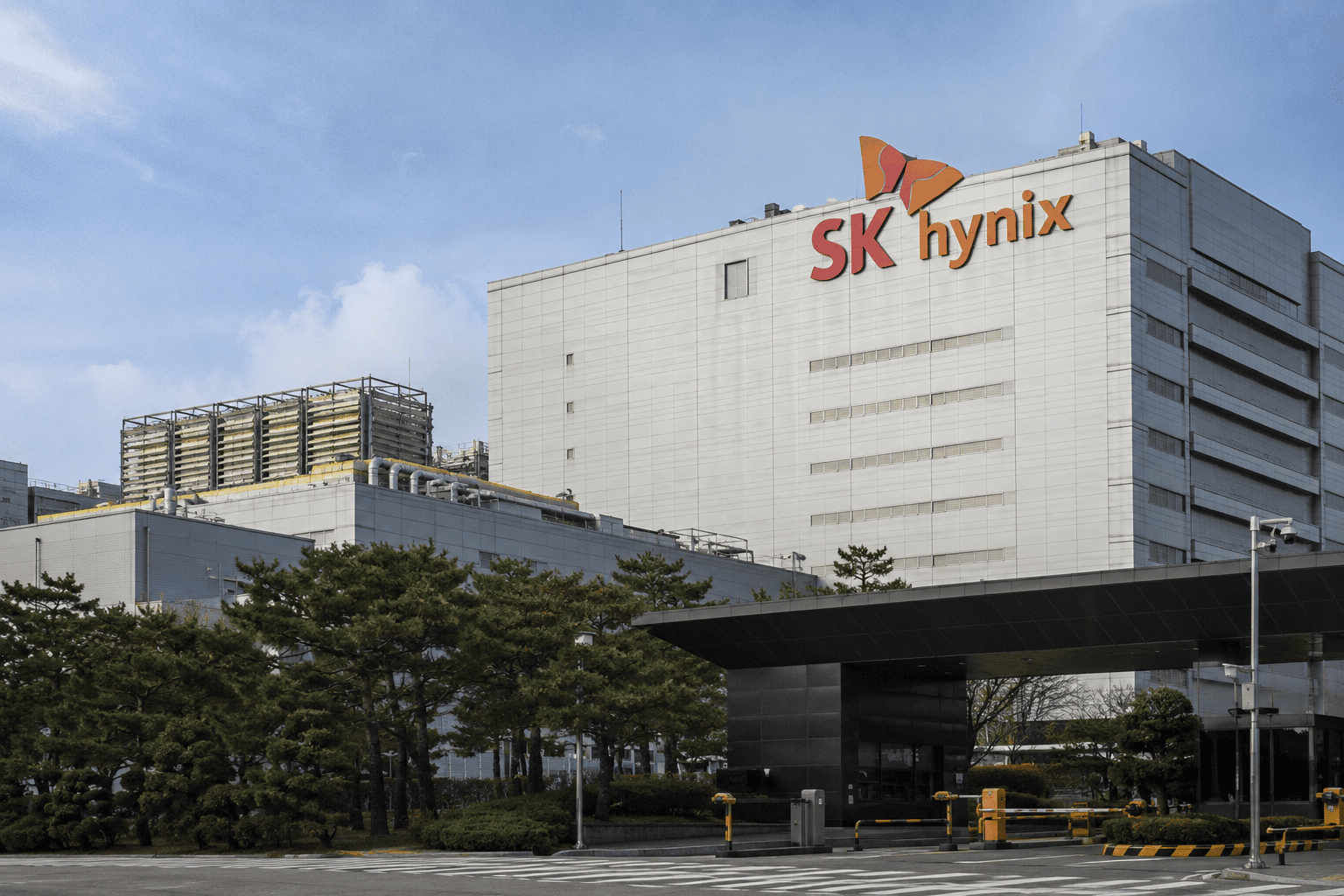
SK Hynix's American depositary receipts surged more than 5% on Tuesday, buoyed by a wave of bullish analyst initiations following its recent U.S. listing and the unveiling of a new open standard for AI memory technology developed with Sandisk.
The stock closed at $142.72 on Monday, roughly 4% below its U.S. listing price from mid-July. Wall Street's optimism suggests significant upside potential, with the average price target of $227.84 implying approximately 60% upside from Monday's close.

Analyst initiations paint a rosy picture
William Blair analyst Sebastien Naji initiated coverage with an Outperform rating and a $260 price target, implying roughly 82% upside. Naji highlighted that "sticker pricing for AI memory and a slow ramp-up of new supply are likely to keep the company's earnings power higher," describing SK Hynix as the "memory leader for the AI era." He also noted that the U.S. listing could help narrow the valuation gap with rival Micron.
Stifel's Brian Chin also initiated with a Buy rating and a $240 target, stating, "We believe SK Hynix's improved execution within a memory industry where demand continues to far outstrip supply, is undervalued." Other firms including Needham, Wedbush, Cantor Fitzgerald, RBC Capital Markets, and Rosenblatt also initiated with Buy ratings, according to FactSet.
RBC Capital's Srini Pajjuri initiated with an Outperform and a $200 target, suggesting the current memory upcycle could extend through 2027 as generative AI drives structurally stronger demand. Analysts also pointed out that SK Hynix's ADRs trade at 6.1 times expected fiscal 2026 earnings, versus Micron's 11.3 times, leaving room for multiple expansion as the U.S. listing matures.
New HBF standard with Sandisk
In a separate development, SK Hynix and Sandisk announced the release of the first industry standard for High Bandwidth Flash (HBF), an open technical blueprint for next-generation AI memory. Developed through the Open Compute Project with contributions from Alphabet's Google and AI chip startup Tenstorrent, the specification aims to bridge the performance gap between high-bandwidth memory and traditional solid-state drives by using NAND flash optimized for faster data transfers.
The HBF specification adopts the Universal Chiplet Interconnect Express (UCIe) standard, enabling compatibility with processors from multiple vendors rather than proprietary interconnects. This open standard could allow future AI servers to combine processors from Nvidia, AMD, Intel, and custom AI accelerators while using the same memory architecture, potentially giving hyperscale cloud providers and enterprise customers greater hardware flexibility.
AI demand continues to support memory outlook
SK Hynix, along with Micron and Samsung Electronics, has benefited from rising demand for AI memory chips as investment in AI infrastructure accelerates while supply remains constrained. Although memory stocks have experienced volatility over the past month amid questions about the durability of AI spending, analysts remain optimistic that tight supply and continued demand for high-bandwidth memory will support earnings in the coming years.
For context, the broader memory sector has seen mixed performance recently, with oversupply fears from CXMT's expansion and Korea's leverage hangover weighing on sentiment. However, the latest analyst actions and the HBF standard suggest that SK Hynix is well-positioned to capitalize on the AI-driven memory upcycle.
This article is for informational purposes only and does not constitute financial advice.

