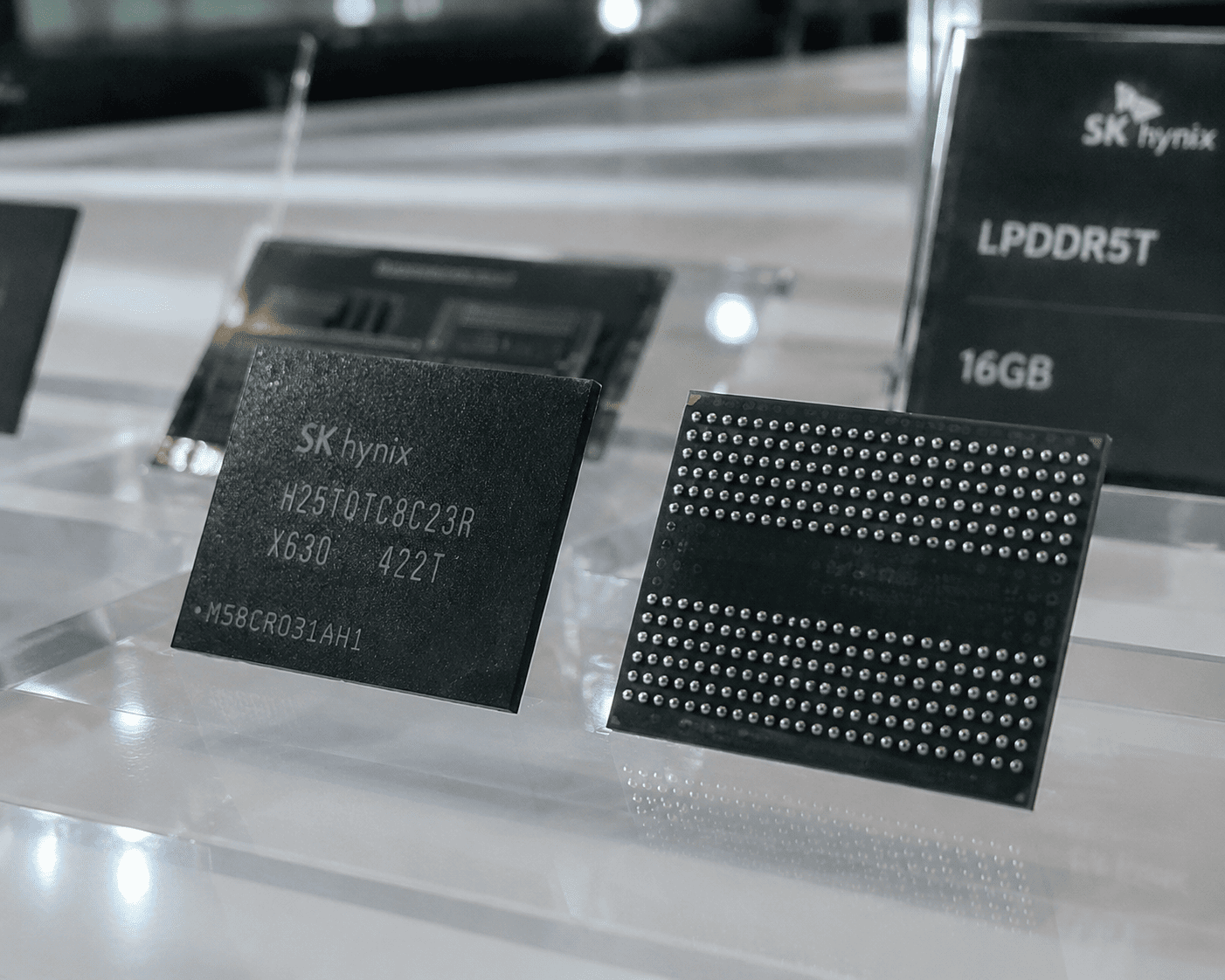
SK Hynix's US-listed shares gained in premarket trading Thursday after the company confirmed a cap on converting domestic shares into American depositary receipts (ADRs), a move that could sustain a significant premium in New York.
The South Korean memory chipmaker, which debuted on the Nasdaq on July 10 through a record $26.5 billion ADR offering, has limited conversions to 2.5% of total shares outstanding, according to the Korea Securities Depository (KSD). The entire allocation has already been used in the initial issuance, effectively halting new ADR creation unless existing holders cancel their receipts.
This restriction addresses a key question following the blockbuster listing and has important implications for pricing between Seoul and New York. Since the listing, SK Hynix ADRs have traded at premiums as high as 51% over the Korean shares. As of Wednesday, the premium stood at around 33%.
Typically, arbitrage traders exploit price differences by converting shares between markets, keeping prices aligned. With fresh ADR creation blocked, traders have fewer opportunities to close the gap. Analysts expect the premium to persist longer than usual, though hedge funds may still trade the spread based on sentiment shifts.
Broader demand for semiconductor stocks, particularly AI-related hardware, supports the premium. SK Hynix is a leading supplier of high-bandwidth memory chips used in artificial intelligence systems, and the ongoing rally in the Philadelphia Semiconductor Index continues to attract investor interest. US investors increasingly gain international exposure through exchange-traded funds, which may also sustain demand for SK Hynix ADRs.
Currency movements add another variable. The Korean won has weakened significantly in recent years but recovered modestly after the Bank of Korea raised interest rates. A stronger won would naturally reduce the ADR premium if other conditions remain unchanged.
Longer-term, increased competition for investor capital could narrow the gap. Market speculation periodically suggests Samsung Electronics may pursue a US listing, which could diversify demand away from SK Hynix ADRs.
Investors now focus on SK Hynix's second-quarter earnings, due July 29. Citigroup, the depositary bank, has informed investors that ADR issuance and cancellation will remain suspended until that date because newly issued Korean common shares cannot be transferred until officially listed on the Korea Exchange.
The structure mirrors that of Taiwan Semiconductor Manufacturing Co. (TSMC), where investors can cancel ADRs but cannot freely create new ones from local shares. TSMC's US shares have traded at an average premium of about 12.6% over its Taiwan listing over the past five years, according to Bloomberg data. Each SK Hynix ADR represents one-tenth of a common share, with holders retaining the option to cancel and receive the underlying Korean stock.
For context on memory chip demand, see our analysis on DRAM ETF Inflows Surge as Micron, Samsung, SK Hynix Lead Memory Stock Rebound Amid Concentration Risks. Currency dynamics are also relevant; read USD/JPY Hits 163 as Yen Weakens: Technicals Signal Further Gains for broader forex trends.
This article is for informational purposes only and does not constitute financial advice.