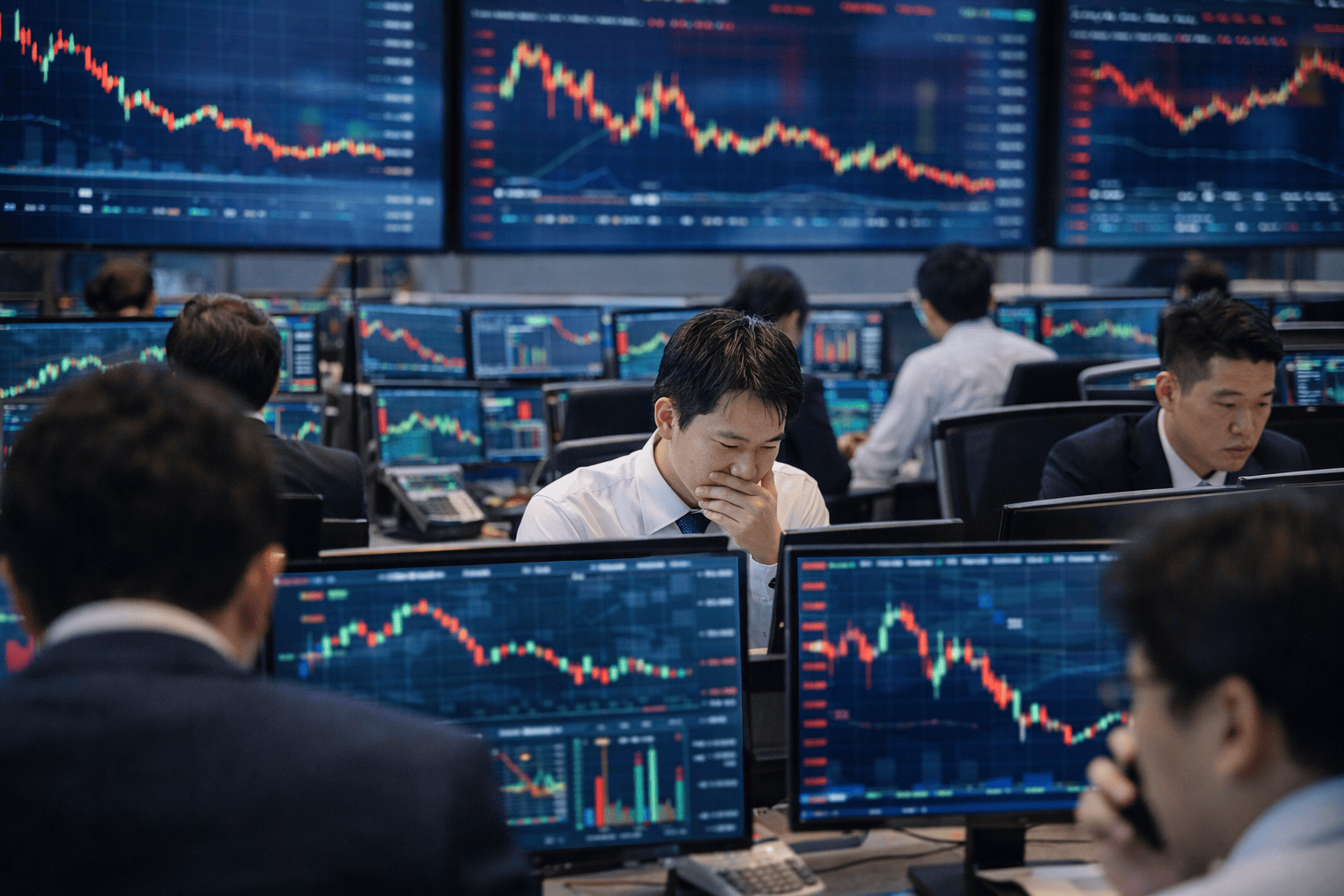
South Korea's semiconductor heavyweights Samsung Electronics and SK Hynix posted sharp gains in Wednesday morning trading, with Samsung climbing more than 7% and SK Hynix rising over 5%. The rally came despite a 0.6% decline in the Nasdaq Composite on Tuesday, driven by Middle East tensions and caution ahead of U.S. inflation data.
The divergence highlights a growing conviction among investors that the recent sell-off in Korean chip stocks overshot the underlying fundamentals. Fresh export figures, stronger-than-expected pricing for high-bandwidth memory (HBM), and supportive commentary from major banks all point to a memory upcycle that may be more robust and longer-lasting than initially feared.
Memory market signals point to strength
UBS analyst Timothy Arcuri noted that pricing for HBM4 and HBM4E is running “even stronger than our prior expectations,” according to MarketWatch. The firm now projects HBM average selling prices to rise roughly 79% year-over-year, up from an earlier estimate of 67%. This directly benefits Samsung and SK Hynix, which, along with Micron, dominate the supply of advanced memory used in AI accelerators.
An unusual signal from Nvidia adds to the bullish narrative. Reports indicate Nvidia is testing lower-memory configurations for its upcoming Rubin Ultra systems due to tight HBM supply. Arcuri suggests that using less memory per accelerator could allow Nvidia to ship more units, potentially increasing overall HBM consumption.
South Korea's trade data reinforces the demand picture. Semiconductor exports surged 155.4% year-over-year to $9.95 billion during the first ten days of August, accounting for 46.8% of total exports.
Banks see correction as overdone
Morgan Stanley said the sharpest phase of the memory-stock correction appears to have ended, describing current valuations as a tactical re-entry opportunity. The bank continues to expect strong demand for premium products like HBM as AI data-center investment expands.
Goldman Sachs has taken an even more bullish stance, telling Business Insider that Korea's AI-stock sell-off had gone too far. Goldman argues the memory cycle could be stronger and last longer than previous upswings, supported by accelerating AI-compute demand and severe supply shortages that could sustain memory prices and profits for years.
The recent deleveraging has also cleaned up positioning, with assets in Korean leveraged ETFs and retail margin borrowing falling from their peaks.
Nasdaq weakness less relevant for memory names
Tuesday's Nasdaq decline was driven more by macro concerns than by a breakdown in semiconductor demand. Amazon and Alphabet fell, while investors focused on rising oil prices, Middle East tensions, and Wednesday's U.S. inflation report. Samsung and SK Hynix, however, are trading on their own earnings cycle.
HBM supply remains tight, next-generation pricing is beating expectations, Korean chip exports are surging, and major banks argue the recent correction created an entry point. For context, Goldman's dip-buying call has gained traction, while KOSPI's recent strength reflects broader regional momentum.
Risks remain, as memory stocks are highly volatile, supply expansion could eventually soften pricing, and Chinese producers such as CXMT could become stronger competitors. Investors should weigh these factors carefully.
This article is for informational purposes only and does not constitute financial advice.