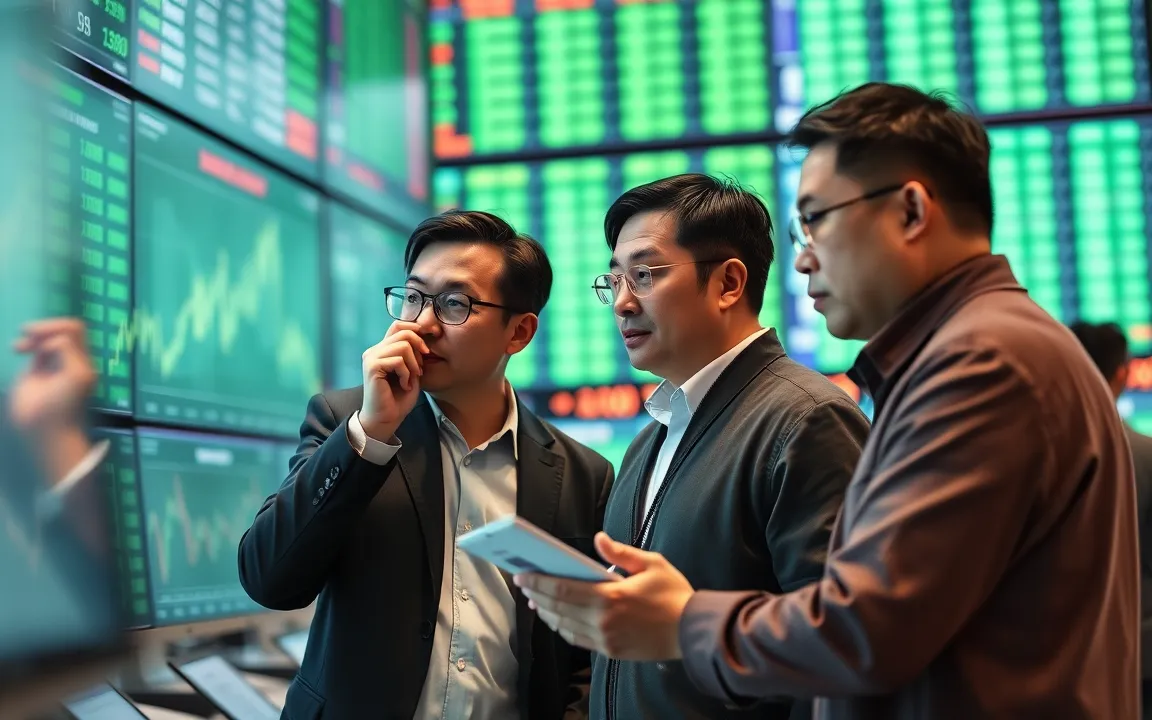
Samsung Electronics and SK Hynix shares extended gains on Wednesday, yet a major pillar of support for Korea's leading chipmakers is nearing its conclusion. The two companies have collectively spent over 36 trillion won repurchasing their own stock, a move that absorbed heavy selling pressure and underpinned the broader KOSPI index.
These buyback programs, originally slated to run through November, are now on track to finish weeks early. Samsung had acquired 41.8 million shares by September 21, spending 10.85 trillion won and completing 78.44% of its planned repurchase. SK Hynix had bought 14.75 million shares worth 25.51 trillion won, reaching 61.28% of its target. At recent purchase rates, Samsung could exhaust its remaining authorization within five to six trading sessions, while SK Hynix might finish in 14 to 15 sessions.

The scale of corporate buying has been crucial, as it filled a void left by other investors. Over the 15 trading sessions through late September, foreigners sold a net 12.81 trillion won and individuals offloaded 16.28 trillion won, while other corporations purchased 23.19 trillion won. Daishin Securities analyst Lee Kyoung-min told The Korea Times that such corporate buying helped “put a floor under the market” amid external uncertainty. However, he cautioned that this support would prove insufficient if foreign and institutional selling intensified.
With the buybacks winding down, the KOSPI is losing a buyer that operates on a predetermined schedule rather than market sentiment. The question now shifts to whether other participants can absorb the shares once corporate demand fades.
Foreign investors step in as volatility eases
There are signs that foreign investors are returning at an opportune moment. By Wednesday morning, they were net buyers of approximately 140 billion won of KOSPI shares, marking a fourth consecutive session of net purchases. Samsung climbed 2.7%, while SK Hynix rose about 1.6%.
Shinyoung Securities analyst Lee Sang-yeon noted in comments reported by ChosunBiz that historically strong foreign buying tends to emerge when market volatility subsides, domestic investors supply shares, and fresh catalysts appear. Those conditions are aligning: the VKOSPI volatility gauge has dropped sharply from its July peak, and individual investors have turned net sellers this month.
Upcoming catalysts include Micron's earnings and Samsung's preliminary third-quarter results, both of which could reinforce confidence in the memory cycle. However, foreign demand is less predictable than corporate repurchases. Foreign ownership already represented 39.92% of KOSPI market capitalisation on September 22, and higher US yields, oil prices, or a weaker won could quickly interrupt the recovery.
Memory cycle becomes the key driver
The strongest argument for sustained foreign interest is the memory market itself. Yuanta Securities Korea analyst Baek Gil-hyun on Wednesday raised his Samsung price target to 630,000 won from 530,000 won, maintaining a Buy rating. He argued that supply constraints could persist longer than markets expect, as HBM production continues to consume conventional DRAM capacity while AI inference drives demand for larger memory volumes.
Yuanta expects tight conditions to persist through 2028, potentially generating more free cash flow for future shareholder returns. That logic also applies to SK Hynix, where HBM demand and strong conventional-memory pricing remain central to the earnings outlook.
As the buyback support fades, the sustainability of the rally now hinges on memory fundamentals and the willingness of foreign investors to fill the gap. The coming weeks will test whether the market can stand on its own.
This article is for informational purposes only and does not constitute financial advice.

