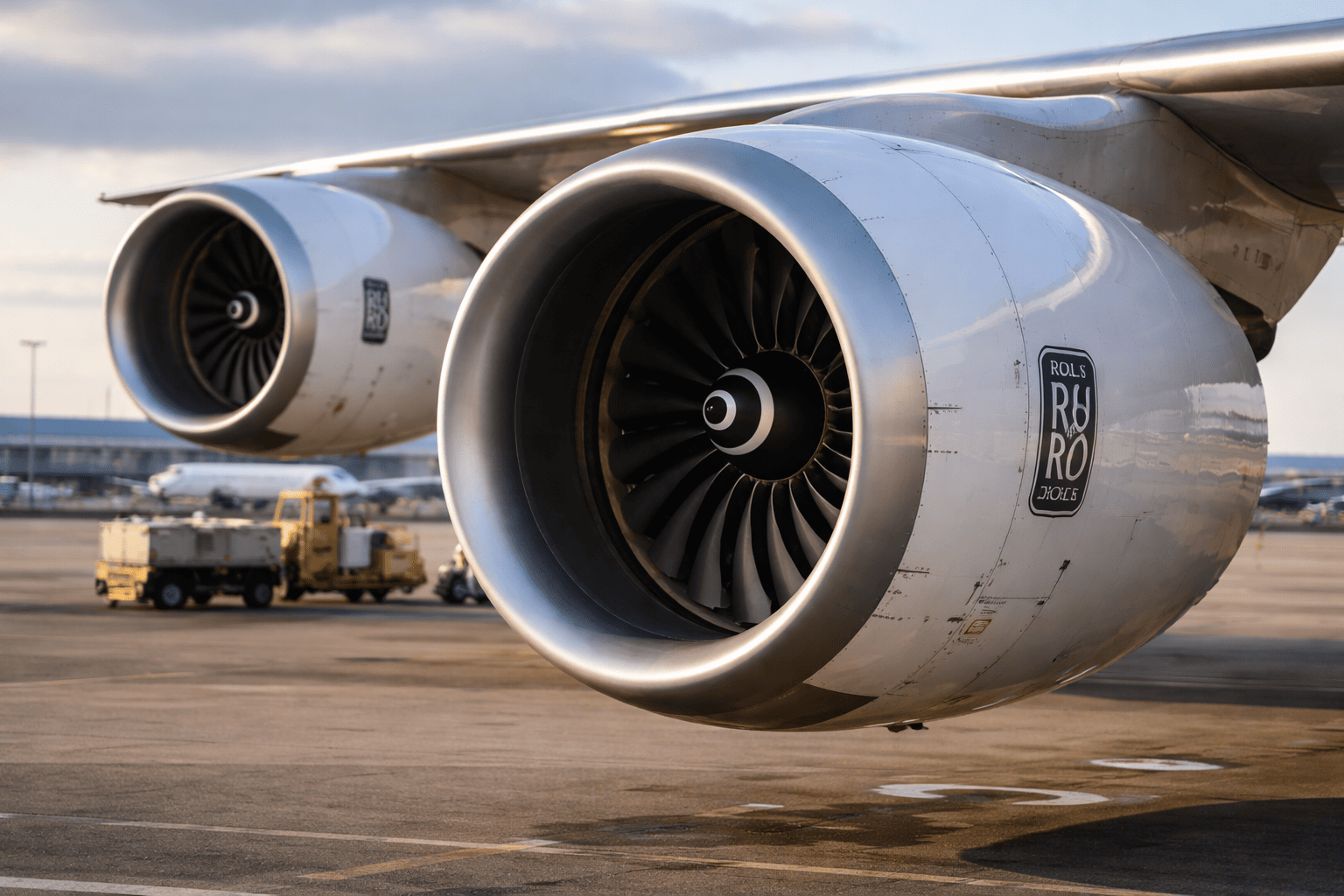
Rolls-Royce (RR.L) shares edged lower on June 26, slipping to around 1,410p from a weekly high of 1,532p, even as the company received a significant order from China Eastern Airlines. The deal, valued at over $9.35 billion, covers 25 Airbus A330 jets powered exclusively by Rolls-Royce Trent 7000 engines. While the market reaction was muted, several underlying catalysts suggest the stock may be poised for further gains.
China Order Adds to Backlog, but Timing Tempers Impact
The China Eastern order is a clear positive for Rolls-Royce, as each Trent 7000 engine is priced between $30 million and $35 million. However, deliveries are scheduled between 2029 and 2033, meaning revenue recognition is several years out. This explains why the stock barely budged on the news. Still, the order reinforces the company's long-term revenue visibility and strengthens its position in the wide-body engine market.

Rolls-Royce's overall backlog has swelled to over £7.3 billion, driven not only by aviation but also by growing demand for power equipment used in data centers and its small modular reactor (SMR) business. The AI boom has been a key tailwind, with data center power needs rising sharply.
Falling Fuel and Raw Material Costs Boost Margins
Beyond the China order, Rolls-Royce is benefiting from a broader recovery in civil aviation. According to IATA, average jet fuel prices have dropped 24% month-over-month to $119 per barrel. Lower fuel costs typically encourage airlines to increase flying hours, which directly boosts engine servicing revenue for Rolls-Royce. The company recently reported that large engine flying hours rose 5% and now stand at 115% of pre-pandemic 2019 levels, with expectations for 115%–120% for the full year.
Raw material costs are also trending lower. Aluminium prices have fallen for four consecutive weeks, the longest losing streak since April, as Middle East supply increases. This decline supports Rolls-Royce's margin expansion and helps the company toward its target of £4 billion to £4.2 billion in annual operating profit and £3.6 billion to £3.8 billion in free cash flow.
Technical Setup Points to Potential Breakout
From a technical perspective, the stock has formed a triple-bottom pattern with a neckline near 1,325p, a classic bullish reversal signal. Shares are currently holding above key support at 1,407p and remain above the 50-day and 100-day moving averages. If the uptrend resumes, a move toward the psychological 1,500p level appears plausible.
For investors tracking the broader market, the FTSE 100 watchlist for July includes Rolls-Royce among key earnings reports to watch. Additionally, the company's recent momentum is explored in Rolls-Royce Soars: 5 Catalysts Driving Shares Past 1,500p.
Risks to Consider
While the outlook appears constructive, risks remain. A sharp aviation downturn or a rebound in fuel prices could reduce flying hours and delay engine demand. Execution in the data center and SMR segments is also critical; any disappointment could slow backlog growth and weigh on estimates.
Overall, the combination of a solid order book, falling input costs, and improving aviation fundamentals provides a supportive backdrop for Rolls-Royce shares. The mild pullback on the China Eastern news may offer an entry point for investors with a longer time horizon.
This article is for informational purposes only and does not constitute financial advice.