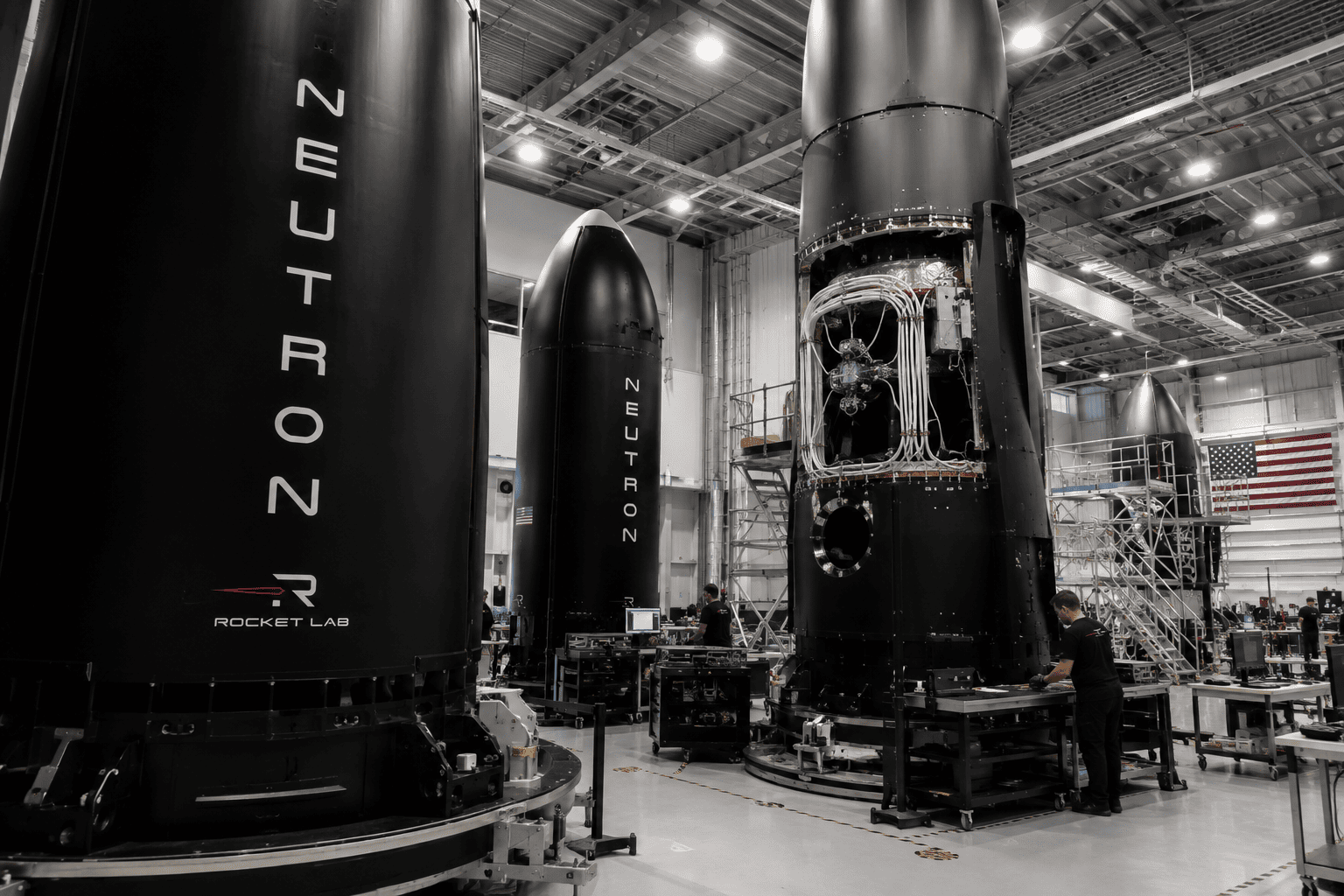
Rocket Lab (NASDAQ:RKLB) delivered record revenue and backlog in the second quarter, yet its shares declined after earnings as investors focused on execution risks, particularly around the Neutron rocket's debut.
Revenue rose 62% year over year to $234.1 million, while backlog jumped 137% to $2.36 billion. The company guided third-quarter revenue to $250 million–$265 million, above Wall Street's consensus. Despite these strong numbers, shares fell as much as 7% in extended trading after management indicated the window for launching Neutron before year-end was narrowing.
Demand remains robust
Rocket Lab's demand story is one most companies would envy. CEO Peter Beck said the company had already signed more than $1 billion in new launch and space-systems contracts in the third quarter. The company ended Q2 with over 90 launches in backlog, including work for the US Space Force.
Neutron is attracting customers even before its first flight. On Monday, Rocket Lab announced that Kepler Communications had booked a dedicated Neutron mission for no earlier than 2028. This early interest underscores the market's confidence in the vehicle's potential.
Analysts have noted the healthy demand across the launch industry. Citizens analyst Trevor Walsh, in a pre-earnings note, viewed Neutron as approaching a "key inflection point" and said successful execution could "raise the floor valuation" of Rocket Lab by removing a major uncertainty.
Neutron timing becomes the focal point
Rocket Lab still expects to deliver Neutron to the launch pad in the fourth quarter, but the maiden flight timetable has become less certain. Beck said the "window for an end-of-year launch is narrowing," while CFO Adam Spice said the company would "hopefully" launch within the same period.
For investors, that distinction matters. Neutron is central to Rocket Lab's strategy to move beyond the smaller Electron vehicle and compete for larger commercial, civil, and national-security missions. A successful first flight and consistent launch cadence could materially reduce execution risk. Conversely, every delay keeps that risk alive.
Rocket Lab is prioritizing reliability over hitting a calendar date, but the stock market is less forgiving when a company's valuation already assumes years of rapid expansion. The market's reaction suggests investors are weighing the strong demand against the uncertainty of Neutron's timeline.
Profitability and margins weigh on sentiment
Neutron timing was not the only reason for caution. Rocket Lab remains unprofitable, posting a Q2 net loss of $49.3 million, or 8 cents per share. Free cash flow was negative $110.1 million, while operating loss reached $57.5 million.
Third-quarter revenue guidance was strong, but management forecast GAAP gross margins of 29% to 31%, below the 37.6% analysts expected. Rocket Lab attributed the lower margin to a greater mix of lower-margin satellite platforms, which would weigh on profitability.
Analysts called the quarter solid and highlighted the stronger revenue outlook, but concluded that investors were likely "hoping for more." The market's reaction reflects a broader concern: while Rocket Lab is growing quickly and its backlog shows customers want what it is building, investors still need proof that those contracts can translate into reliable launches, stronger margins, and eventually sustainable cash generation.
For context, Rocket Lab's recent stock performance has been volatile. The shares have seen significant swings, as noted in technical analysis of the stock's oversold conditions. The company's defense contract wins have provided some support, but the market remains focused on execution.
As Rocket Lab navigates the path to Neutron's first flight, investors will be watching for updates on launch timing, margin trends, and the conversion of its record backlog into revenue. The company's ability to execute on its ambitious plans will likely determine whether the stock can regain its footing.
This article is for informational purposes only and does not constitute financial advice.