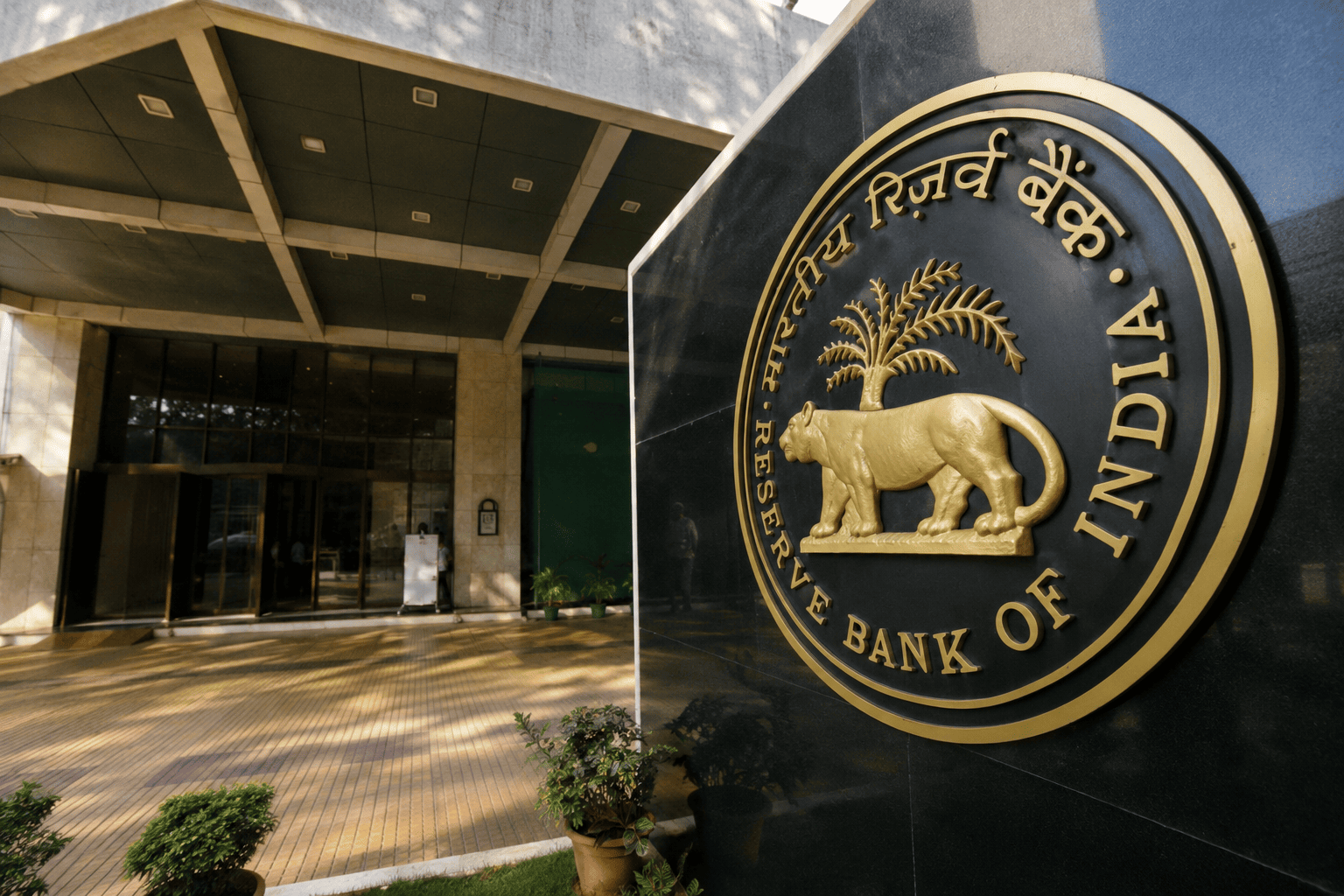
The Reserve Bank of India (RBI) kept its benchmark repo rate unchanged at 5.25% on Wednesday, maintaining a neutral policy stance as it weighed the impact of volatile global crude prices on inflation. The central bank also lifted its GDP growth projection for the current fiscal year to 6.7% from 6.6%, citing stronger-than-expected economic activity in the first quarter.
Governor Sanjay Malhotra announced that the six-member Monetary Policy Committee (MPC) unanimously voted to hold the repo rate, while the Standing Deposit Facility rate remained at 5% and the Marginal Standing Facility rate and bank rate stayed at 5.5%. The decision reflects a cautious approach amid geopolitical tensions and their potential effect on energy prices and domestic inflation.

Policy Stance Amid Global Uncertainty
The RBI's decision comes as several regional central banks, including those in Indonesia and the Philippines, have tightened policy to counter inflationary pressures from higher oil prices and currency volatility. In contrast, the RBI chose to wait for more clarity, citing resilient domestic demand and improved corporate performance.
Malhotra noted that the re-escalation of the Middle East conflict has amplified energy price volatility, but early Q1 corporate results show healthy manufacturing activity and buoyant discretionary spending. He added that the Indian economy performed better than expected in the first quarter.
Market Reaction
Markets showed a muted response to the announcement. The benchmark 10-year government bond yield was largely unchanged at 6.78%, while the rupee weakened slightly to 95.09 against the US dollar. Equity indices were mixed, with the Nifty 50 and Sensex posting modest gains before slipping.
Inflation Outlook Improves, Risks Remain
The RBI trimmed its average inflation forecast for FY27 to 5% from 5.1%, and lowered its core inflation estimate to 4.3% from 4.7%. Retail inflation crossed the central bank's 4% medium-term target in June for the first time in 17 months, but remains within the 2%-6% tolerance band.
Despite the improved outlook, the RBI warned that inflation risks are elevated. The policy statement highlighted that global oil prices continue to swing sharply due to geopolitical developments, making the near-term inflation path uncertain. The central bank also flagged El Niño as a major risk to agriculture and rural demand, with deficient monsoon conditions potentially affecting output.
Economists See Room for Tightening
Economists viewed the decision as broadly expected but noted that further rate hikes could be necessary later in the fiscal year if inflation pressures intensify. Upasna Bhardwaj, Chief Economist at Kotak Mahindra Bank, said the RBI's tone was balanced and data-dependent, adding that there is scope for 50 basis points of rate hikes in the second half of FY27, especially with Q1 FY28 inflation likely to remain above 5%.
The RBI also highlighted continued strength in external capital flows. Gross foreign direct investment inflows reached $30.7 billion in April-June 2026, and foreign portfolio investment turned positive in June and July following measures to attract overseas capital. Governor Malhotra said India's balance of payments is expected to remain in a healthy surplus this fiscal year.
This article is for informational purposes only and does not constitute financial advice.